
It was in 2015 that we first visited Japan, and both of us fell in love with the country and its people, its weird contradictions, beautiful temples and fantastic food. We knew we’d return one day but our plans fell through in 2020 thanks to Covid-19 and lockdown. We finally made it back in the autumn of 2025 for a two-week trip through a trio of new cities and a wealth of experiences.
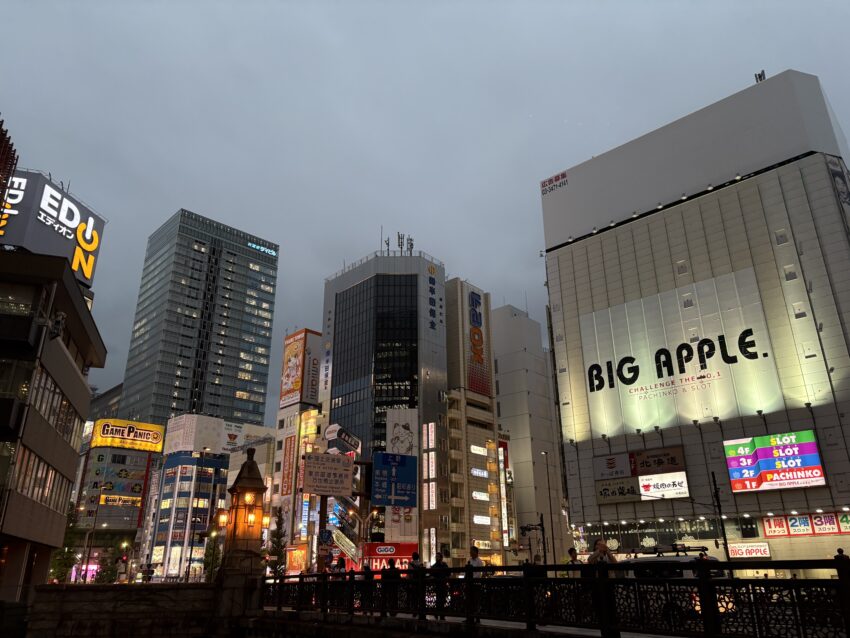
Flying into Haneda Airport, our Japan holiday began with a few days in the vaguely familiar, sprawling metropolis of Tokyo. Not that it felt too much like a return. The city is so huge that one could revisit it year after year and never go back to the same district twice. Last time we based ourselves in Shinjuku, this time it was Akihabara and the modern Nohga Hotel, tucked away in the back alleys beyond the neon of the main streets and the bustle and noise of the railway station.
Akihabara has been known as electric town for years thanks to the mass of shops selling electrical goods, cables, plugs, games and the like. They’re still there but it’s also got plenty of bars and restaurants, a multitude of other stores, a multi-storey sex shop and maid cafes, the Japanese entertainment scene staple that’s both bewildering and just a little bit disturbing to western eyes. The district is vibrant and buzzing but a bit more manageable than the sensory explosion of Shinjuku. And like the rest of Tokyo, the architecture is largely utilitarian rather than attractive; rail lines criss-cross the area, there aren’t nearly enough green spaces and people surge this way and that. The spaghetti junction of cables strung precariously above the streets, clusters of pot plants beside doorways and colourful restaurants with garish graphics and just a few seats were all familiar sights from last time round.
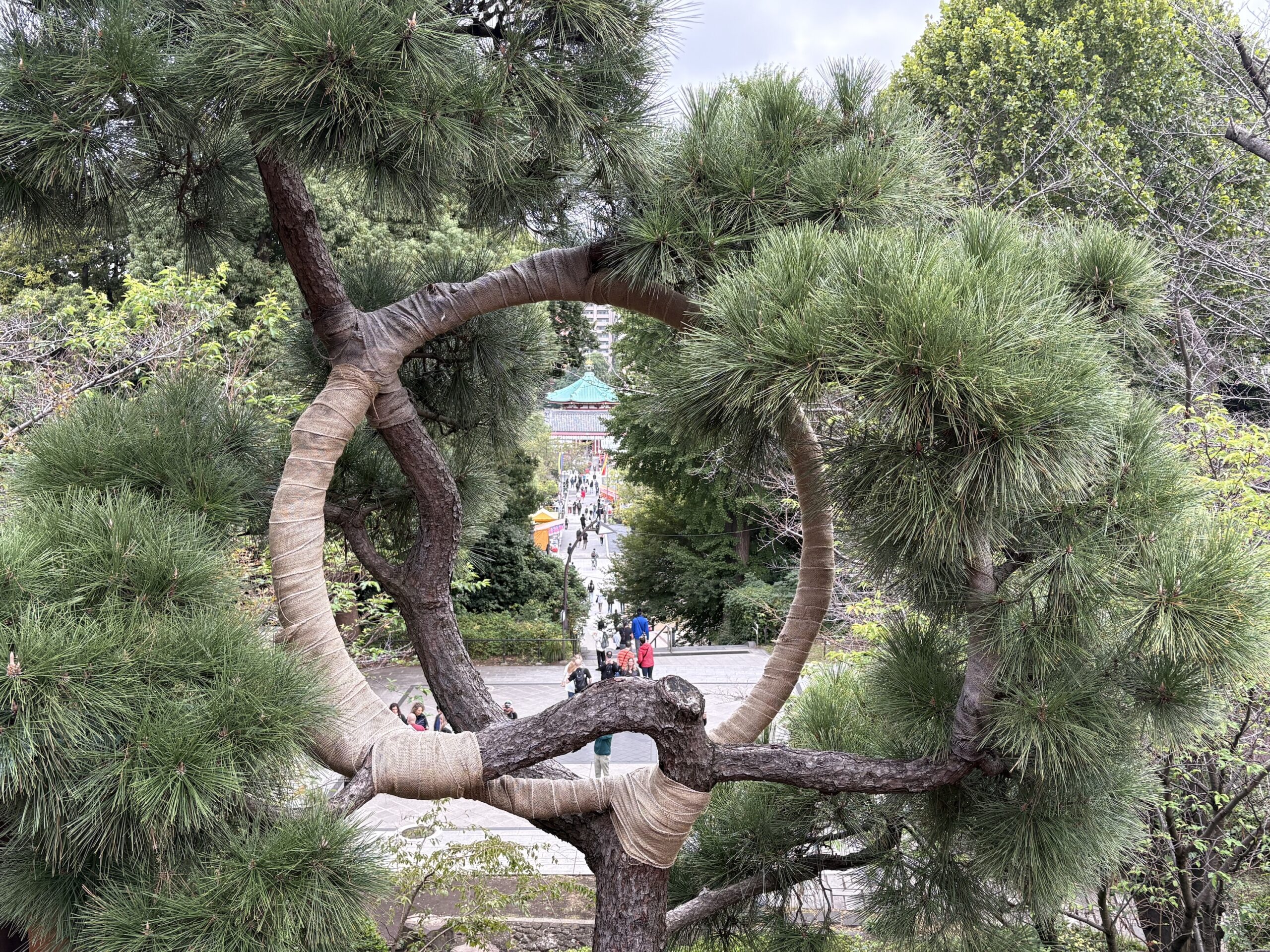
A short walk north of Akihabara is Ueno, home to a large park and a collection of museums. Shinobazuno Pond lies at the park’s southern end, clogged with lotus plants that were well past their summer best sadly. On an island in the centre sits the Benten-dō, a Buddhist temple devoted to the goddess Benzaiten – the first of goodness knows how many temples and shrines we’d find over the course of our fortnight’s holiday. Indeed, a short walk away and on higher ground was the impressive Kiyomizu Kannon-dō Temple with its delicious landscaping of perfectly placed plants, rocks and clipped pines – including the heavily trained and much photographed pine tree of the moon with views back to Benten-dō. The 17th century temple was one of more than 60 buildings that made up the complex once upon a time, but it went into decline after the end of the Shogunate in the 1860s and few now survive. The grounds were turned into busy Ueno Park, which we ambled through while street artists performed and countless visitors took selfies.
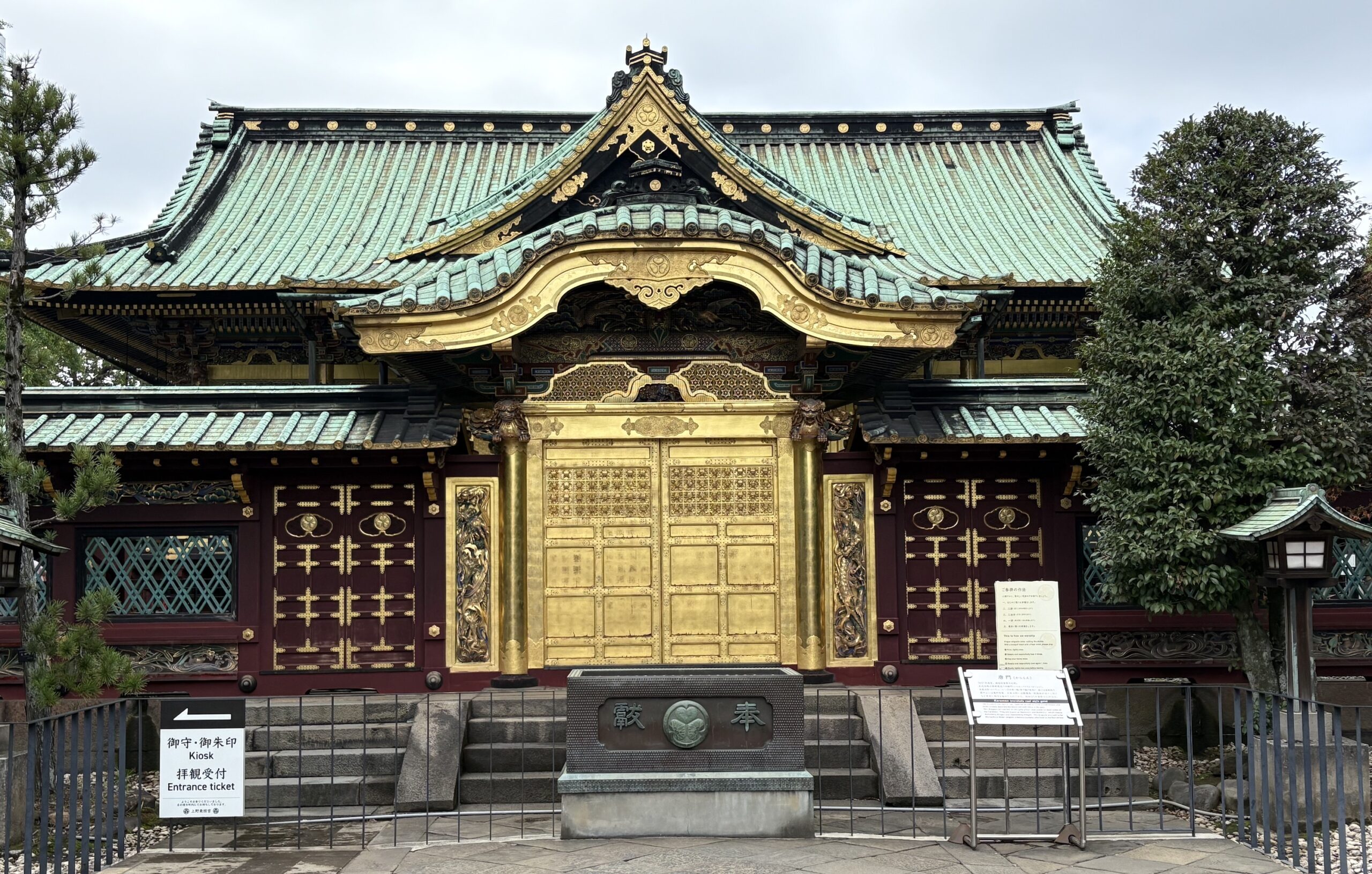
We decided against the museums but spent plenty of time at the captivating 17th century Ueno Tōshō-gū Shinto shrine, the approach to which is lined with large groups of majestic lanterns. The shrine has somehow survived the devasting earthquakes, fires and wars that have been thrown at it over the centuries and features a golden karamon gate, exquisite carvings of birds, dragons and other flora and fauna, and a golden and black main building or honden. Too many people were there, of course, but it was a real treat to just stand and admire the craftsmanship and detail. The grounds included a peony garden, which during our visit was host to a large display of dahlias – allbeit in a formal way that the Japanese love but is a bit too clinical for me.
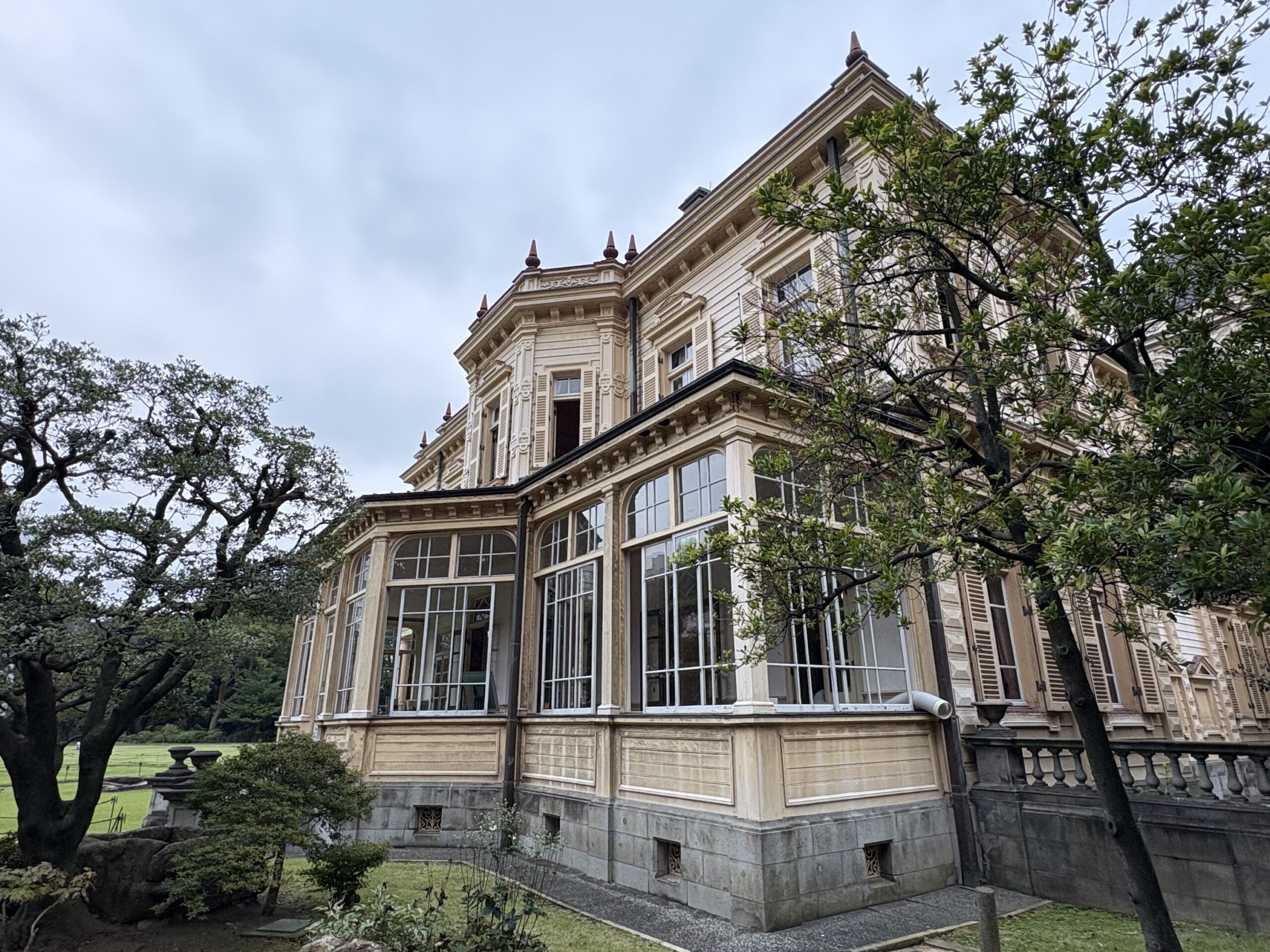
After struggling to find somewhere for lunch, we found a place doing excellent sushi and then walked through a neighbourhood of love hotels and dodgy bars to the oddity that is the Kyu-Iwasaki-tei Gardens. Situated amid the grounds is a large European-style Victorian villa, built for the family that founded the Japanese industrial giant Mitsubishi and which looks completely out of place in modern Tokyo. The house is certainly grand from the outside but a bit of a shell inside, lacking any furniture, but we toured the rooms, noted the architectural flourishes and read the information boards. The latter were, as one would expect at a Japanese attraction, vastly outnumbered by the signage that stipulated how we should behave and the large number of activities that were forbidden, such as touching things, taking photos, breathing… Airy verandahs looked out over the simple garden to the city beyond. The villa, which was mainly used as a guesthouse by the family’s visitors, is linked to a Japanese residence that the family much preferred to live in back in the day. Now much reduced in size, because parts of the site were sold off to developers over the years, it offered the traditional set of rooms consisting of tatami matting and paper walls.
Both Akihabara and Ueno were good places to eat out but the challenge for me in Japan has always been finding the right restaurant. Many of them, as well as the bars, are hidden behind closed doors so it’s impossible to tell whether we’d be eating alone (a mortal fear) or among an atmospheric crowd (much favoured). We eventually found some good cheap places, open and buzzing, with a wide range of great food often served as small plates. One place up in Ueno, though, had us dreading the morning after following a dish of chicken yakatori that was essentially raw in the middle. After much angst and debate, we ate it and survived to tell the tale. Fortunately, the types of bacteria that would make us as sick as dogs (or dead) back home are rare in Japanese poultry. In fact, we sometimes found chicken sashimi on menus – a dish that certainly would’ve been a step too far. The craft beer movement is also alive and kicking in Japan and we discovered a couple of welcoming bars in the neighbourhood, including a lively one in otherwise quiet backstreets that went by the name Scissors. Why Scissors? Who knows. There wasn’t a pair in sight, so perhaps something had got lost in translation…
The day after we caught the Shinkansen to Hiroshima from the central station, a chaotic place that’s difficult enough to negotiate as it is without the trauma of having to understand the bureaucratic approach to tickets adopted by Japan Railways. This is a country that has yet to grasp that it’s much easier to have an e-ticket and a simple QR code, rather than multiple bits of paper, stressed-out tourists and a concourse full of nervous breakdowns.
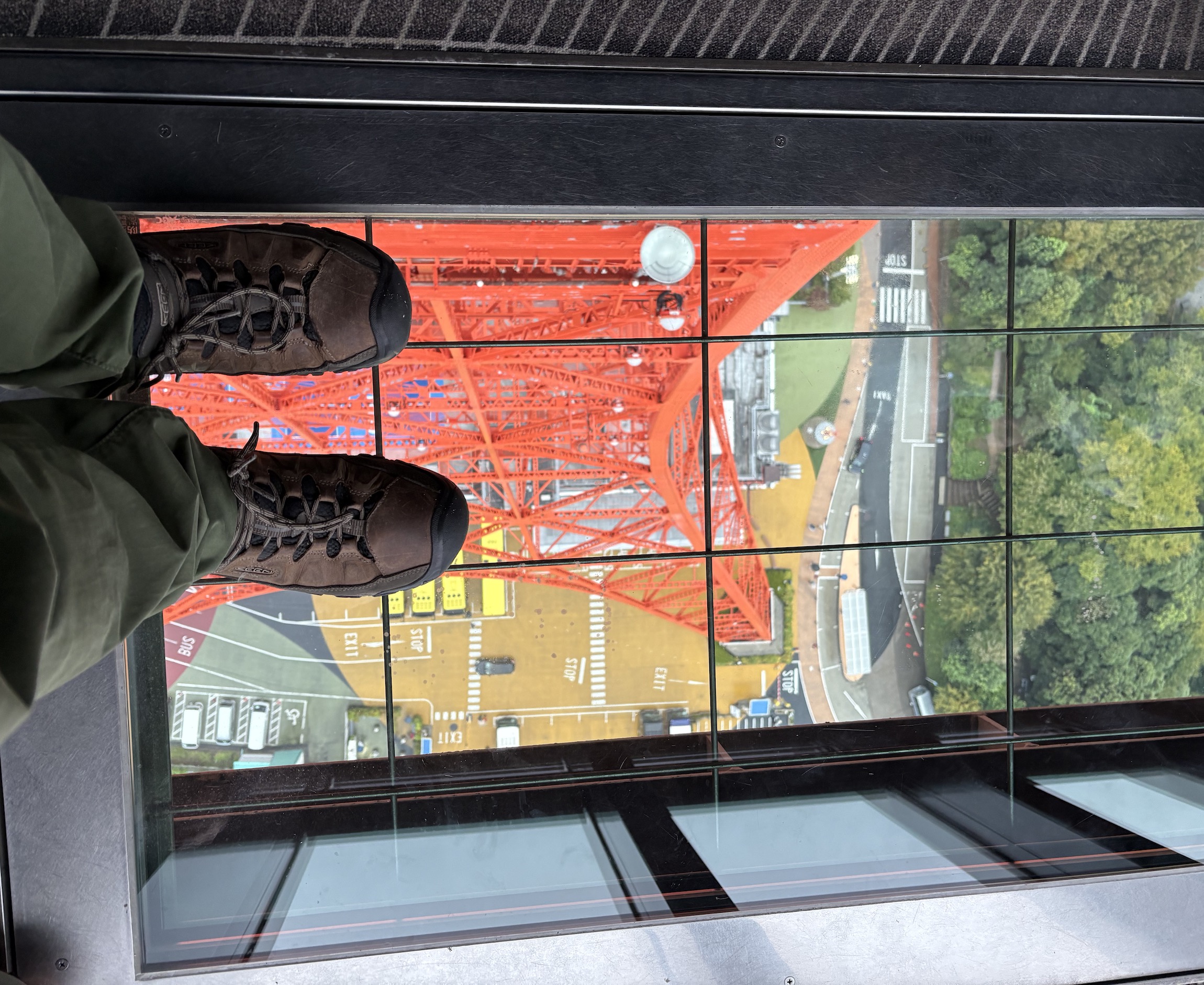
A few weeks later we arrived back at the station ahead of our last night in Japan, stopping at a hotel near the Hamamatsucho station. The weather was drab and damp but we went off to one of the city’s tackiest attractions – the Tokyo Tower – to pass the last few daylight hours. Opened in the 1950s as a copy of the Eiffel Tower and as touristy as it’s possible to be, it had good views from the main deck but cloud swirled around further up so there was no point going any higher. Everywhere we turned were souvenir shops filled with plastic tat and fridge magnets, along with a range of other attractions designed to relieve visitors of their yen. It was colourful and ludicrous all at the same time. Later we went out in Hamamatsucho for our last night of food and drink before our flight home from Haneda the next morning.
Japan had changed in 10 years. I certainly remembered the crowds when we visited Kyoto back in 2015 but this time the number of tourists was noticeably much greater wherever we went, attractions creaked under the weight of all those visitors and it was a lot harder to find peace and room to breathe. The one-time silence of the train carriages – a sign of the respect people had for one another – had begun to crack under the tyranny of the mobile phone and the gaggle of tourists who perhaps didn’t grasp the etiquette. And western fast food seemed more prevalent than ever in a country whose cuisine really is among the best in the world. Even so, Japan is still an amazing country with much beauty, bonkers contradictions, wild and colourful graphics, bizarre cutesiness, exceptional crafts and fantastic experiences. I’ll be disappointed if we never go back.