
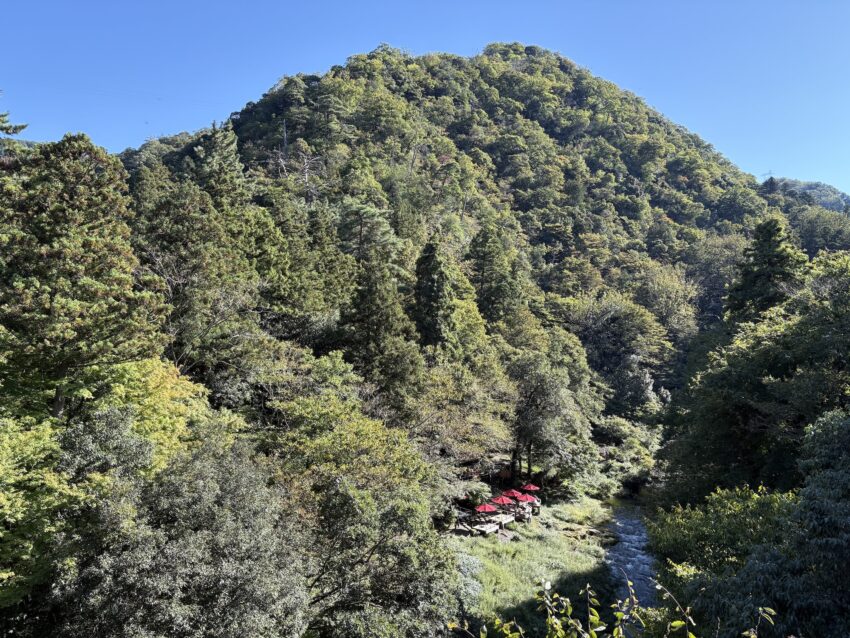
A visit to the onsen is a way of life for many Japanese but can amount to torture for the rest of us. It’s like being boiled alive with no clothes on and we’re just not used to it.
With thousands of hot springs across the county, it’s no surprise that locals regularly take a dip in the mineral rich waters, partly to aid relaxation, ease aches and pains and treat all sorts of skin complaints. We’d had our first experience of an onsen at Hirayu on our last holiday in Japan and, while it had been challenging to say the least, we decided to give the baths another go on our 2025 trip.
Yamanaka is one of four hot springs villages that go under the umbrella name of Kaga Onsen, which all lie a short way down the railway line from Kanazawa and are renowned for having some of the finest waters in the region. The Shinkansen dropped us at Kagaonsen Station in a fairly nondescript suburb of Kaga City, but very few suburbs in Japan or anywhere else are overlooked by a giant golden Kannon statue. It came as a bit of a surprise to see it, towering over the trees and a hidden temple complex. Leaving it behind, we caught the bus to Yamanaka, a village in the hills about 30 minutes away. It was a pleasant morning and the sun shone.
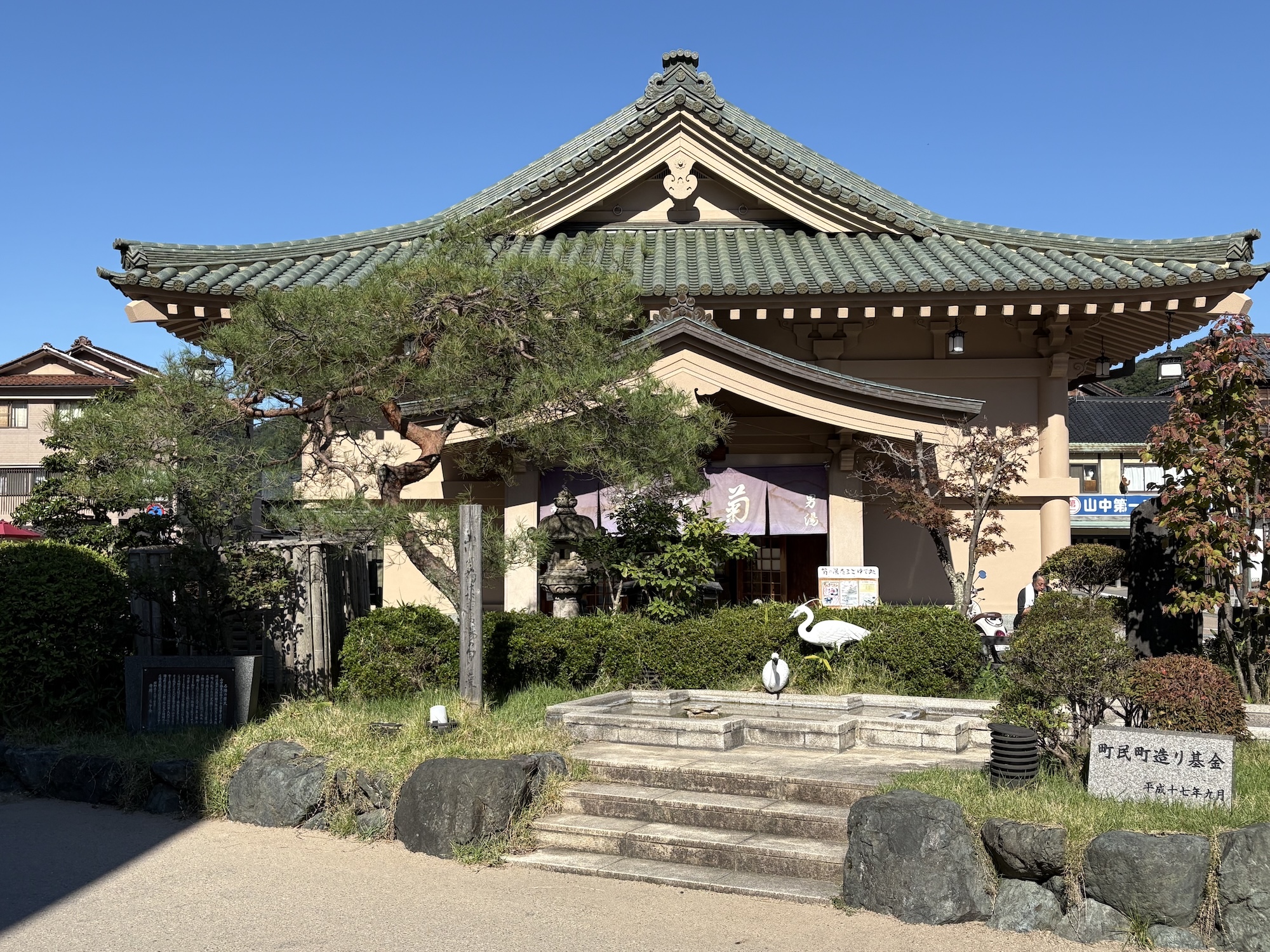
In Hirayu we’d found a ryokan in beautiful wooded grounds that allowed day visitors to use their onsen but this time we’d opted for a public bath. I was, perhaps foolishly, expecting some of the luxury of our Hirayu experience but should’ve known that would not be the case. Yes, the building itself and the surrounding square were well designed and welcoming but the men’s bath itself was all pretty utilitarian and basic. Having finally worked out the right admission ticket from a confusing list that included something involving boiled eggs (what I have no idea), we got naked, which isn’t something that bothers either of us despite being supposedly reserved Brits.
Onsen rituals are clearly laid out and woe betide anyone who breaks them. First we had to scrub ourselves clean from top to toe, second we had to ensure that all soap had been removed from every square inch, nook and cranny before getting into the water. Then we joined a handful of village pensioners in the bath itself, and my goodness it was hot. Graham lasted barely a minute or two before giving up. I went for a few dips, partly in an effort to soothe an aching back I’d been suffering with for weeks, but it wasn’t the most relaxing experience. Still it was something else to chalk off the list.
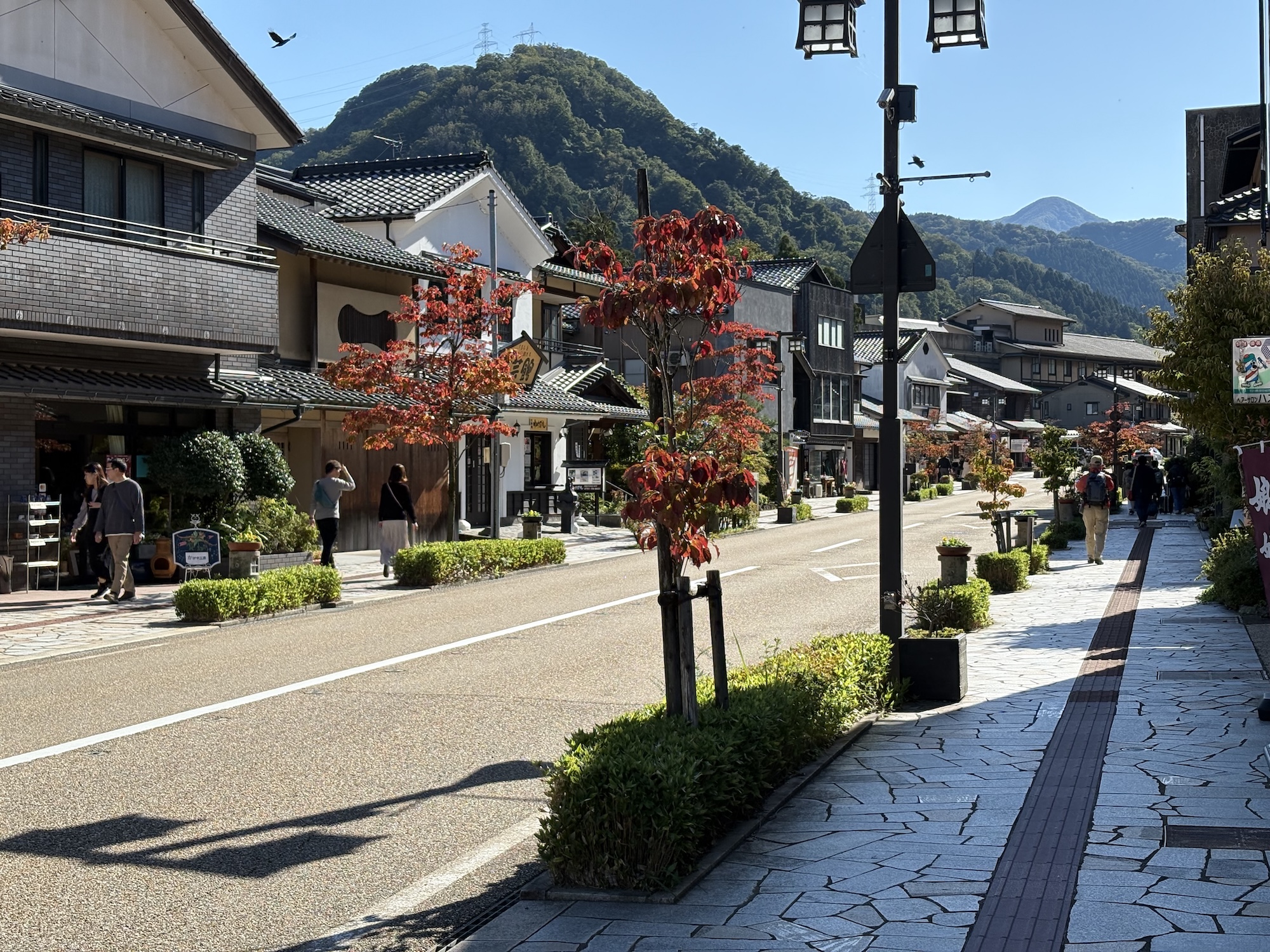
After drying off and cooling down, we took a walk up the attractive main street and found a small cafe for refreshments before taking a walk through another of Yamanaka’s main attractions, the Kakusenkei Gorge. Carved through the verdant wooded hills by the Daishoji River over millennia, the gorge allowed us to bathe in nature after several weeks of being caught up in Japan’s concrete and steel cities. The walk, which is by no means long or strenuous, began at the modern, steel Ayatori Bridge designed by an avant-garde Japanese film director. Standing high above the gorge, the twisting purple structure offered great views of the hills surrounding Yamanaka, the river far below and a small cafe set up on its banks.
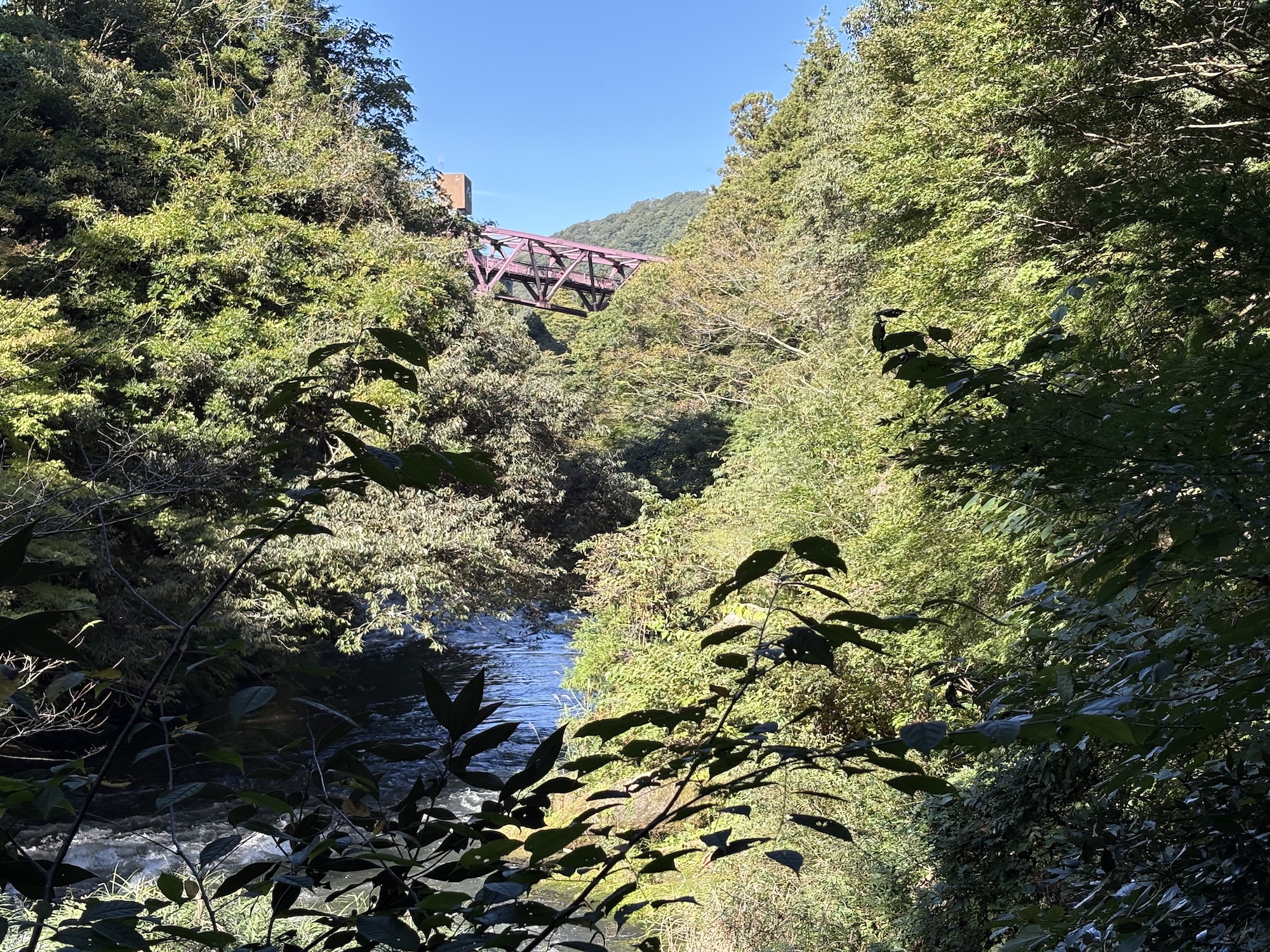
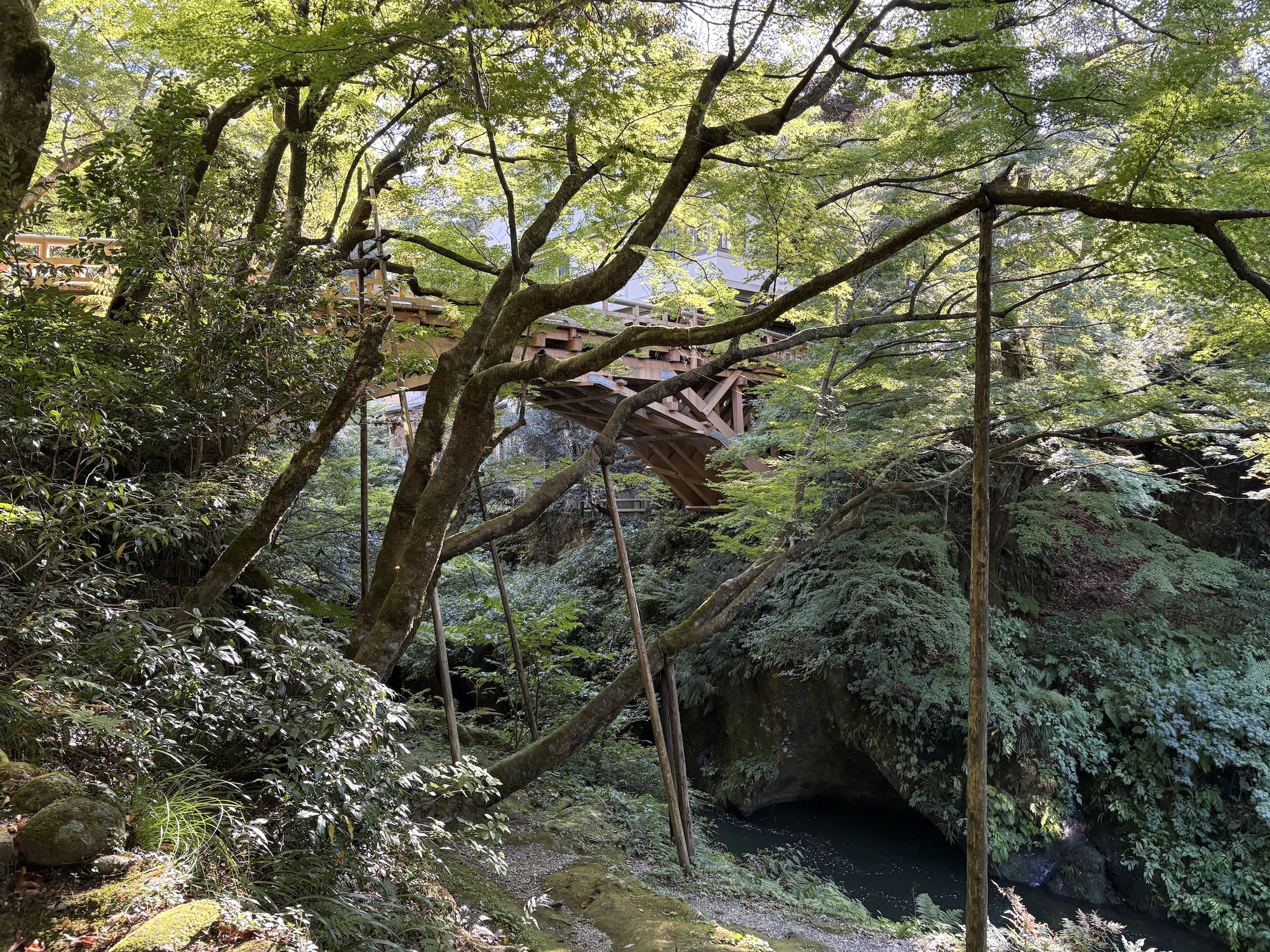
We clambered down steps to the water’s edge and walked on, passing sturdy cedars, maples changing into their autumn dress and giant moss-covered boulders. Streams picked their way down the hillside through the rocks and tree trunks, feeding the river that tumbled beside us, and we passed several shaded seating areas as we walked on. We left the water’s edge at the traditional Korogi Bridge, made out of local cedar, and carried on south along village roads but this end of Yamanaka told a very different story to the centre, clustered around the onsen. This district looked poorer and many properties had been abandoned. It’s true that Japan’s rural areas are suffering from the effects of long-term migration to the cities, where most of the work can be found, and some villages have been abandoned completely. Perhaps Yamanaka is suffering too…
Our goal was to continue onwards to a grove of giant cypress trees but with time ticking away and our route looking increasingly unpromising and confusing, we crossed the river over a weed-infested bridge and footpaths that hadn’t been used in a long time, passed what looked like an abandoned swimming complex and headed back north into the heart of the village.
Just a few hundred yards further on and Yamanaka was back to its prosperous self again – a perfectly manicured main street, free of the usual tangle of power lines, lined with beautiful wooden ryokan and attractive shops selling antiques and hand-made lacquerware, which has been one of the area’s principal crafts for centuries. We went into one shop that had been in the same family for several generations – the owner showed us photos from early in the 20th century – and had stunning examples for sale for thousands of pounds. I opted sensibly for a much-cheaper example, a simple but elegant bowl made from zelkova by the shop owner’s son.
With that our day out was all but over. We travelled back to the train station by bus, which took the most circuitous route imaginable while we chatted to a couple from down under. Whether we’d bother with an onsen again is doubtful. It’s a bit of a palaver for just a few minutes of “pleasure” but at least we can say we’ve tried it, and that’s what matters.