
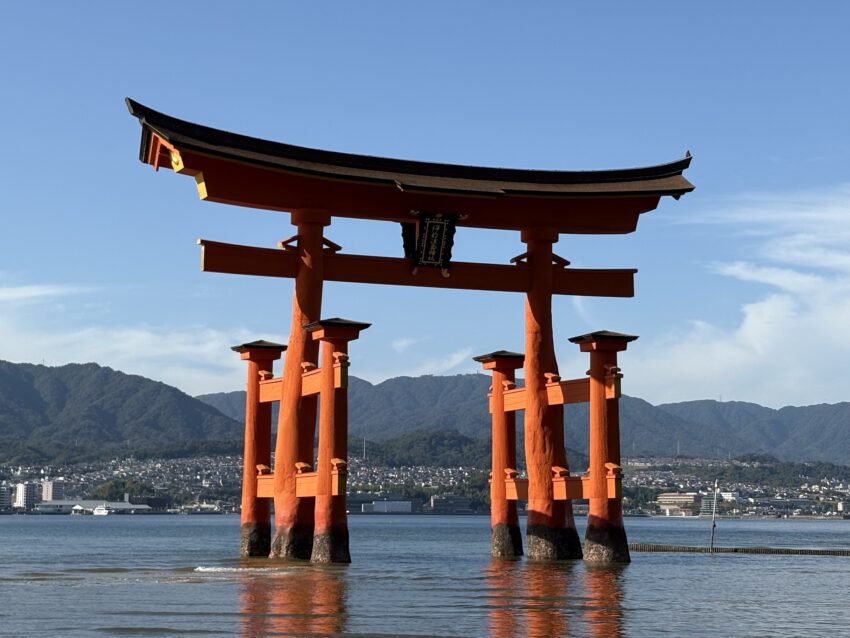
Less than an hour across the bay from Hiroshima lies the island of Itsukushima, better known to tourists as Miyajima. The star attraction is a giant red torii gate at the entrance to the Itsukushima Shrine, both of which appear to float on the sea at high tide.
It’s an easy, 45-minute journey from the city on the fast ferry from the pier at Hiroshima Peace Park, just around the corner from our hotel. It was a still and sunny October morning, the sea was flat and the ride comfortable with great views of the city. Dotted around the bay were ample stretches of oyster beds that supply the city’s restaurants with a regular supply of tasty molluscs, sometimes eaten raw, often fried in breadcrumbs.
Itsukushima lies to the south-east of the city, one of many hilly islands in the Inland Sea, and it’s well and truly on the tourist trail. Ferries in large numbers chugged this way and that from Miyajimaguchi on the mainland, and docked at the main Miyajima terminal alongside our more modest craft. Like so many destinations in Japan these days, the island has become a victim of its own success and its narrow streets and attractions swarm with people. We walked from the terminal to the village, on streets lined with touristy shops, restaurants and semi-tame deer that constantly pester visitors for a snack. School-children scampered around, more interested in souvenir shops than the history and cultural significance of the sights.
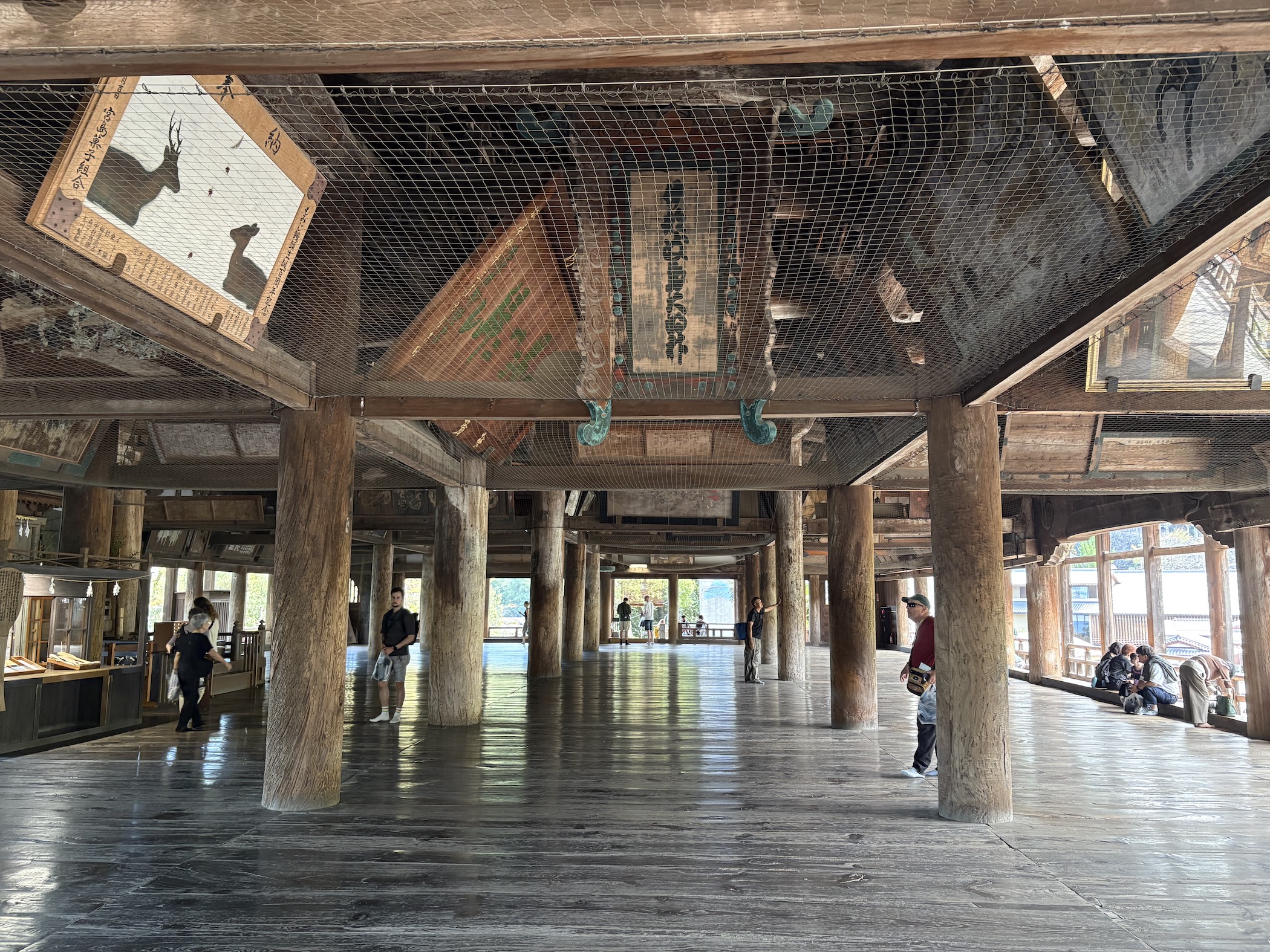
Rather than join the throng at the famous torii gate we detoured up a flight of steps to Senjokaku, or the Hokoku Shrine. A five-storey pagoda that’s part of the site was covered with scaffolding and tarpaulin as part of a restoration programme, but the main 16th century wooden hall was well worth the diversion. It was commissioned by one of the three unifiers of Japan, Toyotomi Hideyoshi, but he died before it was completed and it remained unfinished. Striking and powerful, the bulding has giant wooden pillars supporting the roof but it’s also spacious and light with great views in all directions, from the urban sprawl of Hiroshima, to the bay and the wooded hills of the island’s interior. Painted panels hang from the ceiling.
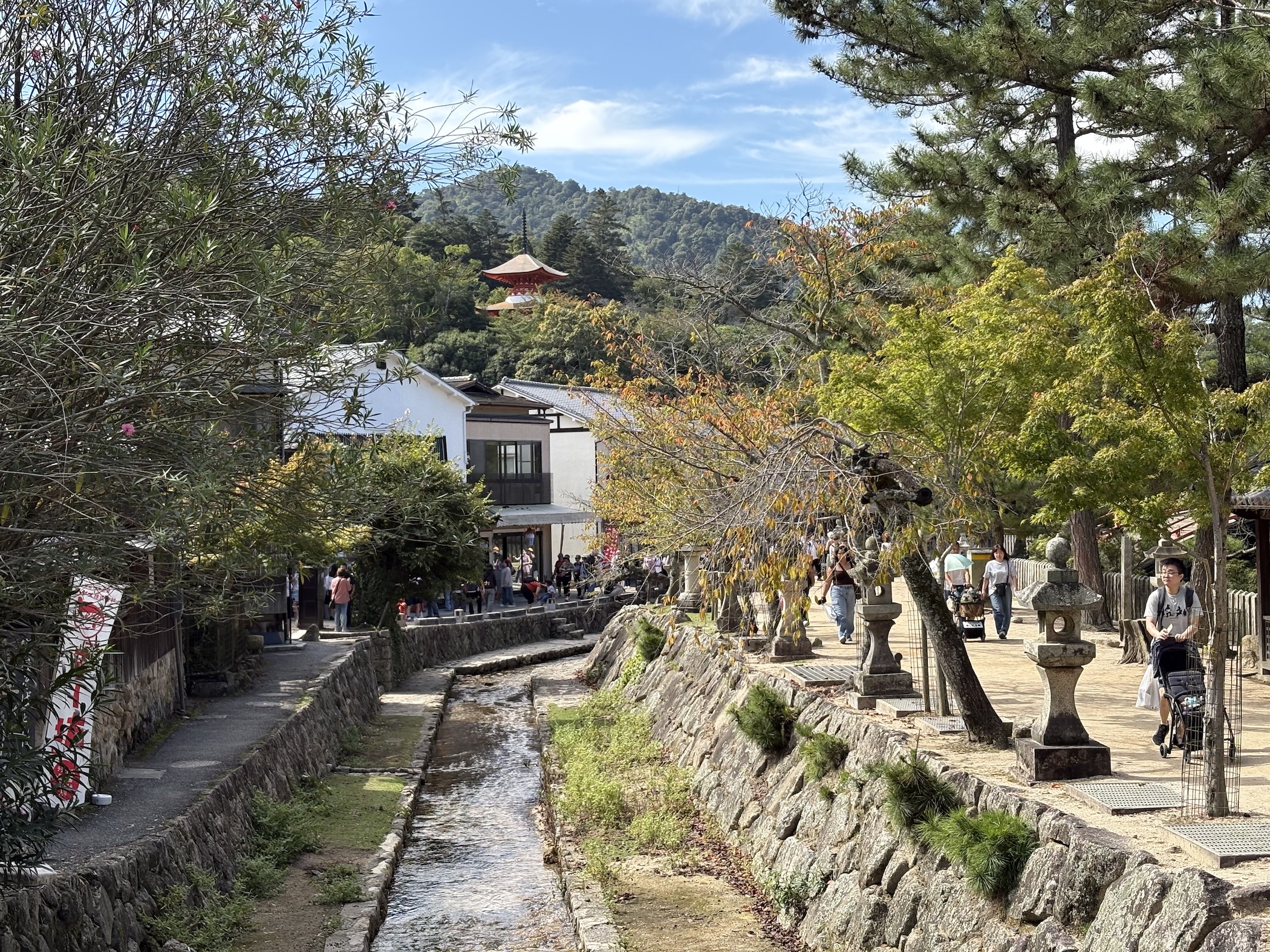
We carried on through the village to its quieter outskirts, crossing streams that flowed down from the hills. We climbed through pleasant woods that offered shade on a warm day, past the modest Tahoto Pagoda and onwards towards the Daisho-in Temple. But we stopped first at a cafe situated on a bluff with great views of the bay, run by an aged couple who probably should’ve retired years ago. The seriously stooping but cheerful wife tried to keep things together, but it was all a bit chaotic in a Mrs Overall way. Whether you got your lunch was more down to luck than anything.
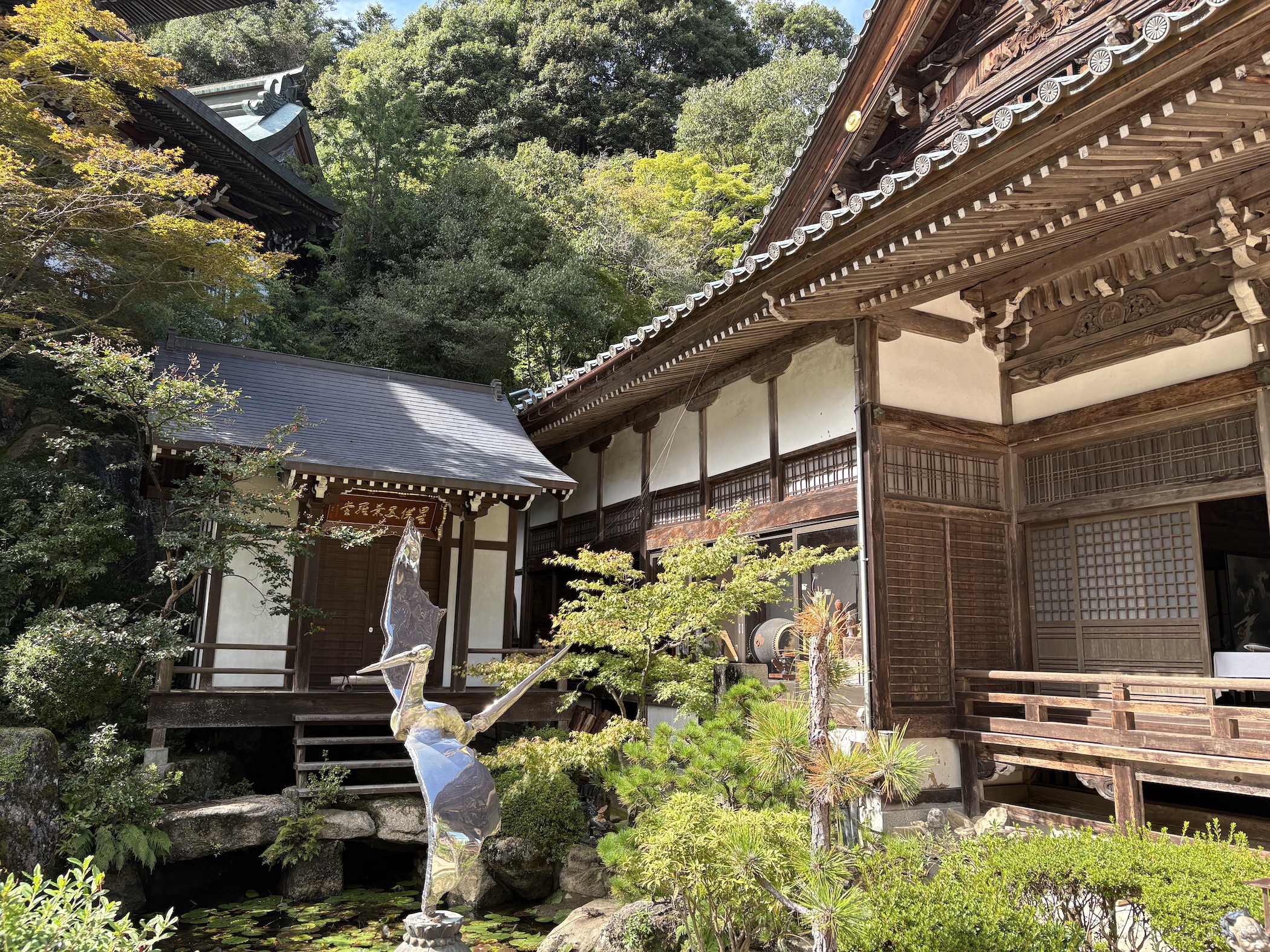
A few steps away lay the absolutely breathtaking Daisho-in Temple, to me the highlight of the trip and a cut far above the reason most visit the island – the Itsukushima Shrine and its torii gate. Nestled amid the woods on the slopes of Mount Misen, it’s a wonderful collection of buildings, gardens, water features, statues and religious objects and is more than 1,000 years old. It’s one of the most important temples of Shingon Buddhism, which is not really surprising considering how spectacular it is.
Among the highlights for me were a cave filled with 88 icons lit by hundreds of lanterns, a ritual staircase with rows of spinning metal wheels inscribed with sutras and a small garden populated by 500 rakan – the various disciples of Buddha – wearing red woollen hats. But to be honest, there wasn’t a corner of the site that was remotely disappointing or awe-inspiring. The extraordinary quality of craftsmanship on display, whether the carving in the wooden halls, the various statues or the modest gardens, was second to none.
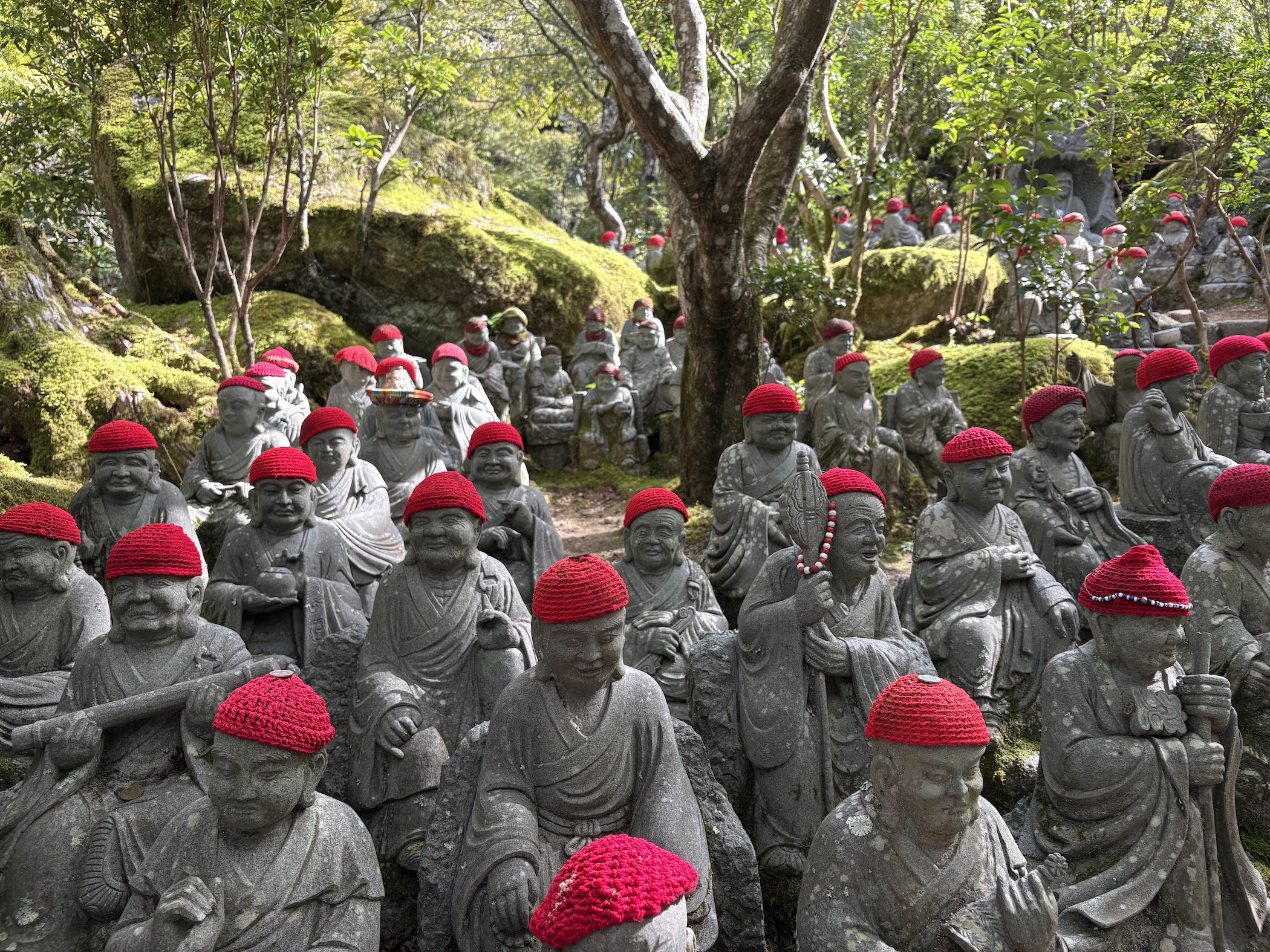
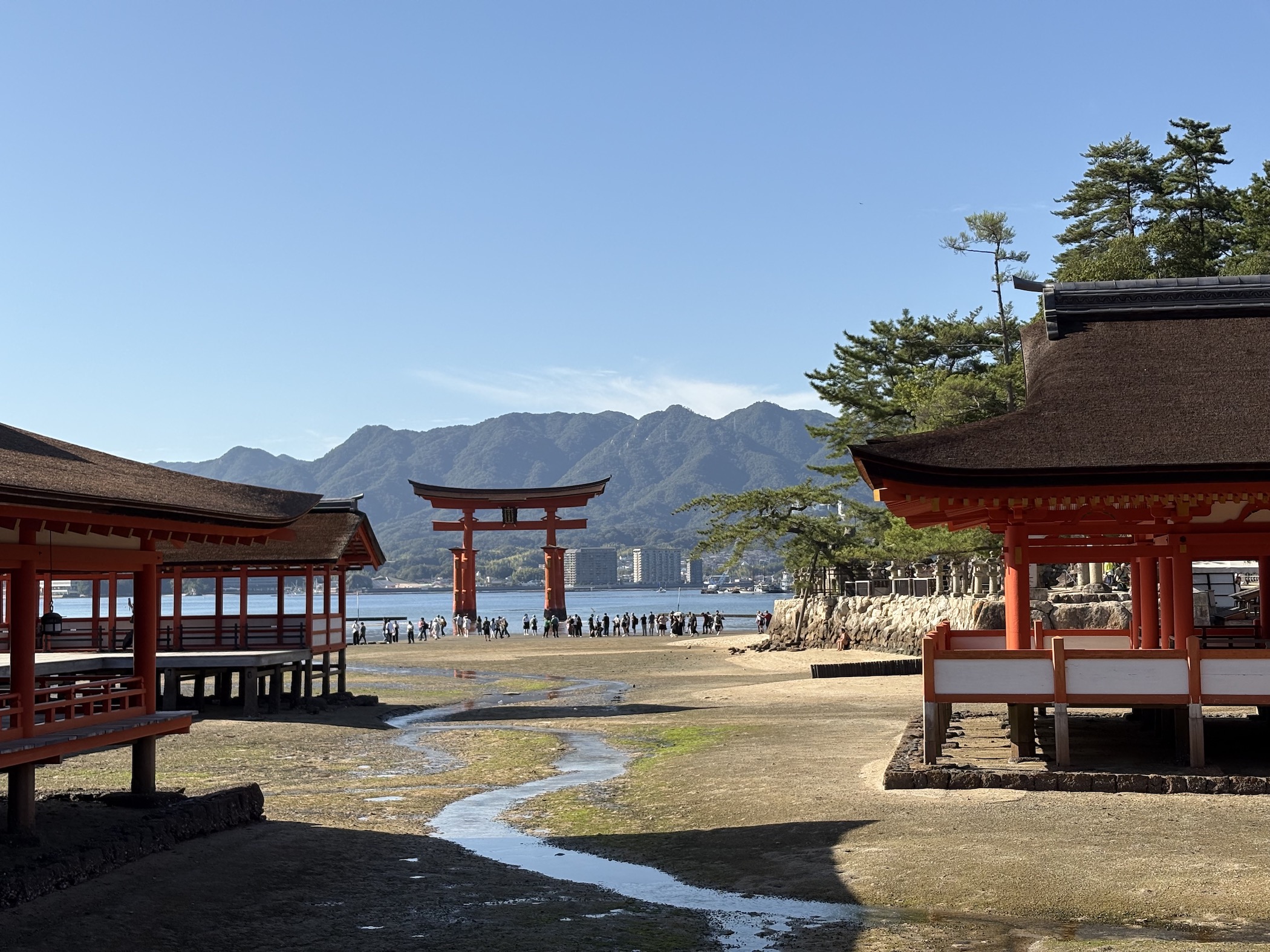
We walked on through the woods to the Momijidani Park, which is full of maples that were not quite ready to take on their autumn hues, and then back to the village to tour the Itsukushima Shrine – a UNESCO World Heritage Site. Along with the torii gate, the shrine sits on stilts over the water in a little bay in front of the village and is painted a vibrant, eye-catching red. But with the tide out, the effect of seeing it surrounded by and apparently floating on water was lost on us. To be honest, there wasn’t much to the shrine itself other than the structure and it was a bit of a disappointment after our other experiences on the island. The crowds, which were much greater than at Daisho-in, didn’t help either. We jumped on to the sand to walk down to the torii gate, which is truly an epic construction, but a few twats with their selfie sticks selfishly hampered the view and further spoiled the illusion.
Our boat home was due so we wandered back through the crowds and commercialism of the main shopping street, stopping for a quick beer and a well-earned bum-on-seat moment. The place was still heaving but nothing could dampen my enthusiasm for an island that had given us Daisho-in.