
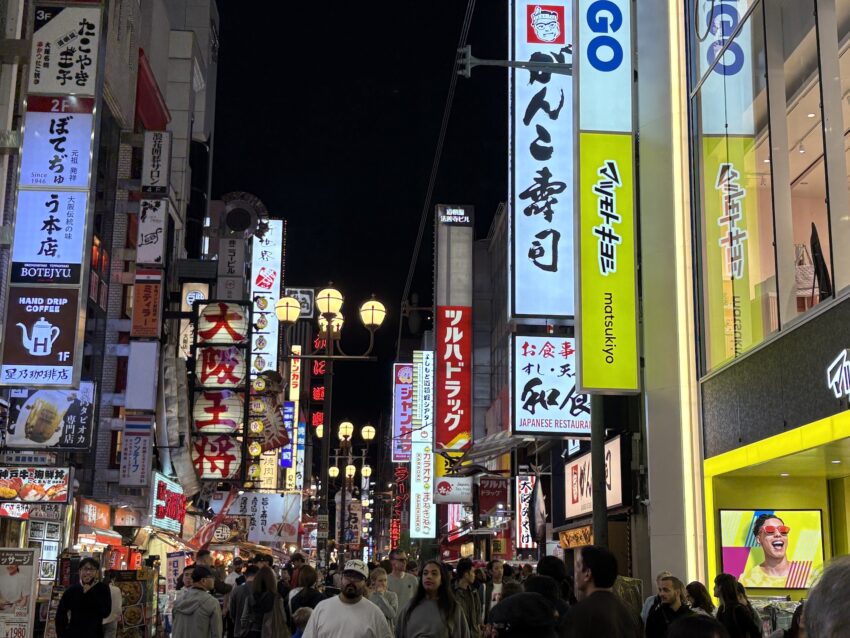
Brash, high-rise, colourful and often chaotic, Osaka is a serious rival to Tokyo in the big city stakes and the third largest in Japan. And like the capital, it has some distinctive neighbourhoods with character all their own.
The district we called home during our stay, Umeda, is a tangled web of soaring office blocks, train stations, giant department stores, malls, flyovers, dual carriageways and underground arcades. We got a great view of it from our room high up in the Hankyu International Hotel, a 1990s development with a now dated vibe, lots of plastic plants and traditional, ruthlessly professional service. We looked across to the red Hep Five ferris wheel, sitting atop yet another shopping mall, but which lay idle during our stay while maintenance work was carried out.
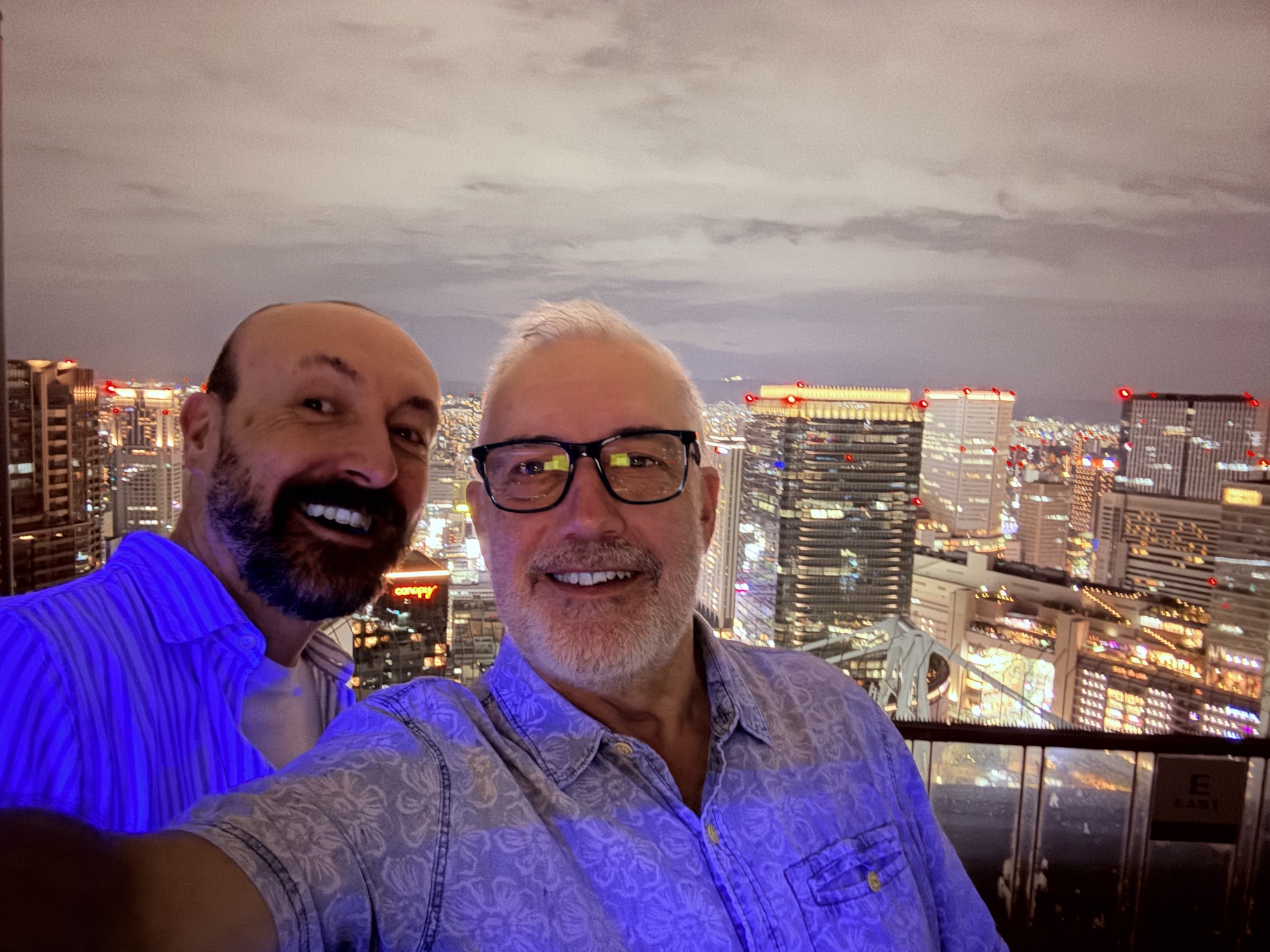
On our first night we walked in the dark and drizzle to the nearby Umeda Sky Building to take advantage of night-time views from the top floor. It’s a pretty horrendous 1990s block composed of two slabby towers linked at the top by an open-air viewing platform that’s a bit like a ring doughnut – open in the middle. After queuing for an age with the masses, we were whisked up in a disconcerting external lift with plenty of windows and then up a set of escalators that hang in the air between the two towers. To avoid feelings of vertigo and nausea, I found that it really was best not to think about it too much or look down too often. And it was one of those moments when one quietly begged the deities not to inflict an earthquake on the city. We emerged into an enclosed space with the inevitable souvenir shop, a bar and a small exhibit featuring other tall towers in history, including those like Umeda with observatories. Up another floor was the circular viewing platform, where the wind blew and the nighttime views across the sparkling city were certainly worth the queues and price of admission. Fortunately, the drizzle mostly stayed away but an autumn chill was in the air.
We descended and wandered off through the modern high-rises and concrete plazas, across multi-lane roads, in search of the Time Out Market, one of several such identikit markets around the world that showcase a wide variety of local foodie outlets. We’d been to a handful on our travels in Europe and the Americas and they’re great for sampling a range of dishes, but it was certainly a frustrating challenge to find amid the warren of glass and steel in Umeda.
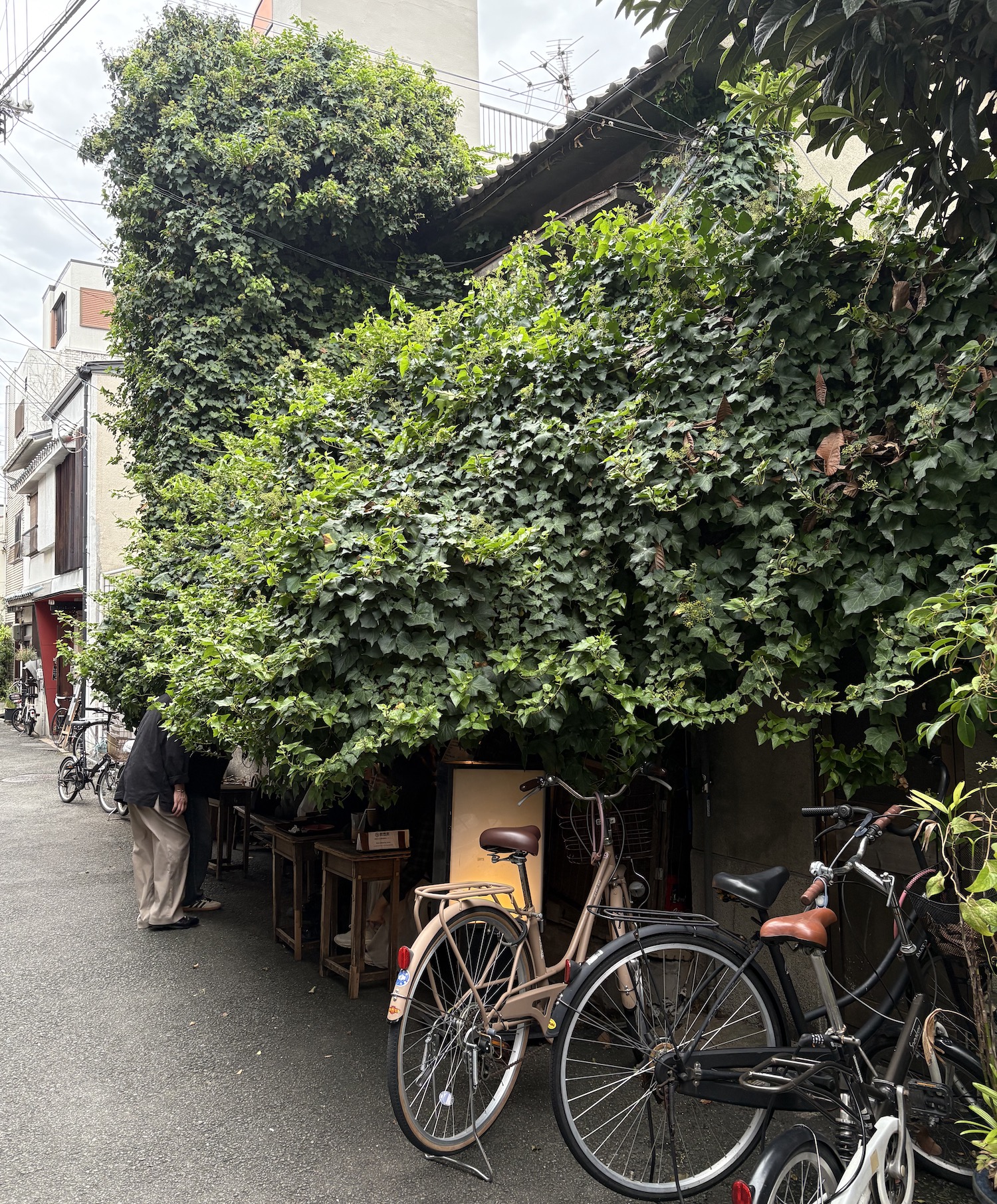
Osaka doesn’t have a wealth of conventional attractions to occupy the tourist for long, unless shopping is the be all and end all (which it isn’t for me). There are, however, interesting neighbourhoods including the characterful, low-rise and hipster Nakazakicho, one of the few areas that escaped obliteration in the Second World War and which hasn’t quite been consumed by rapacious developers. Fancy cafes and boutiques line the narrow lanes, pot plants clutter doorways and a few traditional wooden buildings are a reminder of the architecture that once dominated Japan’s towns and cities. Ivy tumbled in mounds down the front of one cafe, making it nigh-on impossible to enter without getting on all fours, but we found a friendly spot with a rare free table and had a spot of lunch.
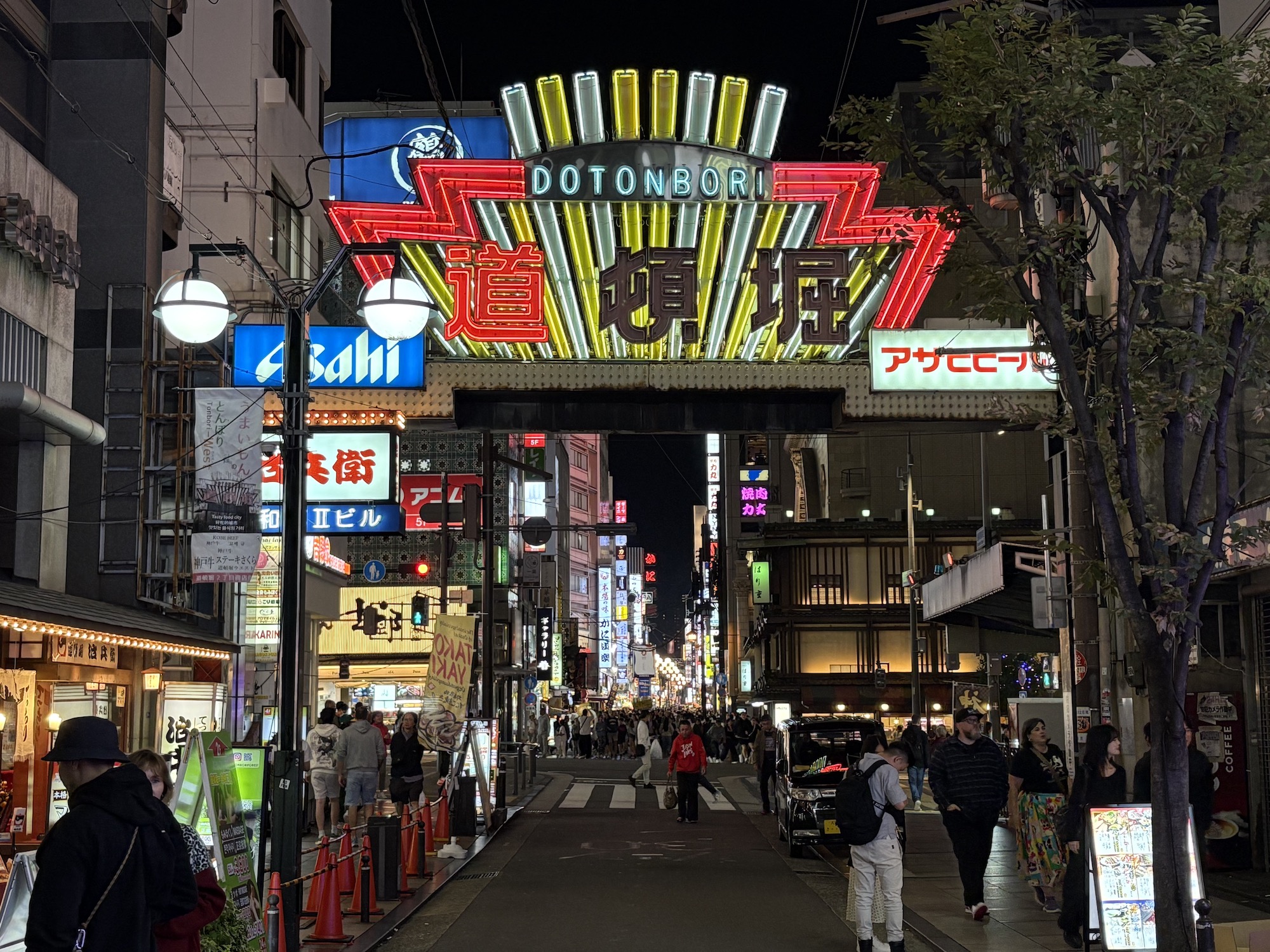
Namba and the Dotonbori district is a very different kettle of fish. Think an explosion of neon, manic signage, giant plastic crabs and octopus dangling above the countless restaurants. It makes for an absolutely captivating and thoroughly cheesey experience and it’s clearly the place to be for the evening, but the main streets were absolutely jam-packed with people when we were there, even during the day, making it next to impossible to enjoy a relaxing meander. The narrow, atmospheric side streets weren’t quite so hectic, and a lone shrine provided a punctuation mark of calmness, but the sheer number of restaurants ended up being overwhelming and it took us a while for me to calm down and find a beef place – one of those where you grill your own. And it was very good too, locked away in our own cubicle.
More by luck than judgement we then stumbled upon a tiny basement bar called Fanny Mae’s, a bit of an Osaka institution that’s run by a genial Rolling Stones fan of a certain age who smoked a lot (weird in this day and age to leave a bar smelling of cigarettes). Clearly popular, we were lucky to get one of the few stools, got chatting to an American couple and listened to a soundtrack of 70s rock. I think I was quite drunk in the end and certainly woke with the headache to prove it.
By day Dottonbori is marginally less busy. We took a walk down the famous canal at its heart, stopped for a beer and nibbles and marvelled at how awful and wonderful it all was. Much of the architecture, in the post-war Japanese fashion, is average at best but in Dottonbori it’s often hidden by the elaborate, over-the-top signage and that at least gives it a degree of character.
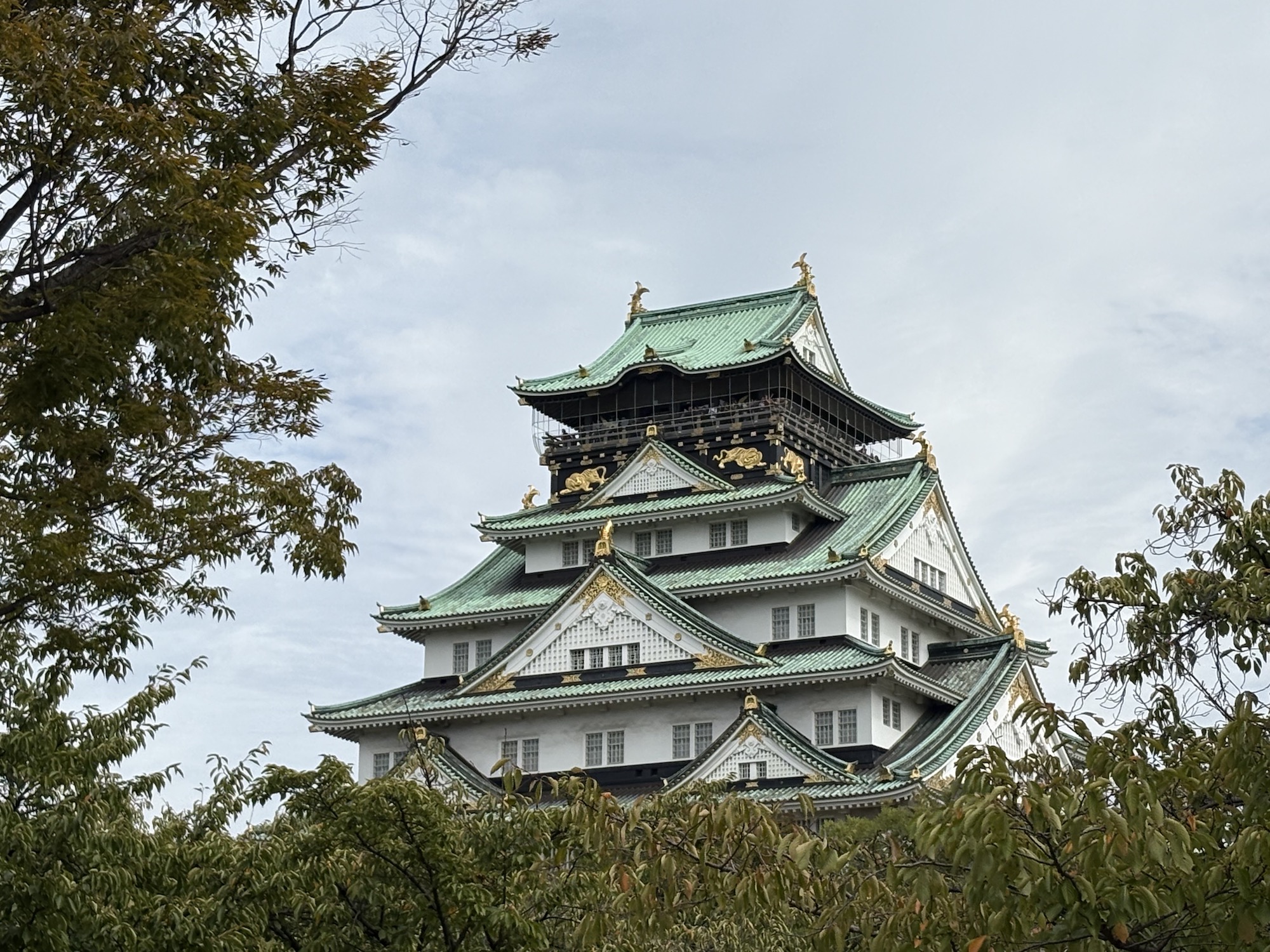
One of the few traditional Osaka attractions is the castle, which is surprisingly the most-visited attraction in Japan so I was expecting the crowds. Enclosed by a generous moat and colossal defensive walls, the grounds are pleasant enough and marked by the usual collection of expert topiary, autumnal acers, elegant pines and vast gate-houses made out of giant timbers and huge slabs of rock. We took a brief tour around the Nishinomaru Garden, which is more a park than a garden, taking in a few restored defensive towers and a particularly good view across the moat to the castle keep. Several classes of schoolchildren were enjoying a picnic on the expansive lawns during our visit. The keep itself is a truly majestic structure in white, gold and green, raised high above the neighbouring grounds on a platform. The exterior is decorated with golden lions and mythical sea creatures and altogether it’s almost as impressive as Himeji Castle, which we visited during our last stay in Japan.
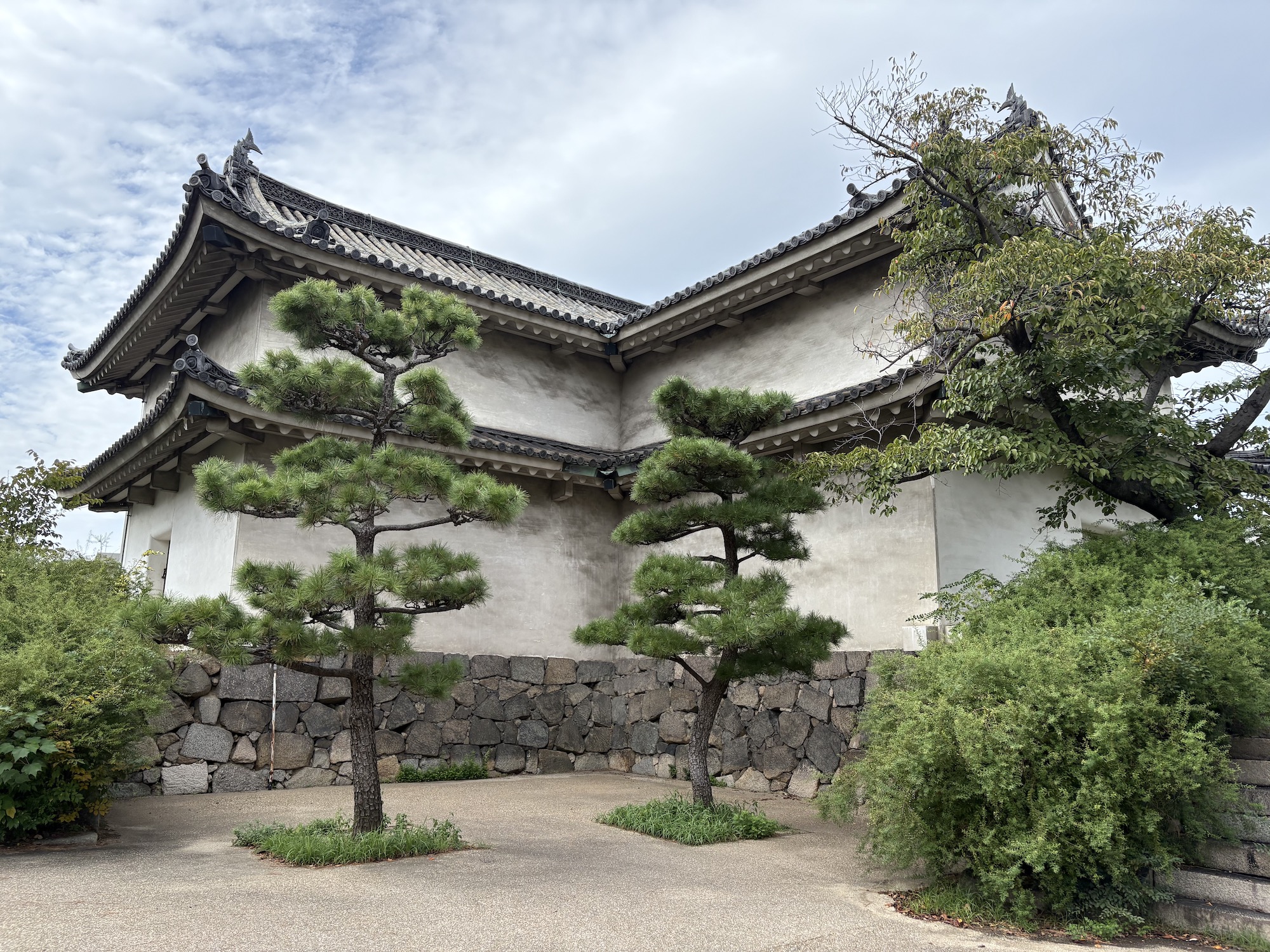
There’s been a castle on the Osaka site for centuries but the current one dates from 1931, miraculously having survived bombing during the war. The interior is plain and given over to an exhibition on the history of the area, including a fascinating retelling of the capture of the castle by the Tokugawa shogunate in the early 17th century – a gruesome battle that was soon followed by the castle’s destruction. Another was built in its place a few years later but subsequent centuries told a tale of civil strife, glory, lightning strikes, fires, rebuilding, yet more destruction and even more rebuilding. The museum was busy but worth touring and once done we climbed the last few steps to the viewing platform at the top.
We finished our Osaka trip on a bit of low, Graham succumbing to the sort of illnesses that usually strike me on holiday, but the city had made for an interesting diversion. He loved it but I wasn’t quite so enamoured. Perhaps it was just too big, too manic, too complicated, too high-rise and concrete for me. Leaving it behind, we caught the train to a very different city – Kanazawa.