
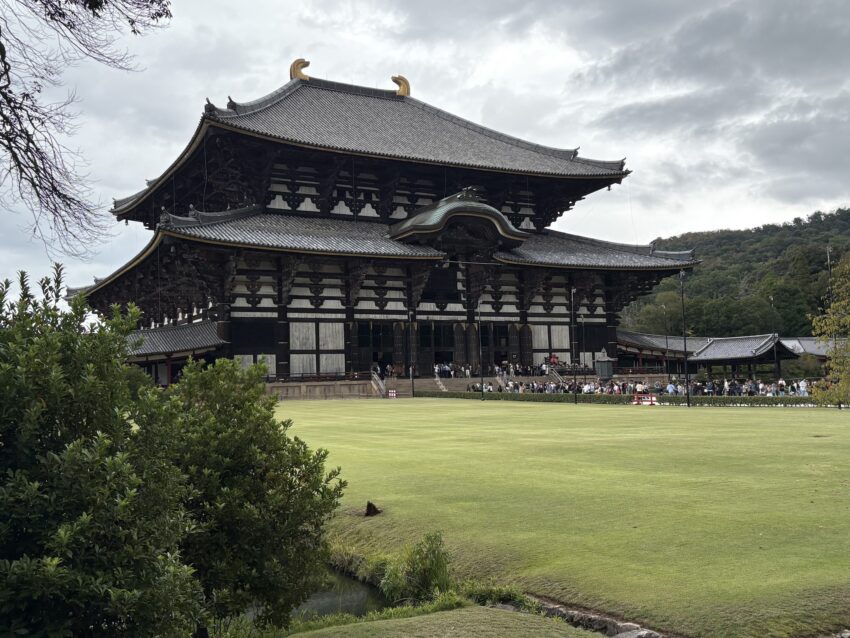
Nara has many claims to fame. It was Japan’s first permanent capital, has one of the largest wooden buildings in the world, boasts a world-class collection of temples and shrines, and is home to large numbers of semi-tame deer.
It’s an easy day trip from Osaka by train and a popular stop on the tourist trail, for some a more modest and manageable version of Kyoto and perhaps with (slightly) fewer visitors. It was busy, busy, busy when we were there, but a welcome break from the high-rise, big city vibe of Osaka, where we’d based ourselves for three nights. Osaka’s forgettable suburbs sprawl uncontrollably this way and that, just like Tokyo’s, so there are precious few paddy fields and stretches of open countryside that separate it from Nara just 45 minutes away. But the cities are worlds apart in look and feel.
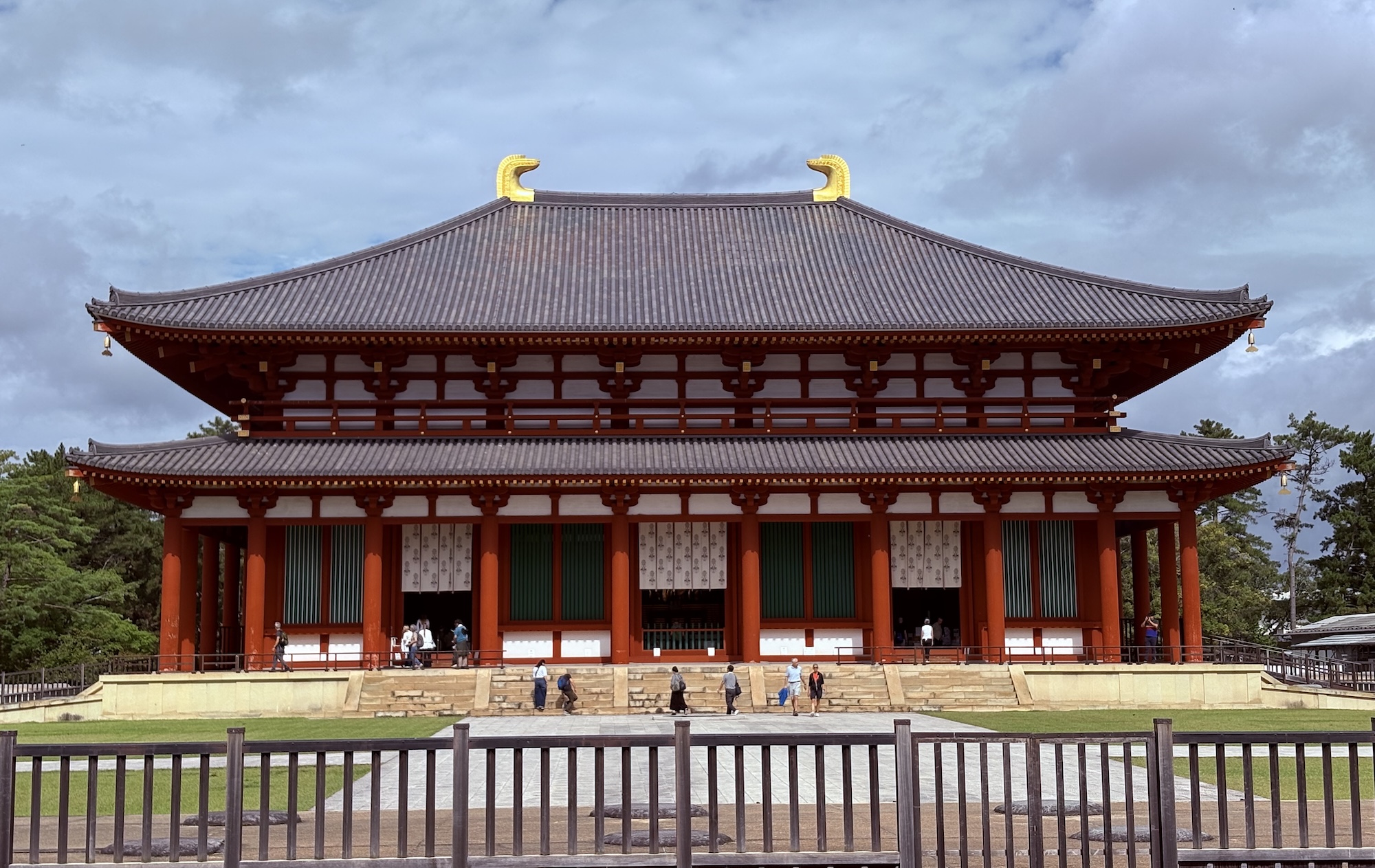
The JR station is just a short walk from the main sites, which mostly lie to the east of the city centre in Nara Park. Pleasant Sanjo Dori Street has some decent shops and restaurants, alongside the usual souvenir stores, and took us straight to the first of the leading sites – Kofukuji Temple. Once the family temple of the all-powerful Fujiwara family and established early in the 8th century when Nara was the nation’s capital, it isn’t the city’s major draw but makes for a pleasant diversion. A famous five-storied pagoda was wrapped in construction materials as part of a multi-year restoration project when we were there (a familiar story during our Japan tour) and the grounds were too sparse for my liking. The grand Central Golden Hall is a modern reconstruction, only opened in 2018, but the much older and far more impressive Eastern Golden Hall is home to a large statue of the Yakushi Buddha. Nearby we toured a museum housing a large number of the temple’s art treasures including some ancient statues.
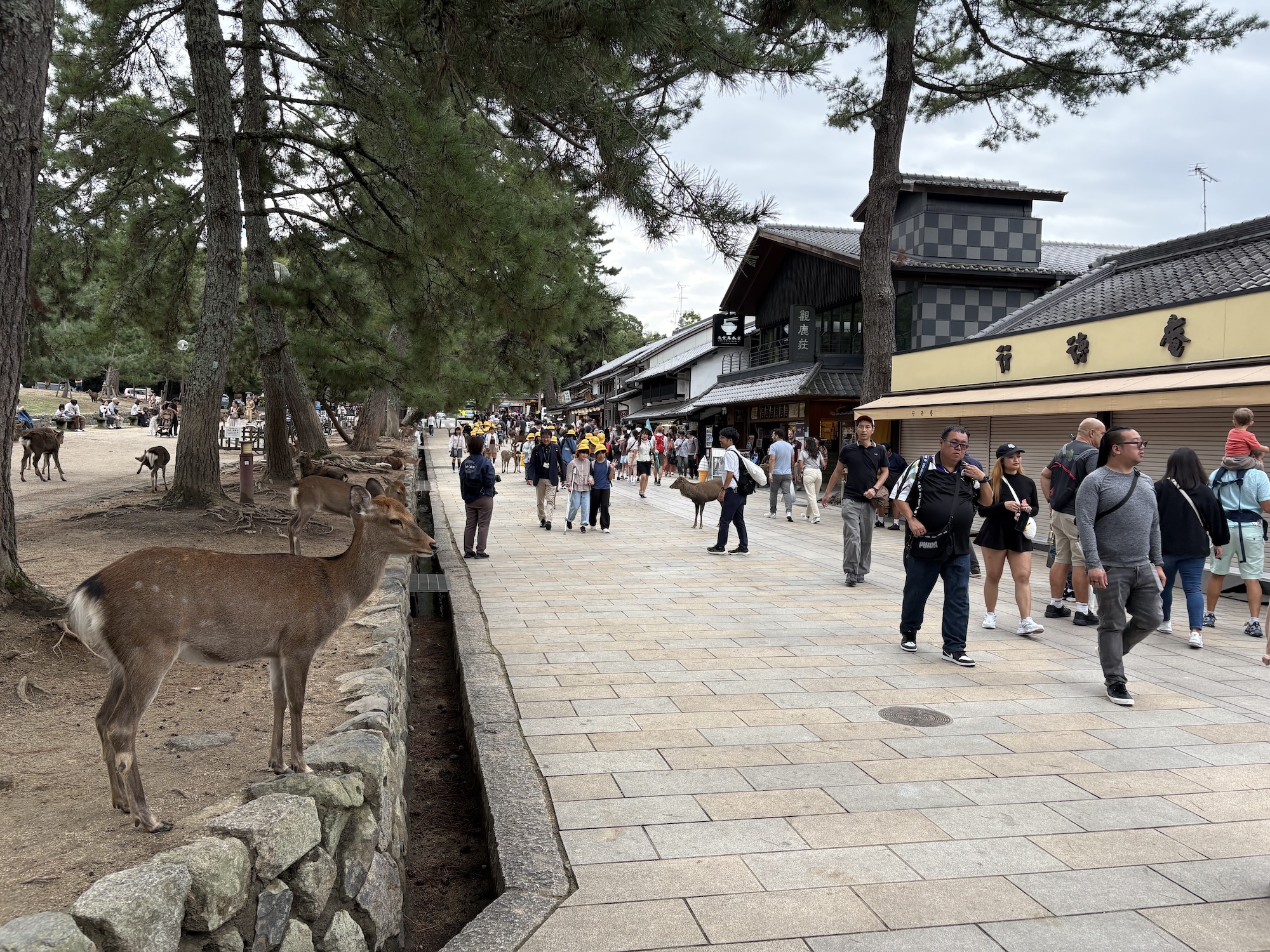
Walking further into the park, the evidence of Nara’s popularity became painfully clear. There were so many people, including many school groups, and most people seemed more interested in feeding the deer than anything else – and getting the perfect Instagram picture to go with it. It was all a bit tedious and a tad depressing. Quite how Nara can support so many deer (let alone tourists) is beyond me but they’re considered sacred by locals, as opposed to a pain in the arse by the rest of us. The city employs plenty of people who follow the deer round sweeping up their shit so tourists don’t get it all over their shoes. Without them, we’d have been knee-deep in the stuff.
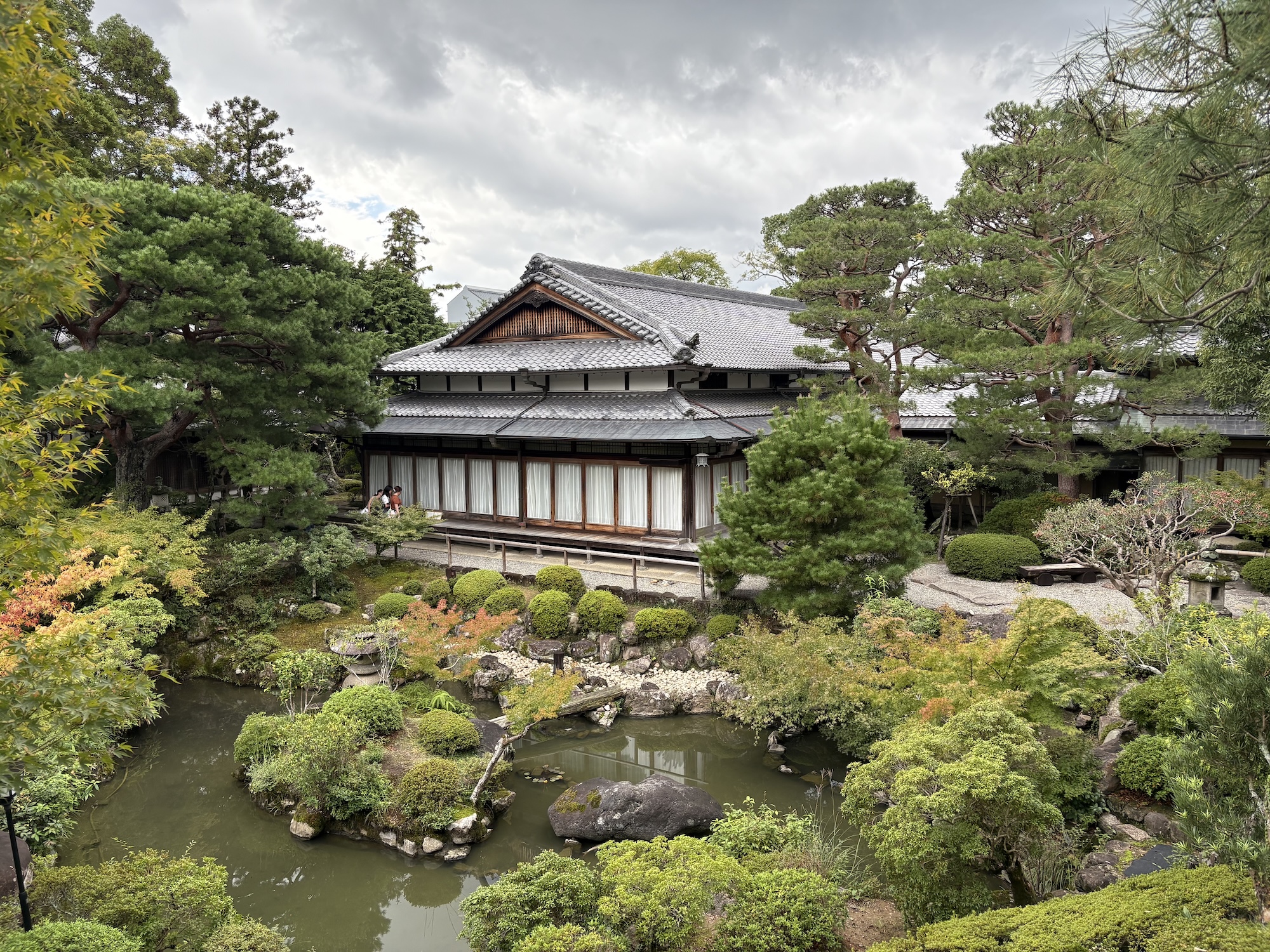
Fortunately we found some respite from the deer and the crowds in the delightful Yoshikien Garden, which sits beside the gently flowing Yoshikigawa River and its wooded banks. The garden was built on the site of a house that belonged to a priest from the Kofukuji Temple and features three distinct pond, moss and tea ceremony gardens, all with exquisite planting and attention to detail. With autumn setting in, some of the acers were already dressed in yellows, golds and reds and looked absolutely stunning around a perfectly positioned tea house. If only we had the skill and the money to create something so magical back home… Yoshikien is a must-visit sight in Nara, a fine example of Japanese gardening traditions, but it was mercifully quiet during our visit. Perhaps peope were too busy running from one temple to another to spare it a thought?
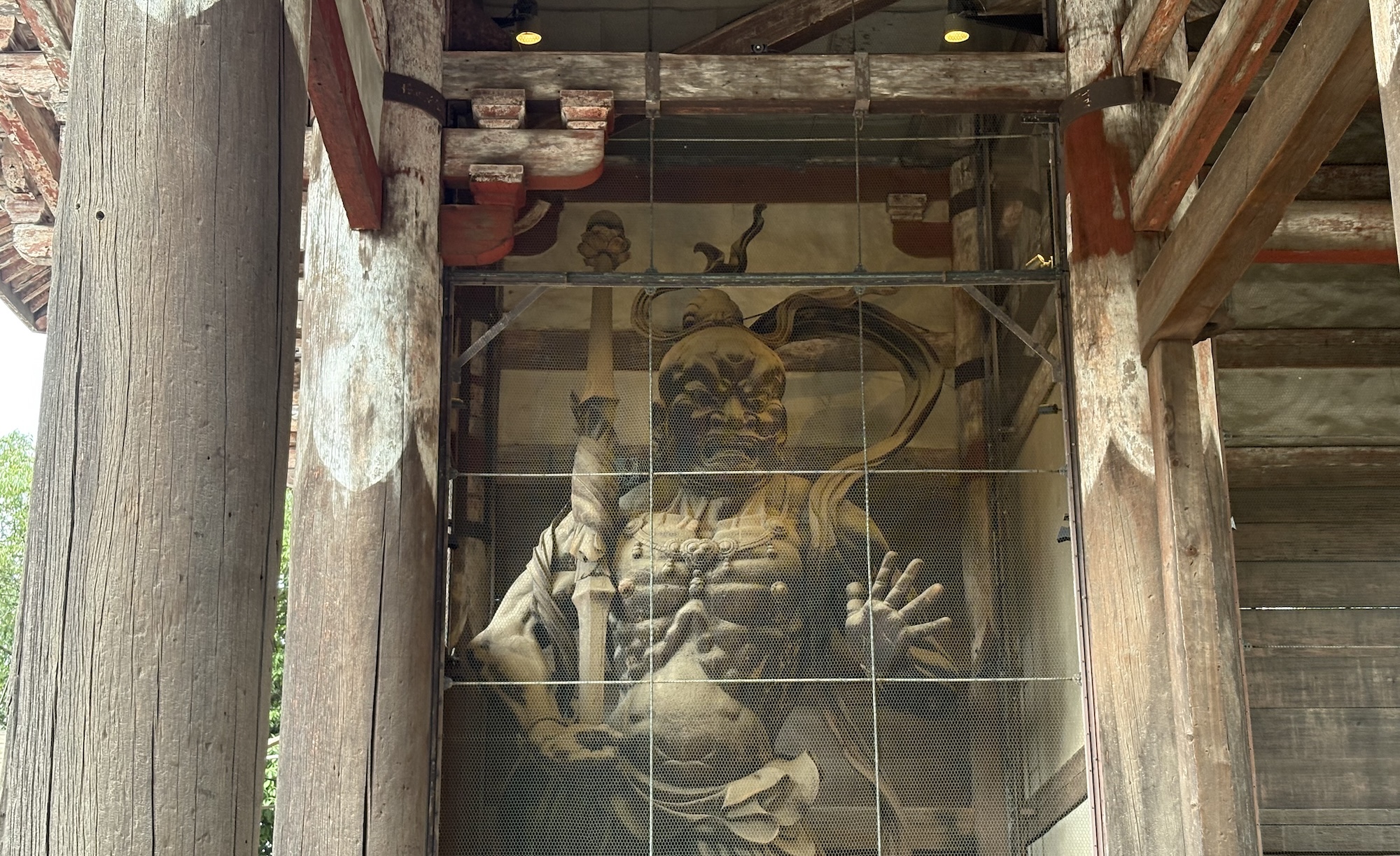
After a brief stop for refreshments, we walked on to the undoubted highlight of the UNESCO World Heritage collection in Nara – the Todaiji Temple and its vast Big Buddha Hall. Everything about the 8th century complex is on an epic scale, a reflection of the fact it was the head temple of Japan’s provincial Buddhist temples and became so powerful an influence on government affairs that the capital was moved away from Nara in 784 in order to diminish its importance. Dodging the ever-present deer, we approached it via the wooden Nandaimon Gate, which on its own is larger and more spectacular a structure than some of the other temples and shrines we’d visited during our Japan holiday. Guarding the entrance, and looking down at us menacingly, were two fierce Guardian Kings.
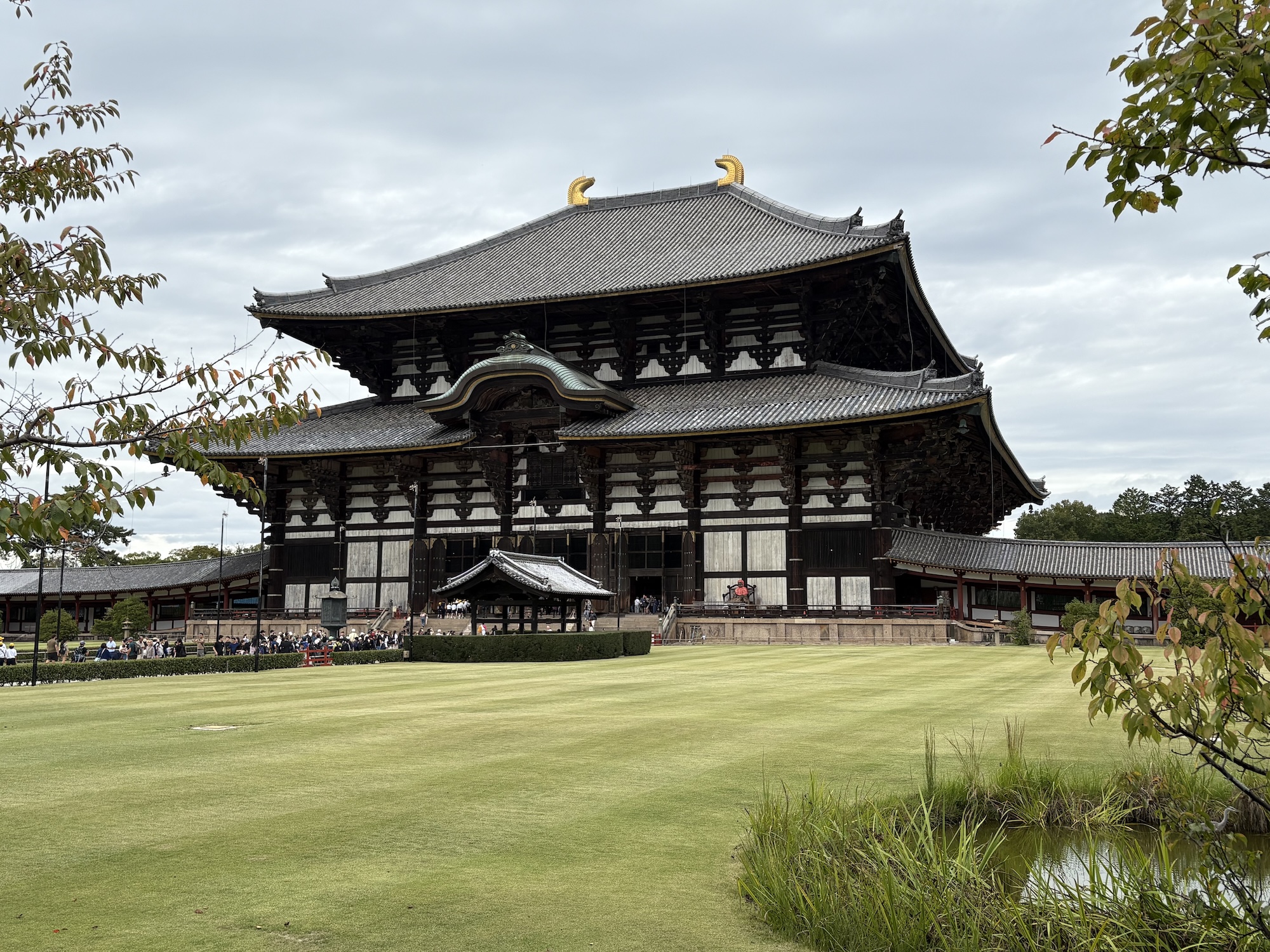
But the gate is nothing compared to the Big Buddha Hall, which stands majestically framed by lawns and streams. One of the largest wooden buildings in the world, the crowds gathered in front and queueing up to go inside looked like mere ants in front of it. What’s even more astonishing is that the original building, from 752, was a third larger than the late 17th century reconstruction that stands today. A first glimpse of it is one of those moments in travel that genuinely leaves one gasping in awe. We went inside to see the 15-metre bronze Buddha, one of the largest in Japan, and to take in the sheer muscle of the structure itself. The hall also has models of other temples and more statues but to me it was the building that was the star of the show.
There was really no point going on to see any of the other temples in the park for nothing could reach the heights of Todaiji, so we walked back to town through the crowds, the deer, the deer shit and the people sweeping up the shit. We stopped for beer and tacos at a roadside cafe and then wandered down a busy covered shopping street before reaching the Naramachi district, where Nara’s merchants once lived and worked in traditional wooden properties. Atmospheric and largely free of the detritus associated with modern tourism, it made for a quiet contrast to the hustle and bustle just a few streets away and a pleasant way to end our visit.