
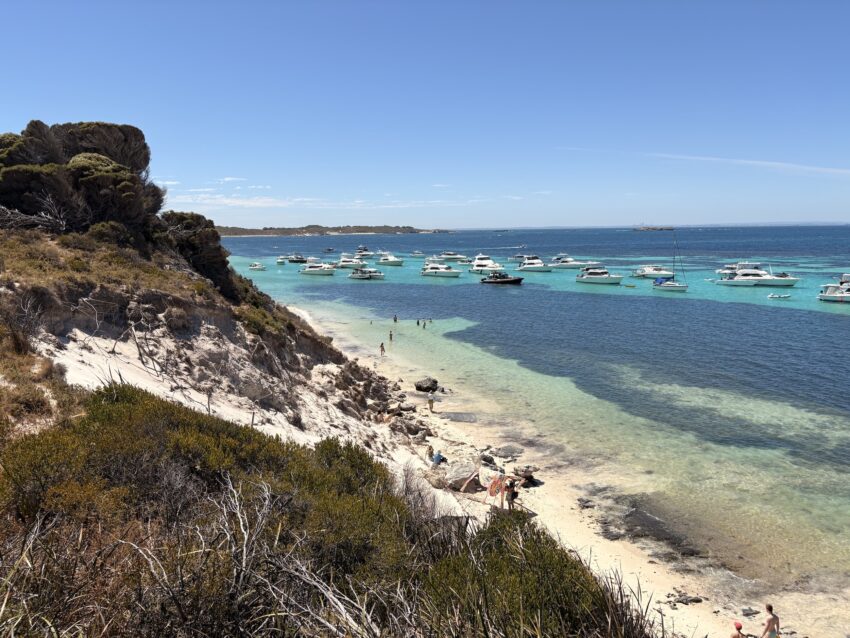
When it’s hotto, go to Rotto. It’s the slogan that’s hard to escape in many of Perth’s popular tourist spots – an invitation to escape the heat of the city for the cooler air of Rottnest Island, 11 miles offshore. With temperatures around 40c while we were staying in the capital of Western Australia, we needed no persuasion.
Rottnest, or Wadjempup, is one of the top attractions in this part of Australia, famous for its beaches, sand dunes and quokkas – small marsupials that can only be found on the island and in a few other parts in the country’s extreme south-west.
We took the morning premium boat service from the Barrack Street Jetty on Elizabeth Quay, complete with free food and drink. The catamaran took us slowly down the Swan River on a beautifully sunny day, past swanky homes and marinas, parks dominated by large gums and the industrial might of the city port, before emerging on to the Indian Ocean. A ninety minute journey later we were docking at our destination.
Rottnest is a low-lying island, just 19 square kilometres, but with a busy little harbour and a cluster of buildings in the main settlement at Thomson Bay. We collected our bikes from the jetty and headed off on a cycle around the island.
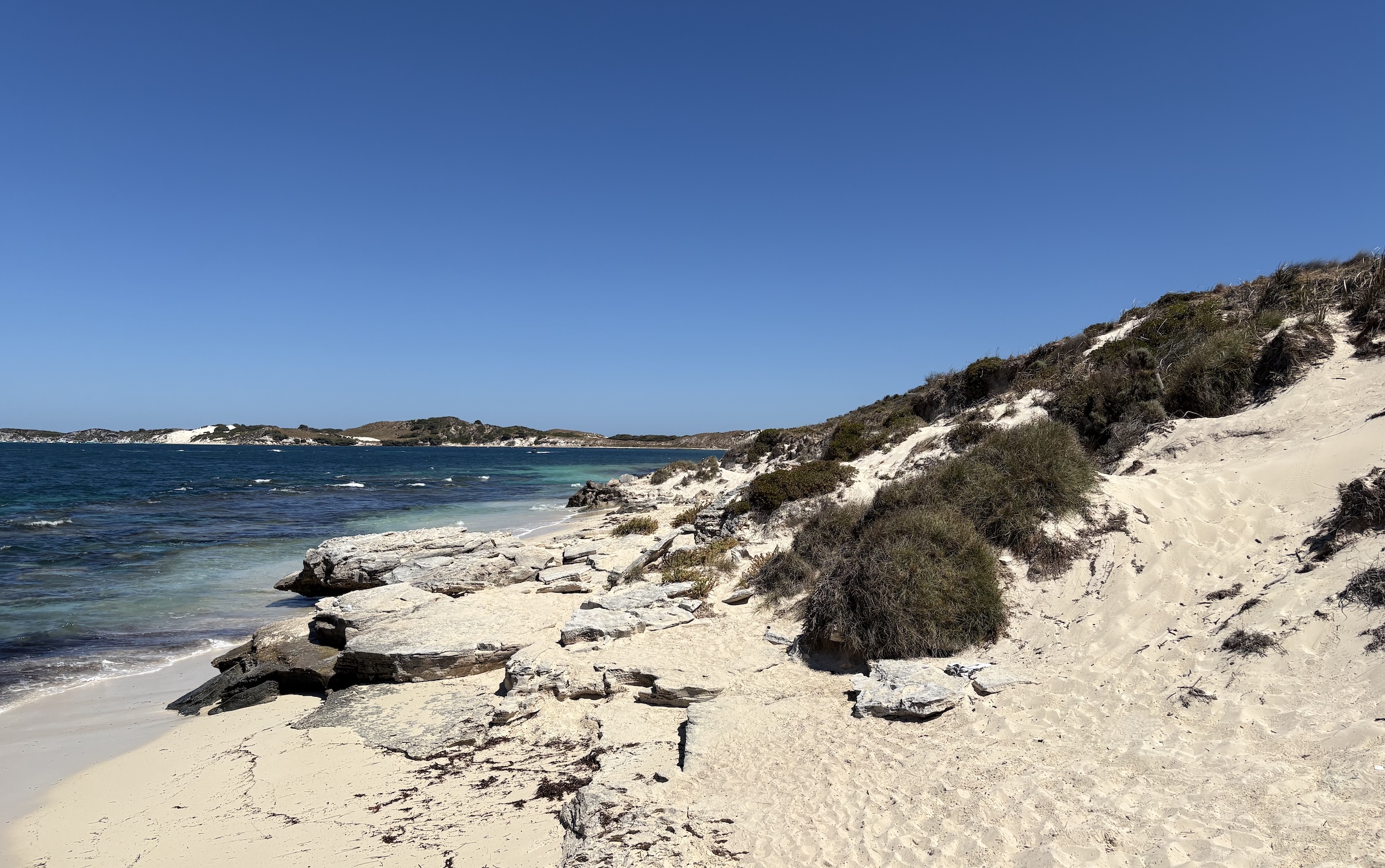
It’s a beautiful and striking place, an island of scrub that somehow grows on the thin soils and fine white sands. Some trees, occasionally bent into curious shapes by the wind and home to giant spiders’ webs, have colonised a efw areas. The dazzling sands lie on a bed of limestone that breaks out at the coast in fascinating rock formations, pitted and eroded.
We stopped at various points en route, learning more about the flora, fauna and the island’s history. And it’s quite a dark one. Wadjemup was once joined to the mainland, regularly visited by aboriginal peoples, but when sea levels rose it was left cut off. The Dutch were the first Europeans to land there and gave the island its name. The aborigines returned in grim circumstances thousands of years later in the 19th century, when the island became a harsh prison and forced labour camp. It survived into the early 20th century. The island was also used as an internment camp during both world wars and as a military base. This depressing history is recorded in the modest island museum but there were hints of that past scattered around the island.
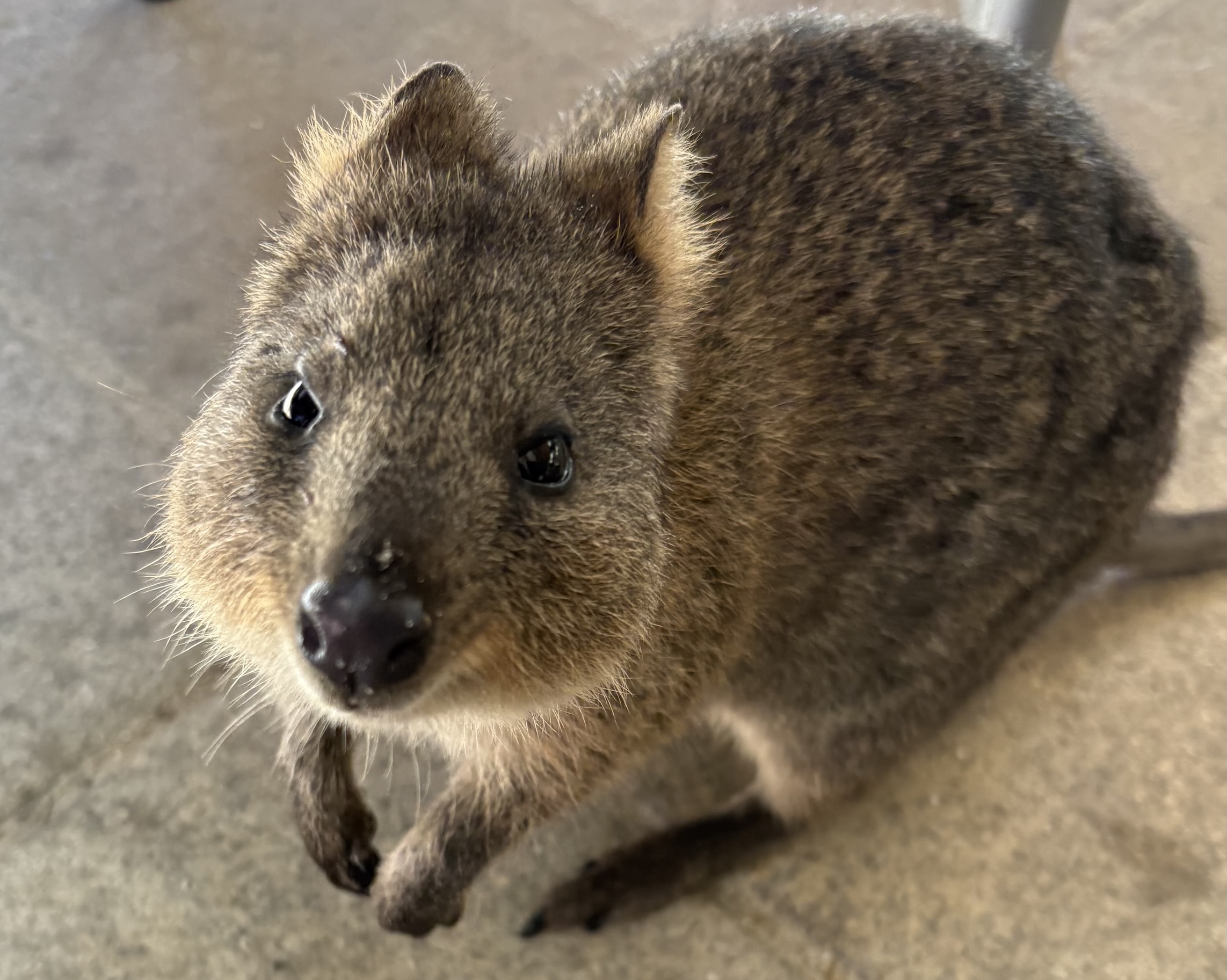
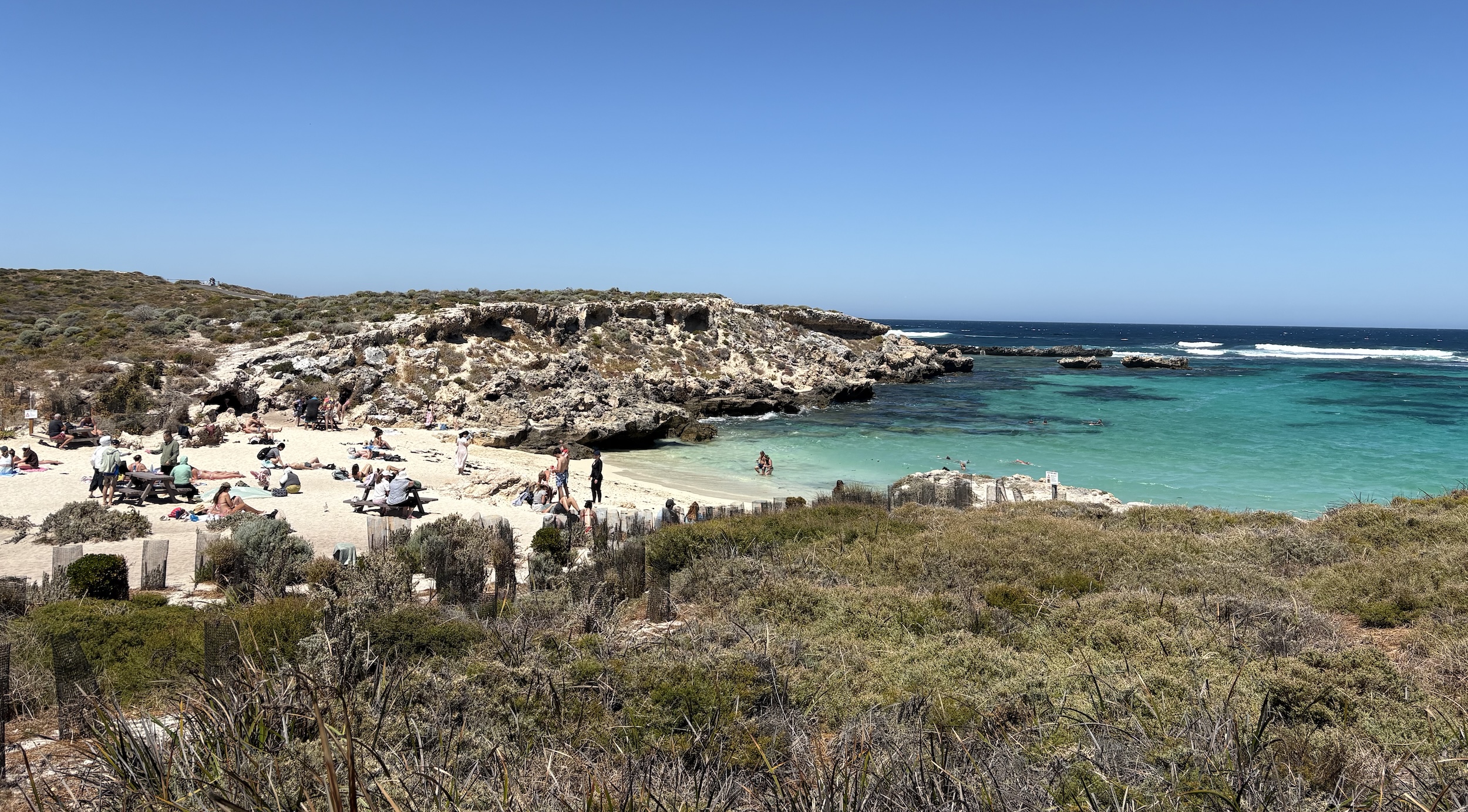
Most tourists are drawn to Rottnest by the landscape, the sandy beaches and the turquoise seas. It’s all very photogenic and the waters crystal clear – we even went for a paddle at popular Little Salmon Bay. Later we skirted round the Wadjemup lighthouse, and past the various salty lakes that make up much of the interior. We dropped down to Geordie Bay, lined by a small number of holiday homes, and stopped for a spot of lunch and a reviving beer, before completing our circuit back at Thomson Bay. Here, quokkas nosed around for something to eat while tourists took endless photos. Clearly, for some, the animals are the main draw.
We had a wander around some of the village’s historic buildings, stopped for more refreshments then caught the boat back on a choppy sea.
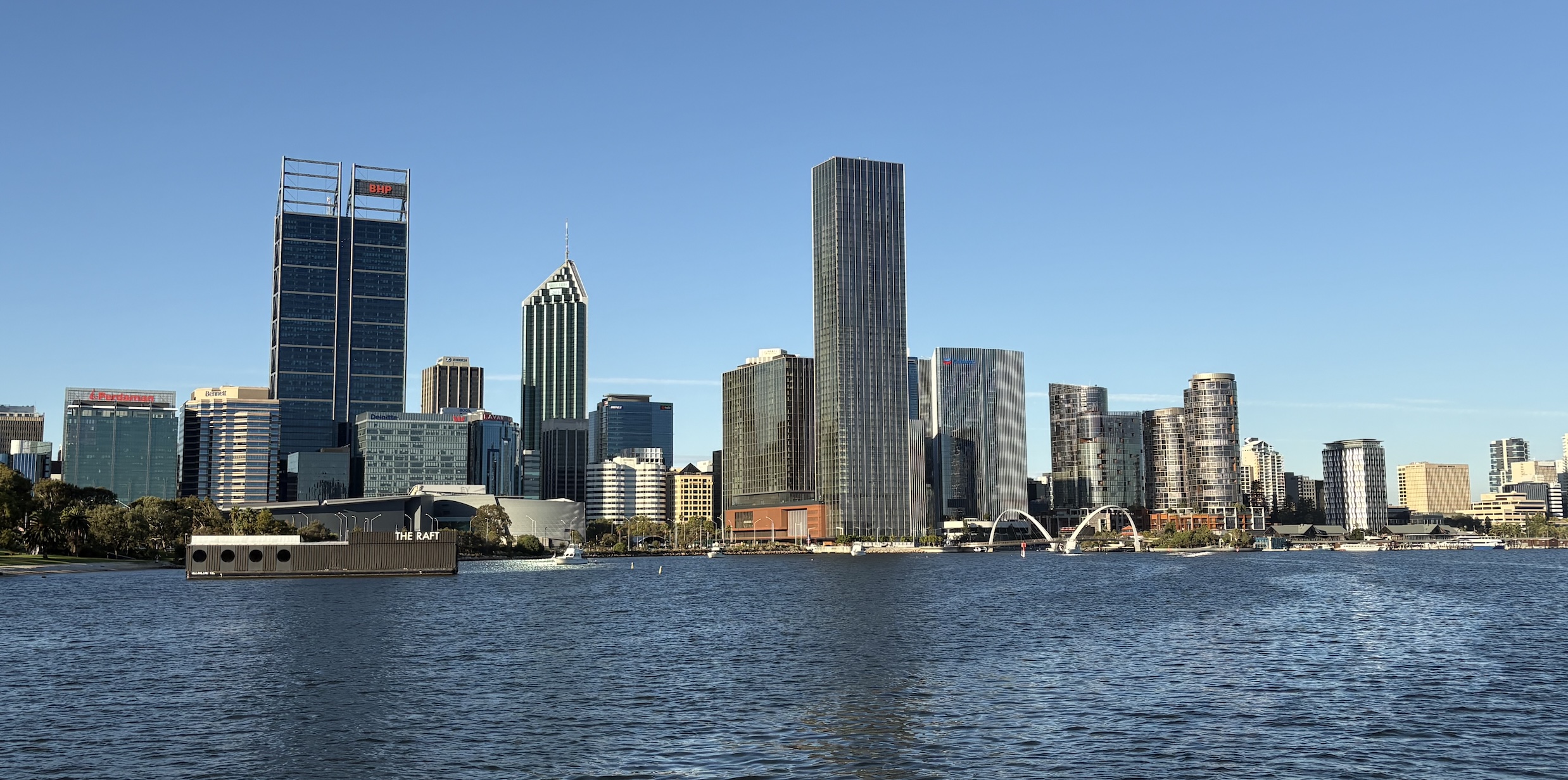
By the time we got back to Perth, it was a little bit cooler and city workers were out having a drink in the city’s many bars.
It’s a modern city, its centre full of skyscrapers, money and big business. The roads are wide and noisy, pedestrians play a distant second fiddle and there’s nowhere near enough greenery. However, we stayed in the less salubrious Northbridge district, a short walk from the CBD but a world away in character. More low-rise and distinctly seedy in places – our hotel was opposite a couple of sex shops – it’s the centre of nightlife so full of bars, cheaper restaurants and clubs and rowdy but good-humoured parties of younger people.
A walk down to Elizabeth Quay took us past the redeveloped Yagan Square development close to the the railway station, dominated by chainy bars and restaurants and the giant Edith Cowan University campus. It’s a bit sterile and will probably date badly. Elizabeth Quay has also undergone much redevelopment. We ate there one night at a Japanese restaurant but also stopped a few times at the Little Shag Bar, where we took part in a pub quiz and felt the chill of autumn nights.
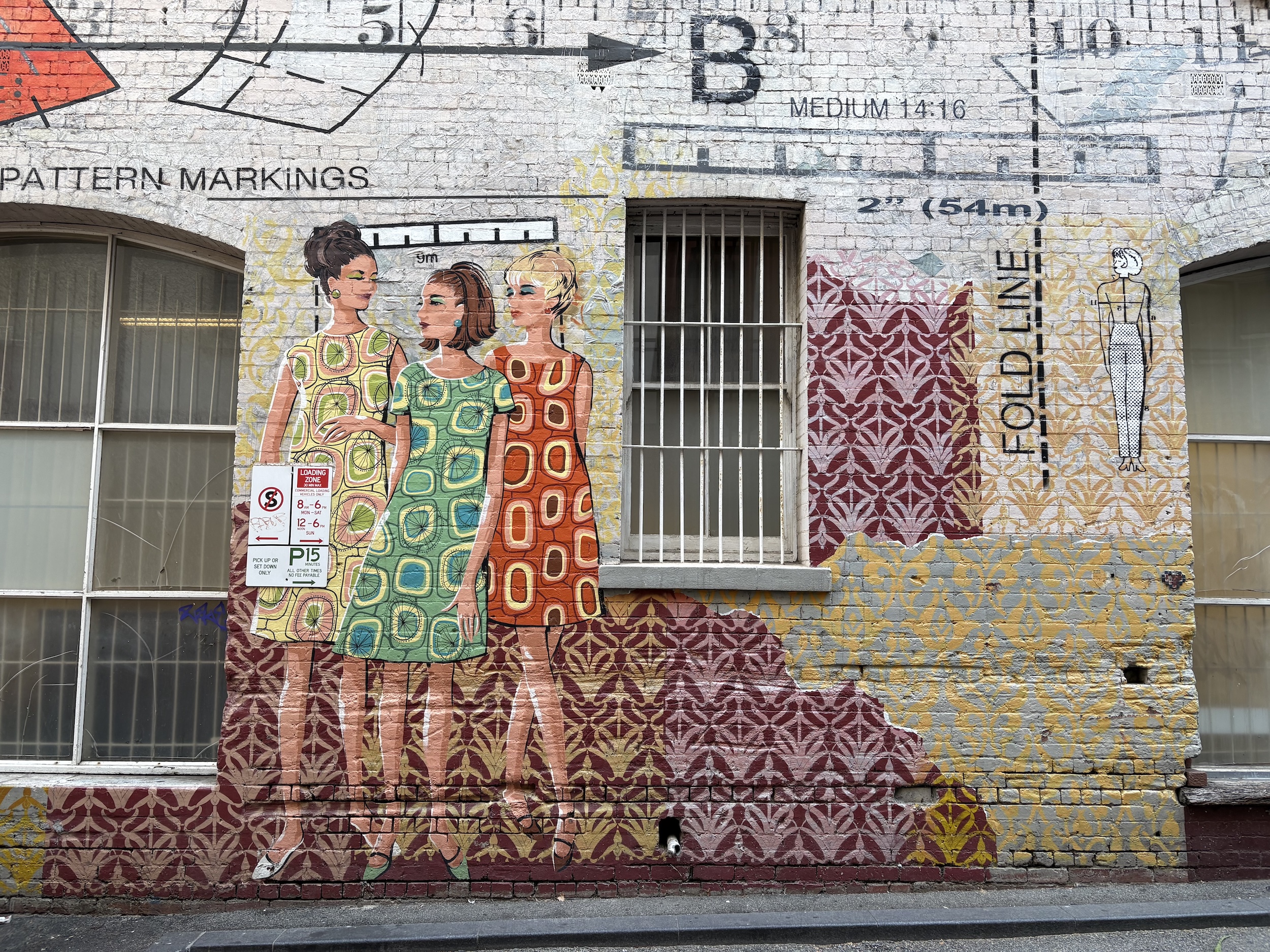
On the whole I didn’t really take to Perth, perhaps because it lacks the character of some of Australia’s other cities but neither did we spend enough time there getting to know it. The highlight was a walk taking in some of the city’s vibrant street art in a more attractive part of town centred on characterful King Street, Wolf Lane and the baroque beauty of His Majesty’s Theatre. Our sole journey into the neighbouring city of Fremantle involved a visit to the old prison for a tour on a truly sweltering day. Today the building is part of the Australian Convict Unesco World Heritage Sites. The lively guide gave us the history of the hellish place, built in the 1850s and originally home to transported convicts from Britain but later a miserable hole for all and sundry, men and women. It only closed in 1991, a few years after a major riot staged as a protest against the terrible conditions prisoners had to face. The tour would’ve benefited from more personal stories but it was an interesting way to spend 90 minutes, and the shade came in very handy.
But then it was on to a very different part of Western Australia – the beach resort of Busselton.