
Located in the north-western Ishikawa Prefecture on the island of Honshu in Japan, Kanazawa is a modest city of exceptional gardens, historic geisha and samurai districts and buzzing nightlife. It was my favourite stop on our 2025 Japanese tour.
It had long been my plan to visit – even as far back as our first holiday in Japan in 2015 – in order to see Kenroku-en, one of the country’s top three gardens. This time we made it. But Kanazawa is no one-trick pony when it comes to attractions.
A few years back it wouldn’t have been quite so easy to get to but these days the Shinkansen glides through effortlessly on its way to Tokyo. Our journey from Osaka began with a busy limited express train to Tsuruga before switching on to the high-speed line, accompanied as ever by the stress, bureaucracy and mind-boggling ticket requirements of the Japan Railways network. With time ticking down to our departure from Osaka, it took visits to various ticket machines and service centres to collect the right bits of paperwork in order to get through the gates. It’s almost as if the railway authorities have designed the system deliberately to be as difficult as possible.
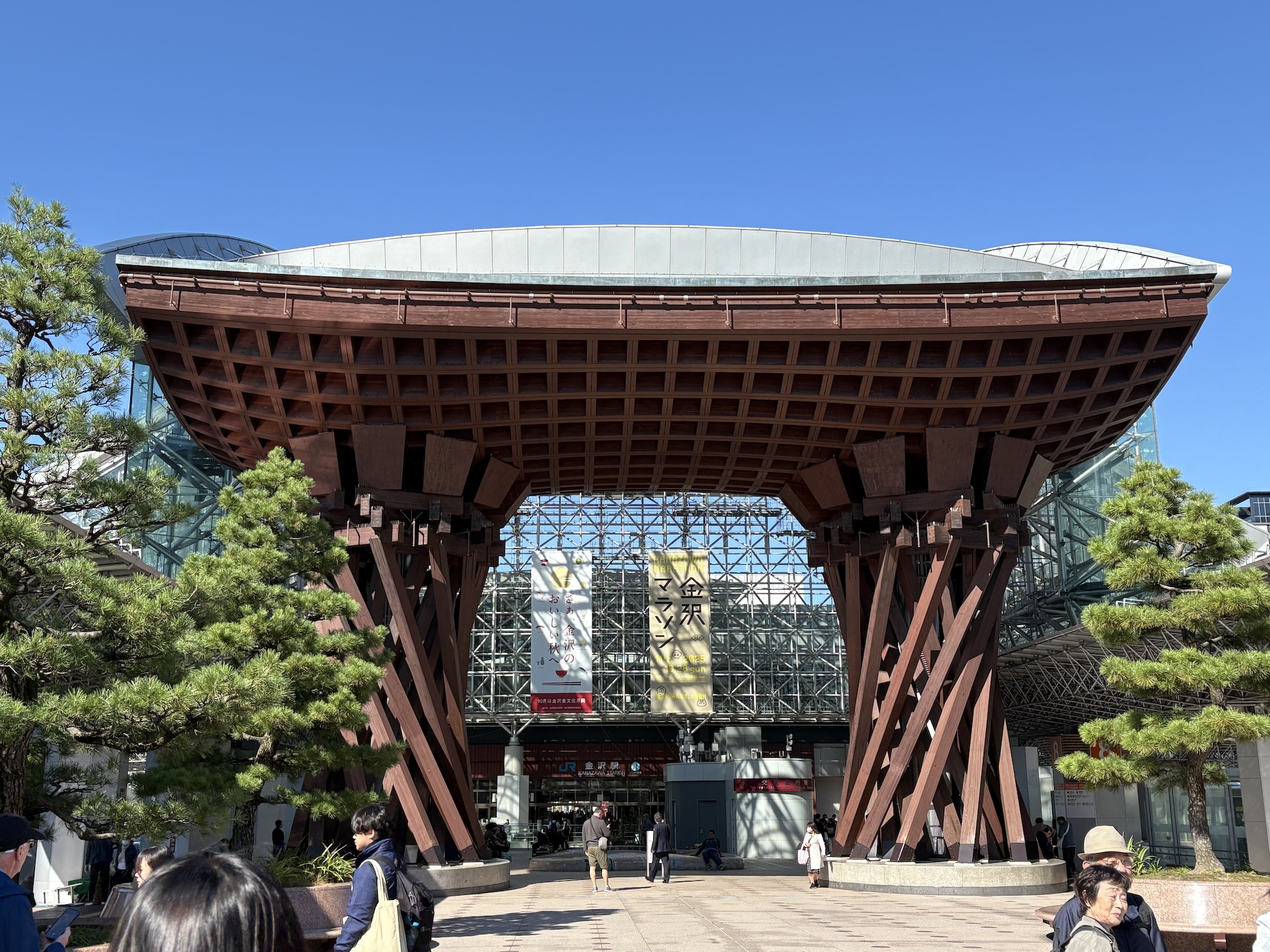
Kanazawa made for a refreshing change from the big metropolises of Tokyo, Osaka and Hiroshima. Smaller, with fewer people, and certainly fewer tourists, it felt calmer and a lot more breathable. The modern station alone was a handsome structure too, featuring the bulky Tsuzumi-mon gate made from immense trunks of rusty red douglas fir. Few stations around the world can deliver such an impressive entrance.
We walked to our hotel, the Mitsui Garden, on the main route into the heart of the city, past some of the numerous canals, some small, some larger, that run alongside many of its streets.
We spent our first night walking around in the usual quest to find a decent place to eat, spoilt for choice, me paralysed with indecision. We ended up in one of the quieter areas, but stumbled across a superb izakaya. Similar to a tapas bar, where small plates are the order of the day, the beer flowed and the excellent dishes kept coming. The team were friendly and the atmosphere buzzing and comfortable. It was just a shame that Graham was feeling rough, as he would continue to do throughout our stay in the city.
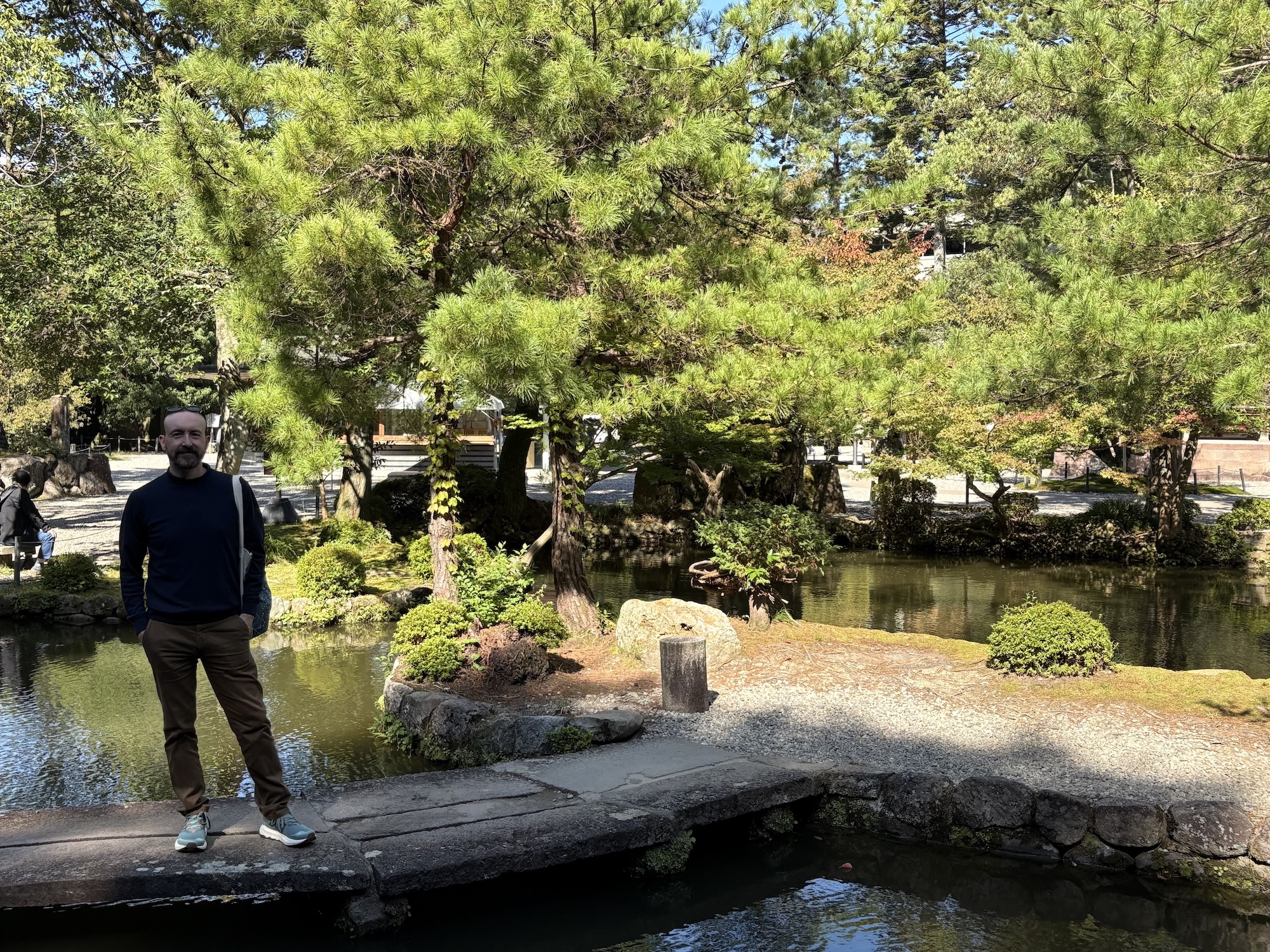
On our first full day, the sun was shining and we went on a long looping walk around the city centre, taking in many of the main sights. Not far from the hotel stood the Oyama Shrine, heralded by a 19th century gate with curious European architectural influences and stained glass windows, looking not far removed from a lighthouse. A quiet spot off the main road, the shrine was a beautiful spot and the grounds were enchanting, composed mostly of a small lake dotted with various islands, linked by bridges lying in dappled shade.
We walked on through the back streets, crossed the wide Sai River and continued up to the Teramachi temple district that’s full of handsome and historic wooden buildings, narrow streets and places of prayer. The most famous of them, and therefore the busiest in terms of tourist visitors, must be Myoryuji, built by the Maeda lords who ruled the region during the Edo period and whose name crops up a lot at the various sights around the city. The temple is also known as Ninjadera, after the fact that it was built with a number of deceptive defences that were designed to confuse and trick potential invaders. The building functioned as part place of worship and part military outpost, a curious mixture. We saw some of those traps, concealed doorways and the like on a tour, which began with the usual long, long, long list of things we were forbidden to do and continued solely in Japanese in a manner so breathless that I began to worry about the health of our guide. Fortunately we were given brochures in English so we could follow along and interesting it was too.
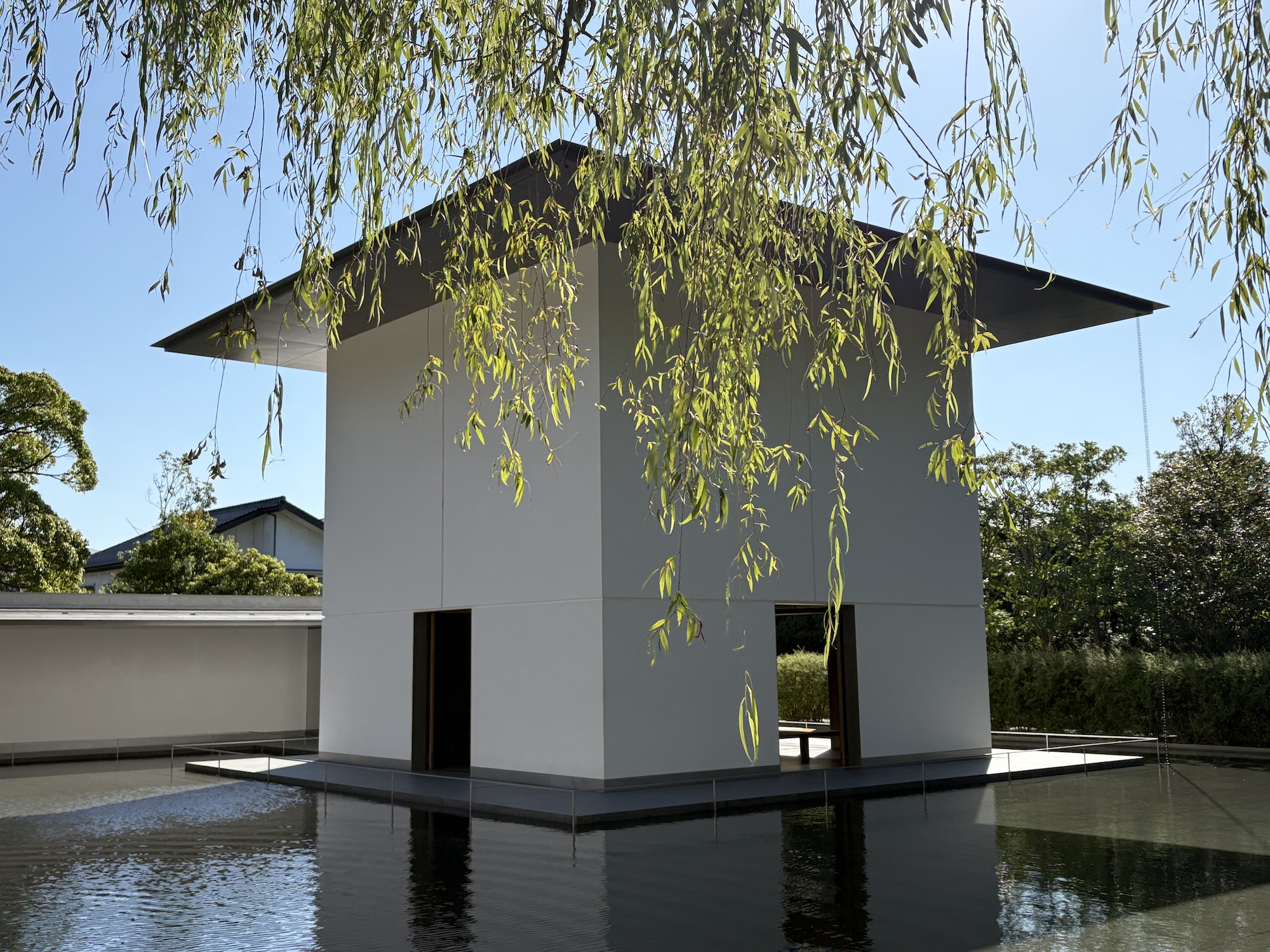
The sun was shining as we continued our walk, passing through a modest, colourful cemetery and then down a steep hill with excellent views of the city to cross the river again. We stumbled by chance on to the grounds of the D T Suzuki Museum, which celebrates the life and work of a Buddhist philosopher I’d never heard of. We didn’t go in but wallowed in the fantastic architecture, the work of Taniguchi Yoshio, that was designed to reflect the serenity of Zen. The most impressive part was the shallow pond and Contemplative Space, a large room that’s open on all four sides and extends into the water. Next to it was an equally serene space, the Shofakaku stroll garden centred on a tranquil pond, and then the Honda Park, both of which were developed on the grounds of a mansion once owned by the Honda clan. The remains of the building were just about visible amid the neighbouring woodland. A couple of museums lay in our path and we stopped at one for drinks and cake before touring Kanazawa’s star attraction, Kenroku-en.
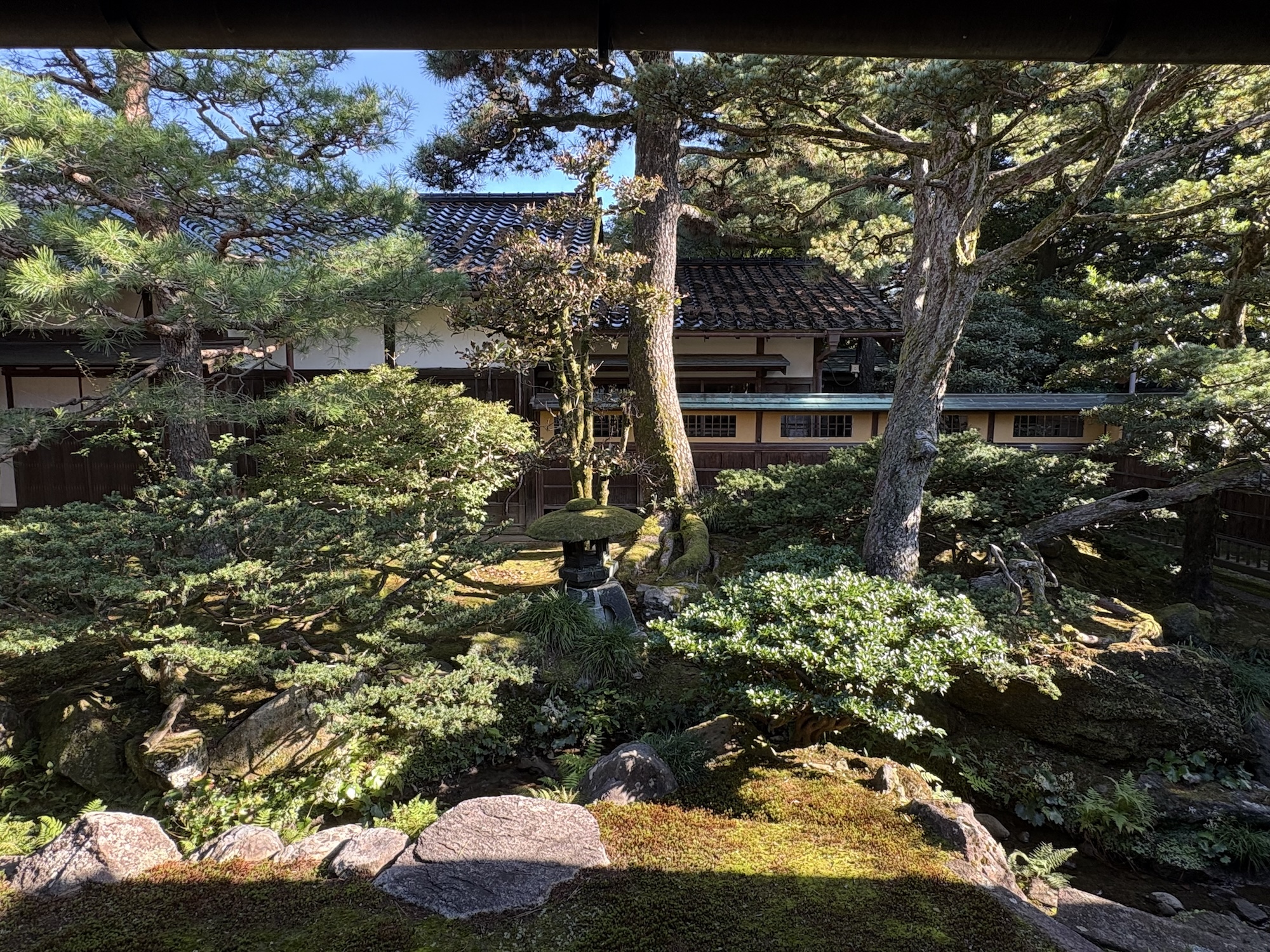
The garden is truly epic but before we went in we detoured to the Seisonkaku Villa, a beautiful house in the Samurai style built by one of the Maeda lords in the late Edo period for his mum. Lucky woman… We toured a number of tatami rooms that were typically cool, spartan and elegant, while a couple of decks allowed us to view the small but absolutely beautiful gardens, dominated by magnicent twisting pines.
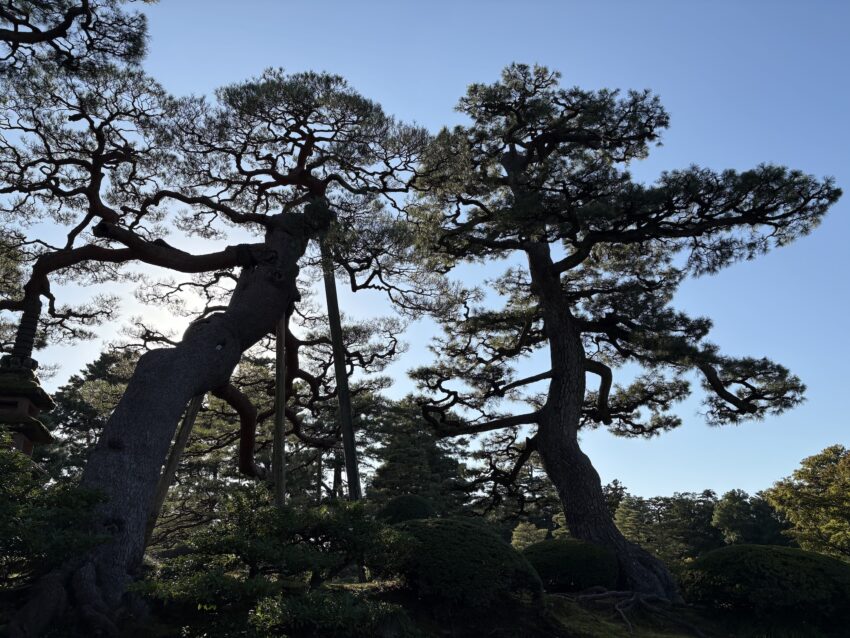
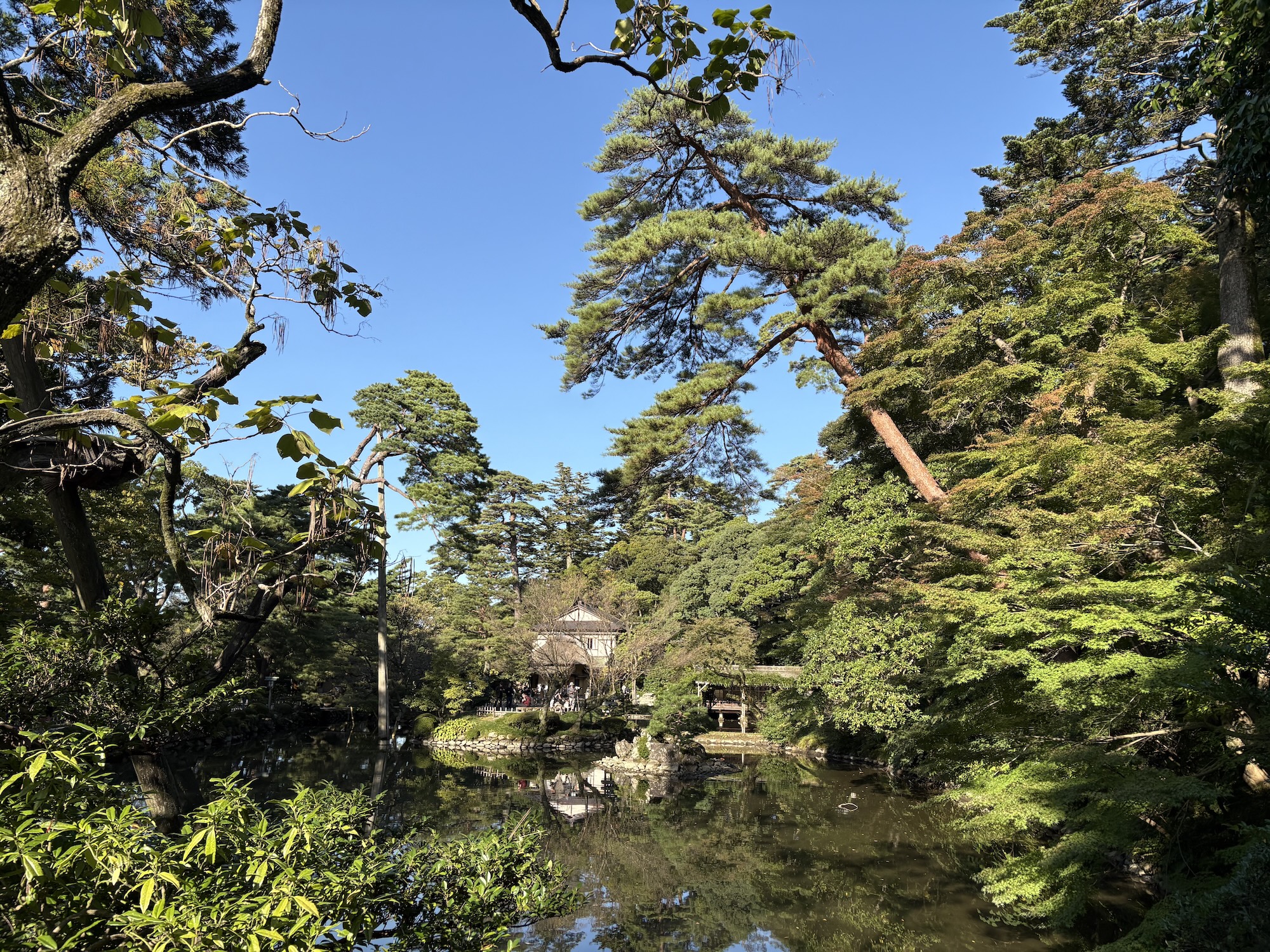
There were plenty more pines, along with acers, cherries, plums and many other trees in Kenroku-en. This breathtaking garden was laid out over the centuries by the ubiquitous Maeda lords on the outer grounds of neighbouring Kanazawa Castle, and they stand high over the city with impressive views towards the Sea of Japan. Typically for a Japanese garden the accent is on trees, water, space, bridges, perfectly positioned rocks and stones and other features representative of the broader landscape. Unlike in Europe, there are no broad beds of herbaceous perennials and swaying grasses, let alone an abundance of colour. Green is the star of the show, although with autumn setting in many leaves were turning yellow, red and orange.
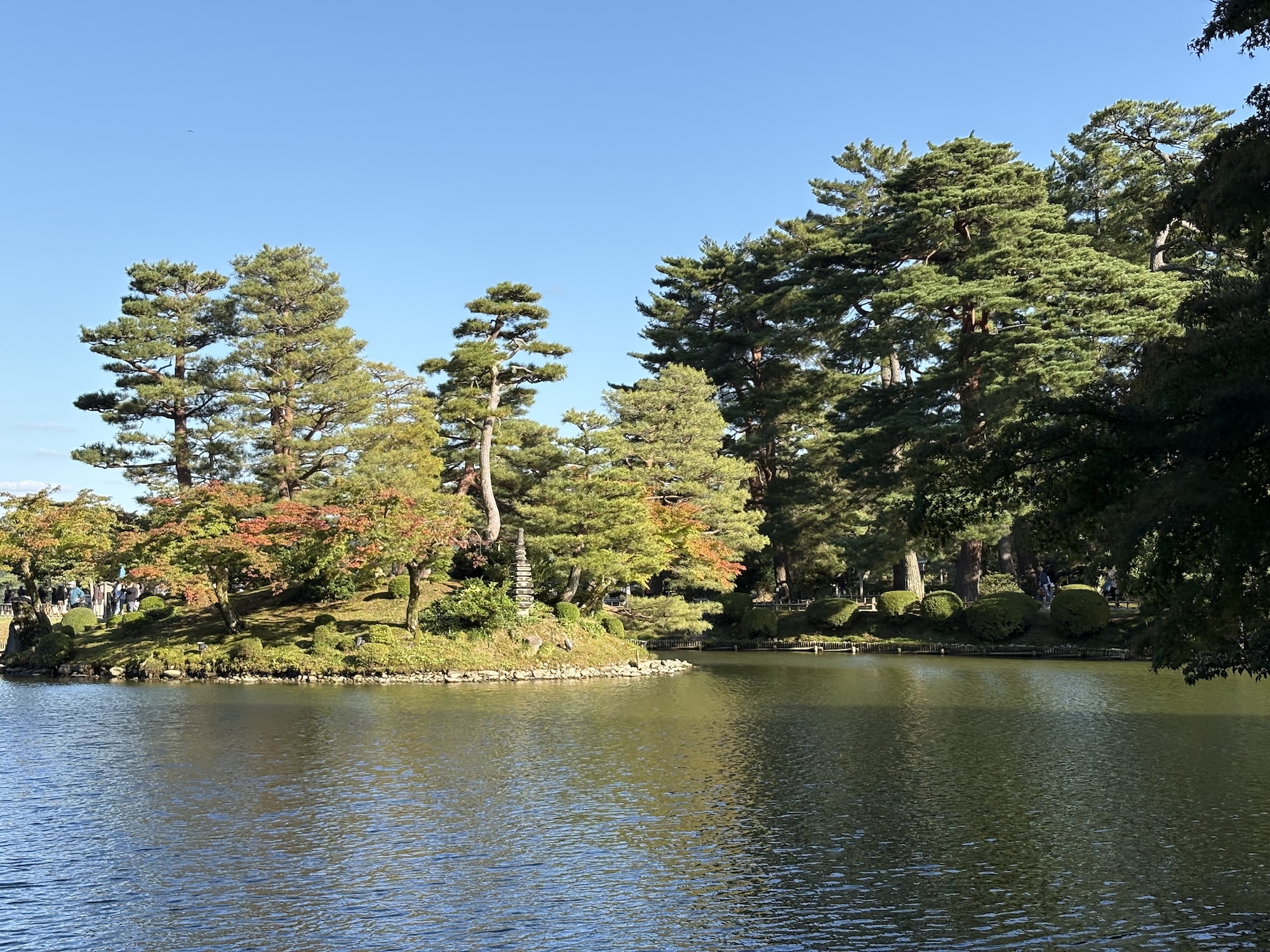
We wandered around, past charming tea houses and through a plum grove to the Hisagoike Pond, where a waterfall was catching the eye of many a photographer. But it was the Kasumigaike Pond that was attracting most visitors, with its eye-catching, two-legged lantern and countless trees at their autumn best. Just yards from the water’s edge stood some of the garden’s most spectactular pines, gnarled, twisting and aged but perfectly pruned. Some of these trees have to be protected in winter and while we were there some of this work was going on. Large poles are erected close to the trunks and long ropes hung from them, which are then attached to the branches, to hold them in place under the weight of snow. The result is a framework above the tree that looks like a pointy umbrella. It’s typical of the care and attention to detail that Japanese gardeners take that the structures themselves are as beautiful as the plants they’re protecting.
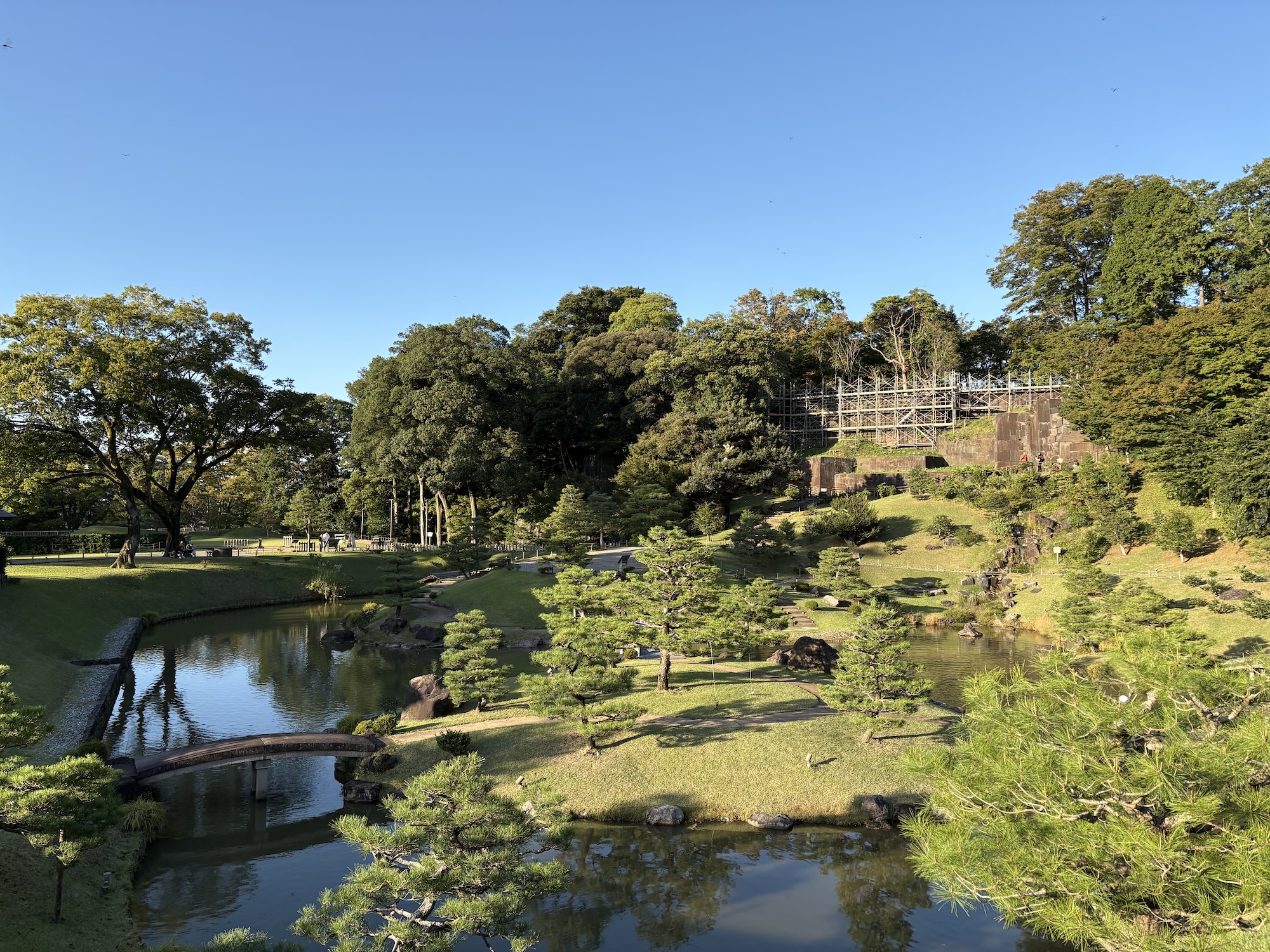
We left the garden and wandered into the castle grounds, where much work is going on to rebuild many of the castle’s lost or decayed buildings so there isn’t a vast amount to see other than a few handsome towers and gates, but it’s a pleasant park to meander round. The highlight was yet another stunning garden, Gyokusen-inmaru. Although it had just closed to visitors by the time we arrived, it sits in a bowl near the castle walls and was easy to admire from neighbouring higher ground.
Kanazawa survived the Second World War largely unscathed and so has more low-rise, traditional and historic buildings than many Japanese cities. Off the main roads, which are now largely given over to blocks of offices, apartments and hotels, it was not difficult to find characterful streets lined with wooden buildings, many of which are now restaurants, cafes and shops. On a cloudier day we went to visit some of the city’s most famous districts, some of which reminded us of our visit 10 years earlier to Takayama.
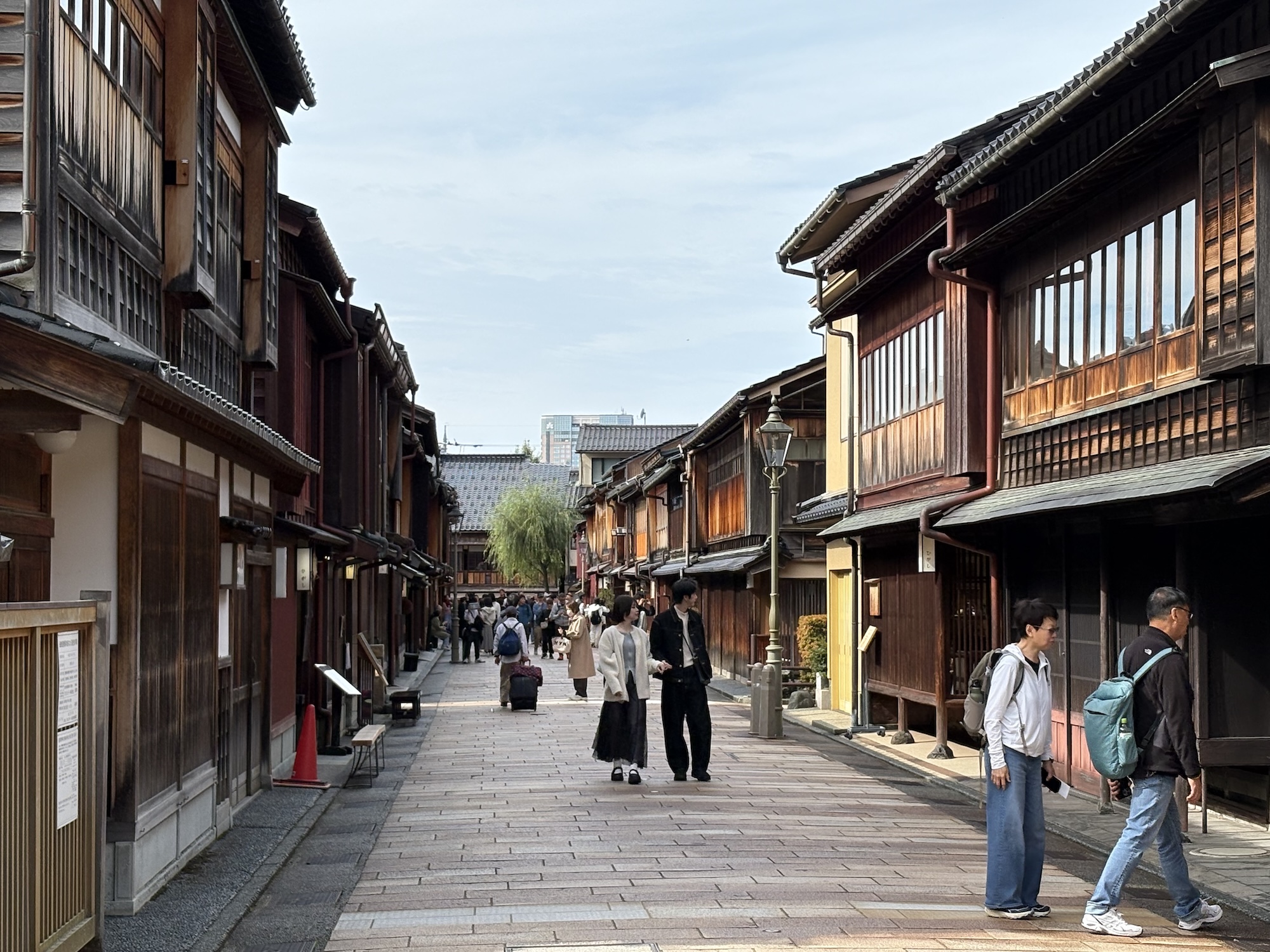
We diverted through the undercover Omicho Market, with its fish, fruit and veg stalls, souvenir shops and cafes, all doing a lively trade, and then crossed the river to the Higashi Chaya District. We’d been there one evening earlier in the week to find something to eat and found the streets deserted, eating in a simple local restaurant before finding a bit more life in the Oriental Brewing Higashiyama bar back near the river. By day, though, the district was a lot busier with tourists. Higashi is one of several surviving chaya, or teahouse, districts in Kanazawa, certainly the biggest and full of character. During the Edo period, there were numerous chaya where geisha entertained with songs and dances, but just a few remain open today. Instead, shopping is the main draw and we indulged ourselves. Gold leaf products are plentiful as Kanazawa has long been the leading centre for its production in Japan, and we later visited the nearby Gold Leaf Museum, which was a lot more interesting than it sounds. By the river, we walked through the smaller and quieter Kazuemachi Chaya district.
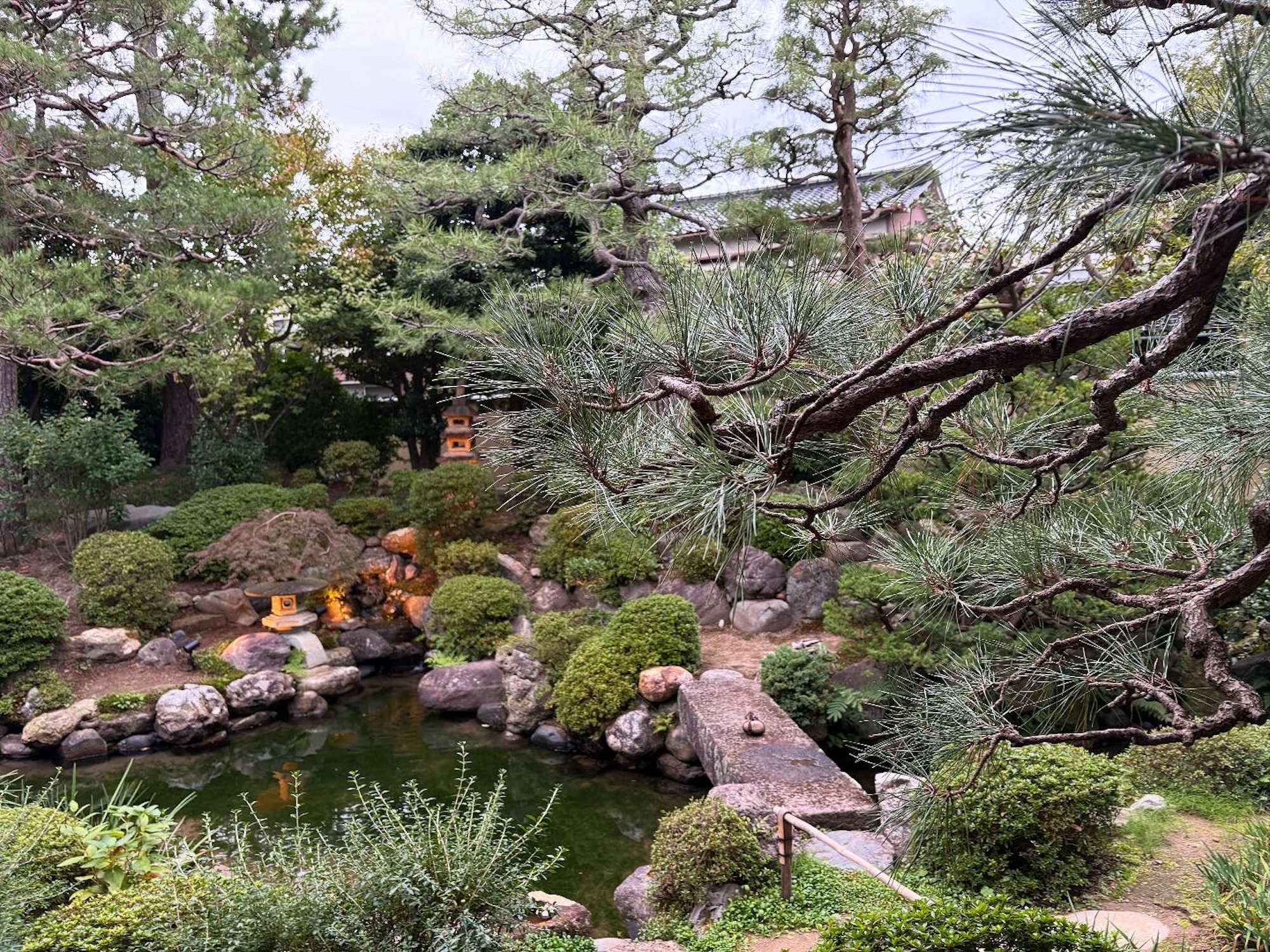
With Graham suffering with his illnesses, I went on my own to the Nagamachi Samurai district back down towards the Sai River. It also lies close to Kanazawa’s busiest nightlife area, where we’d found good food and beer that was far too strong on several nights during our stay. Nagamachi is loaded with atmosphere thanks to its yellow earthen walls, narrow lanes, magnicent restored houses and dreamy canals. Senda-ke house and garden lies on one of the streets and was an absolute treat to visit. The fourth-generation owner gave a couple of us a little tour, highlighting his family history and their Samurai past, and then proudly displayed the beautifully curated garden, full of pines and azaleas. It was a wonderful way to finish our stay.
The next morning – a Sunday and the day of the Kanazawa Marathon – we packed up and walked in the drizzle back to the station, on the start of our marathon journey home via Tokyo.