
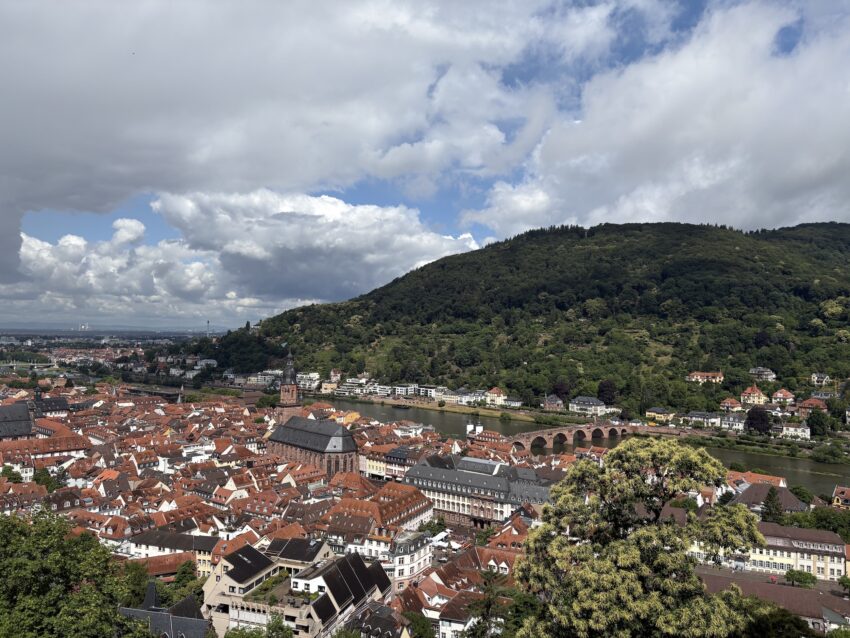
Heidelberg is one of Germany’s most handsome cities. Its old town is full of history, atmospheric cobbled alleyways, fine architecture, grand churches and lively pubs. And to cap it all, it lies nestled in a picturesque wooded valley carved by the River Neckar.
The city is also home to Germany’s oldest university, giving it a youthful, vibrant feel. The more modern sprawl associated with any city spills, in Heidelberg’s case, on to the endlessly flat Upper Rhine Plain. Surprisingly for a German city, many of the historic buildings are original because Heidelberg escaped the systematic bombing that flattened so many other towns in the Second World War.
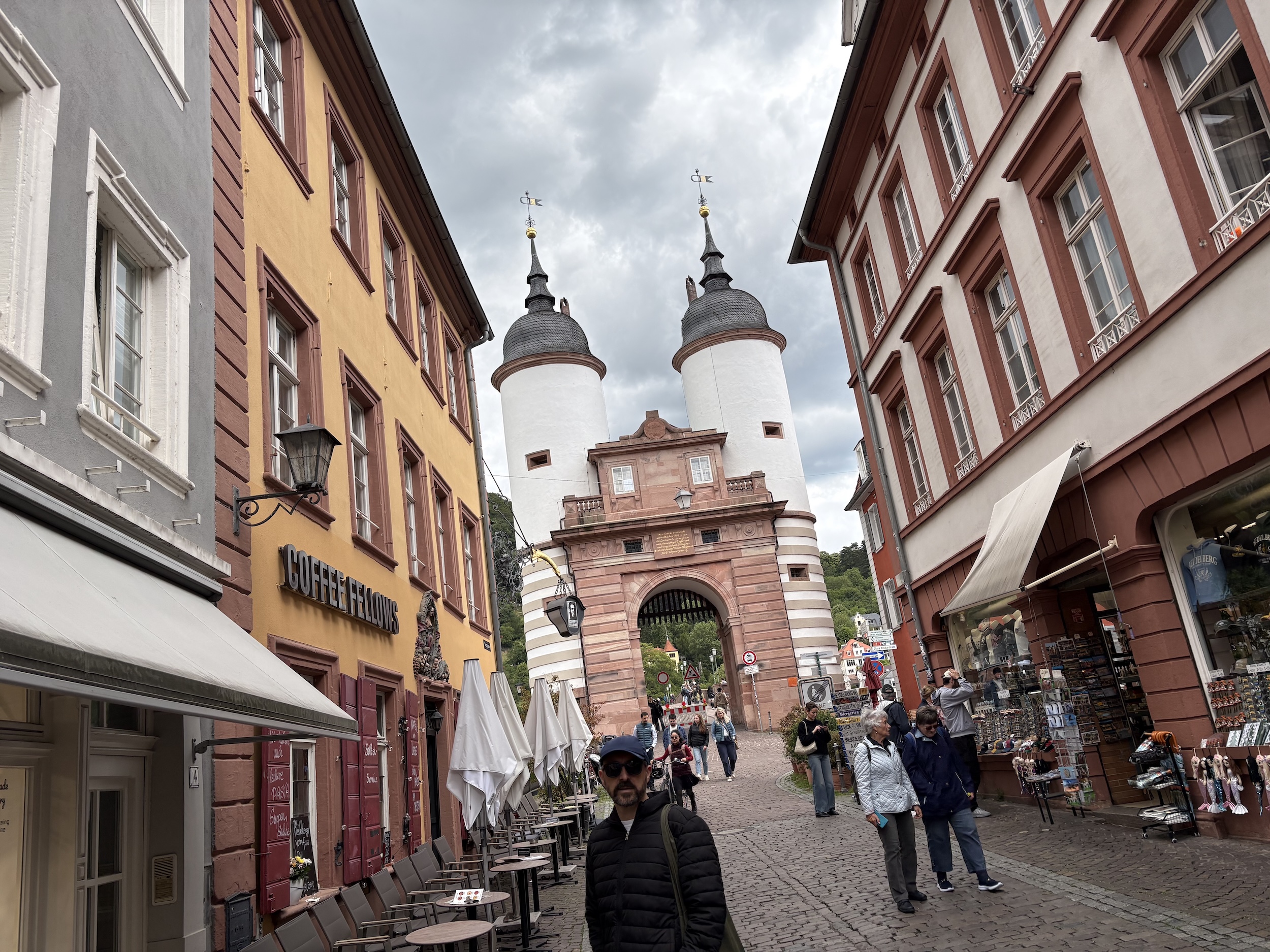
Our hotel, the NH Collection Heidelberg, lay a little to the west of the old town in the Bergheim district on a main road lined with apartment blocks, cafes and yet more university buildings. It was a bit of a trek into the touristy centre, where most of the best pubs and restaurants are, but at least we’d been selected as their ‘Lucky Guest’ and could take our pick of the free cocktails in the bar…
We’d booked a four-night stay, flying into Frankfurt Airport from London City. We eventually caught the train onwards after numerous delays, ensuring that we spent more time in the airport than it took for us to get there.
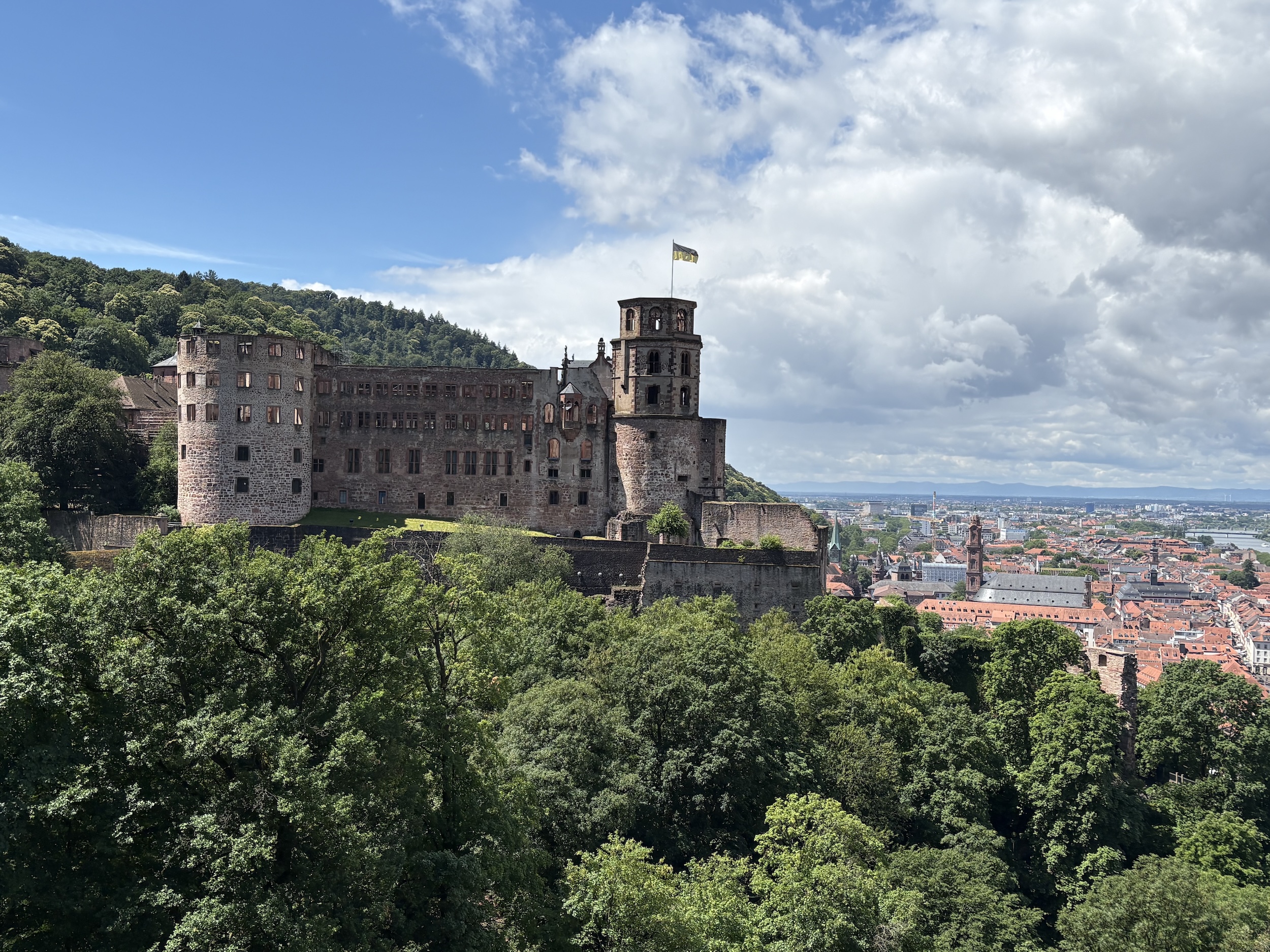
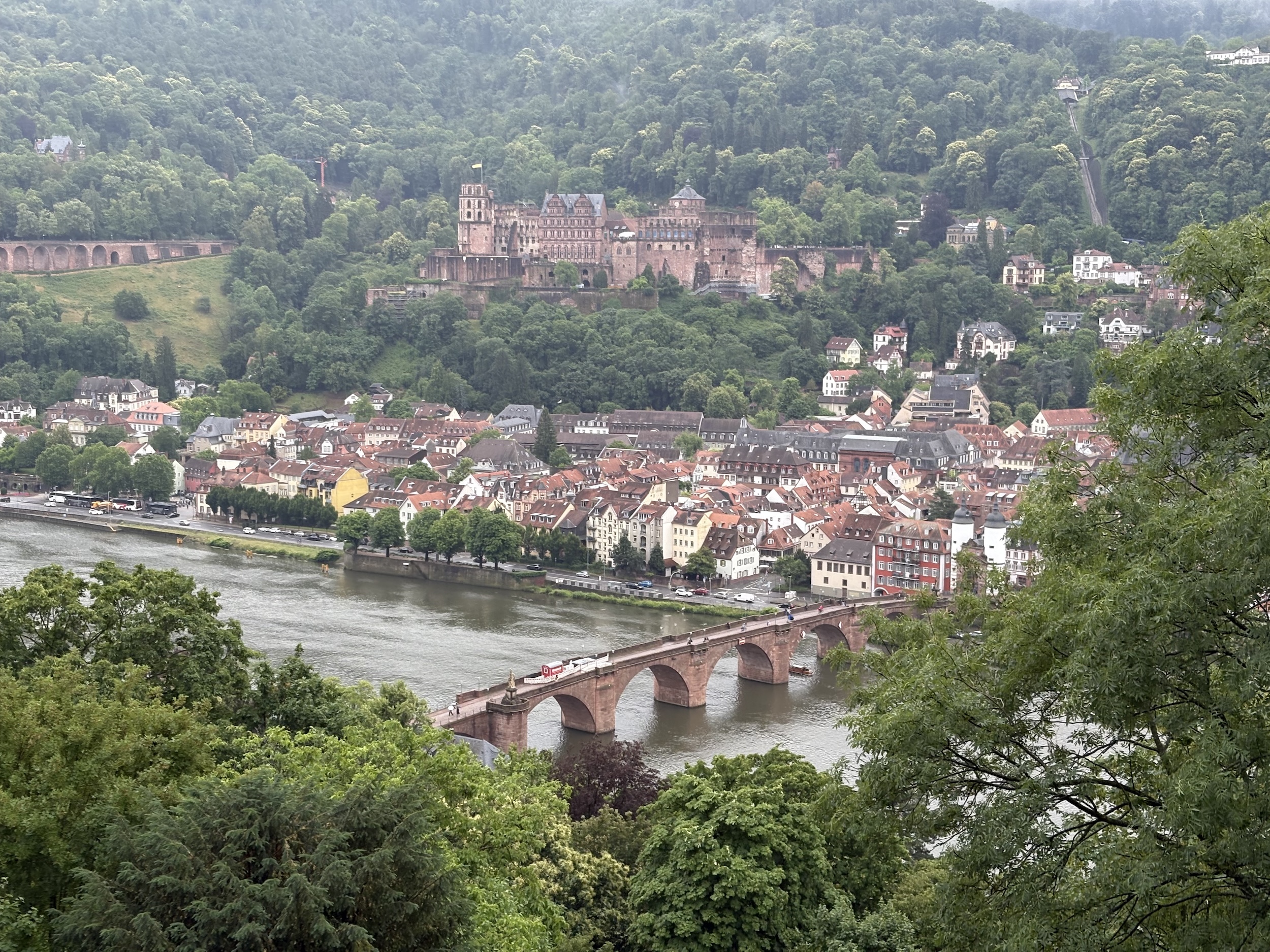
The city’s main attraction is undoubtedly Heidelberg Castle, a red sandstone hulk perched dramatically above the old town. While it’s classed as a ruin, much is still intact and it’s easy to get a feel for what it would’ve been like in its heyday. There’s been a castle there since at least the 13th century but it underwent many facelifts over the centuries, ultimately becoming the seat of the Elector Palatine. Much of the damage was caused during the Thirty Years War in the 17th century and the later dynastic machinations of Louis XIV of France, but it went into further decline when the seat of power moved to Mannheim. Some restoration work was undertaken in the early 20th century.
The views from the castle terraces are worth the price of admission alone, the picturesque city laid out below with the Neckar flowing serenely by. Crossing it, the ancient Old Bridge filled with tourists taking photos.
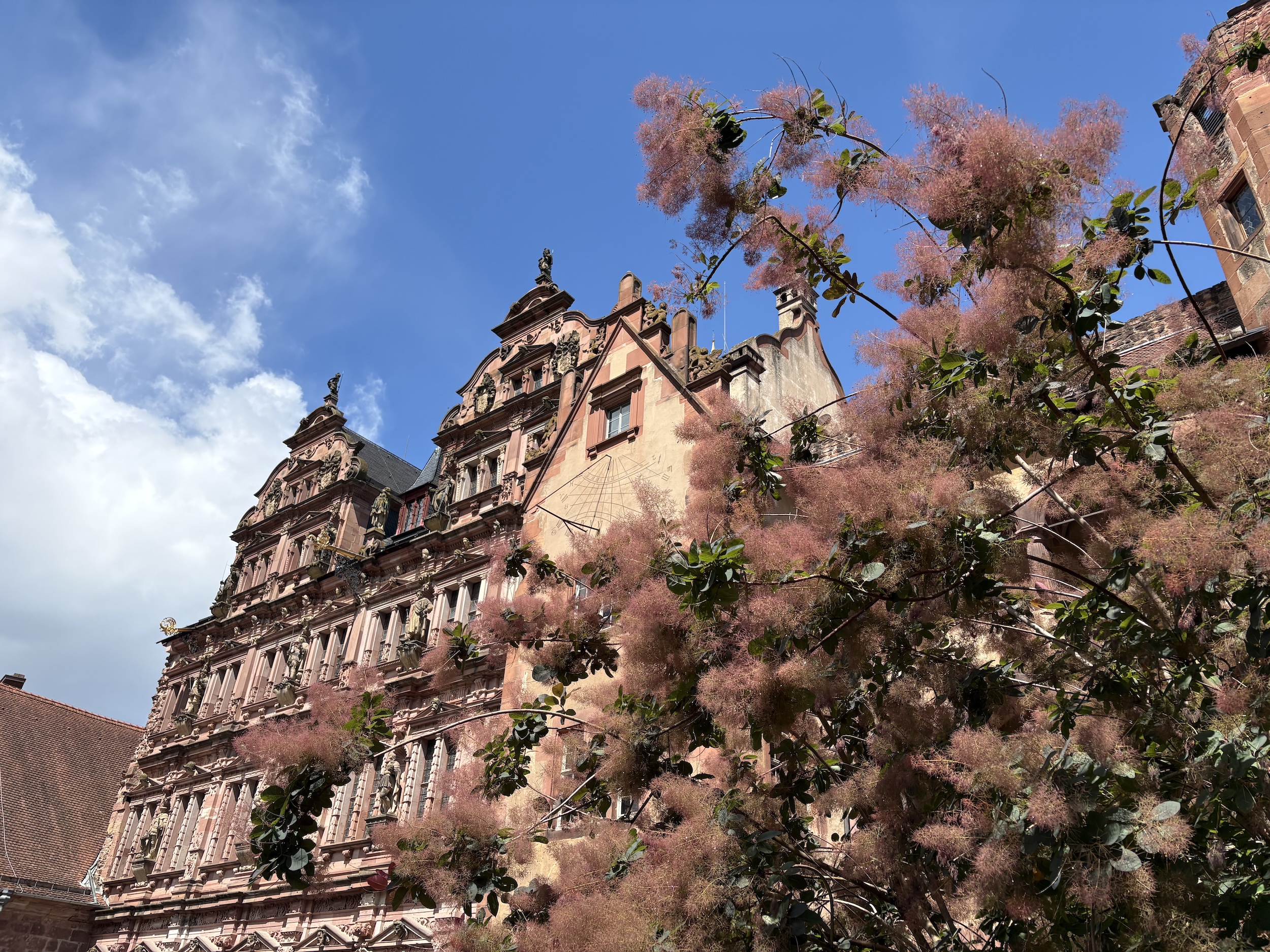
The castle itself is a real mix of styles, betraying the distinct waves of development over the centuries. Several sections, including the austere English wing, are recognisable shells. Other parts are far grander and more ostentatious, decorated with statues and intricately carved stone – notably Friedrich’s and Ottheinrich’s wings. We wandered around, admiring the exteriors and going inside where we could – although there wasn’t much to see. There are a couple of giant tuns, which seemed to excite most visitors and a collection of school children on a tour – and a rather exhaustive pharmacy museum.
Beyond the castle are the grounds and more terraces with expansive views. For a short time in the early 17th century, these were the site of formal gardens known as the Hortus Palatinus and celebrated by some as the Eighth Wonder of the World. Virtually nothing remains of them today and instead there are bland lawns, some impressive trees and the occasional water feature.
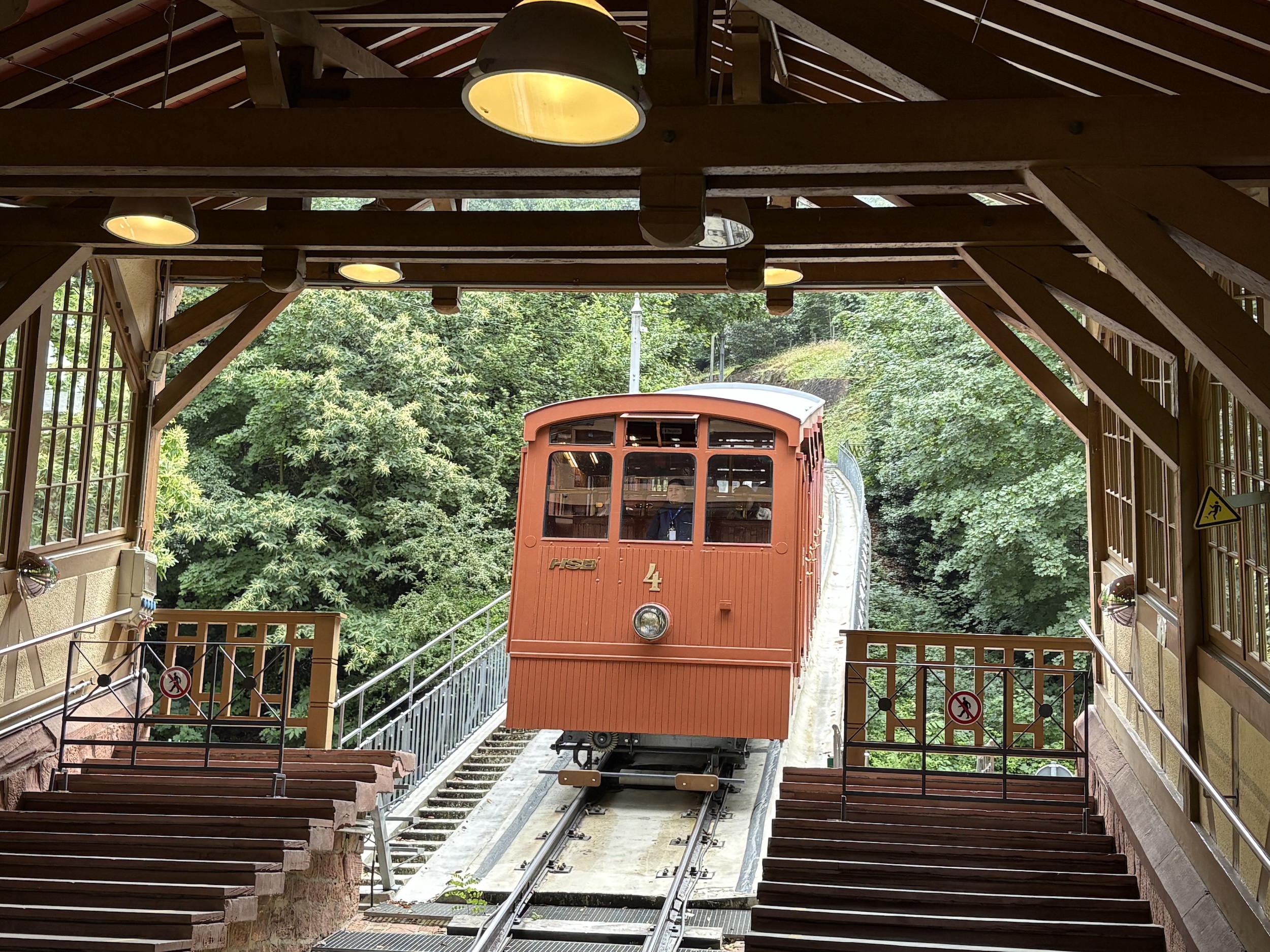
The castle is reached by a funicular railway – assuming you don’t want to walk up – and a second with several a couple of historic cars then runs painfully slowly from the castle up to the Königstuhl peak more than 500m up. The views were fanstatic on such a clear day but we then walked down a steep and punishing footpath through the woods to the intermediate station, where a reviving beer was much needed.
Across the valley lie a number of grand mansions, which suggest that the northern banks of the Neckar were and still are home to Heidelberg’s rich and famous. The hillside, though, rises steeply behind them, ensuring that there’s been little development there. Above them all runs the Philospher’s Walk, reached by a twisting, steep and challenging footpath that starts close to the Old Bridge. We walked it the day after our castle visit, when the rain had stopped and following a diverting visit to the Palatinate Museum. It’s not a long walk by any stretch but has more good views of the city. The hillside itself has a mediterranean microclimate, plenty of orchards, interesting palms and other specimen trees and shrubs. But a garden where the said philosophers would stop to ponder and debate is today a disappointing mish-mash of ghastly old-fashioned bedding plants.
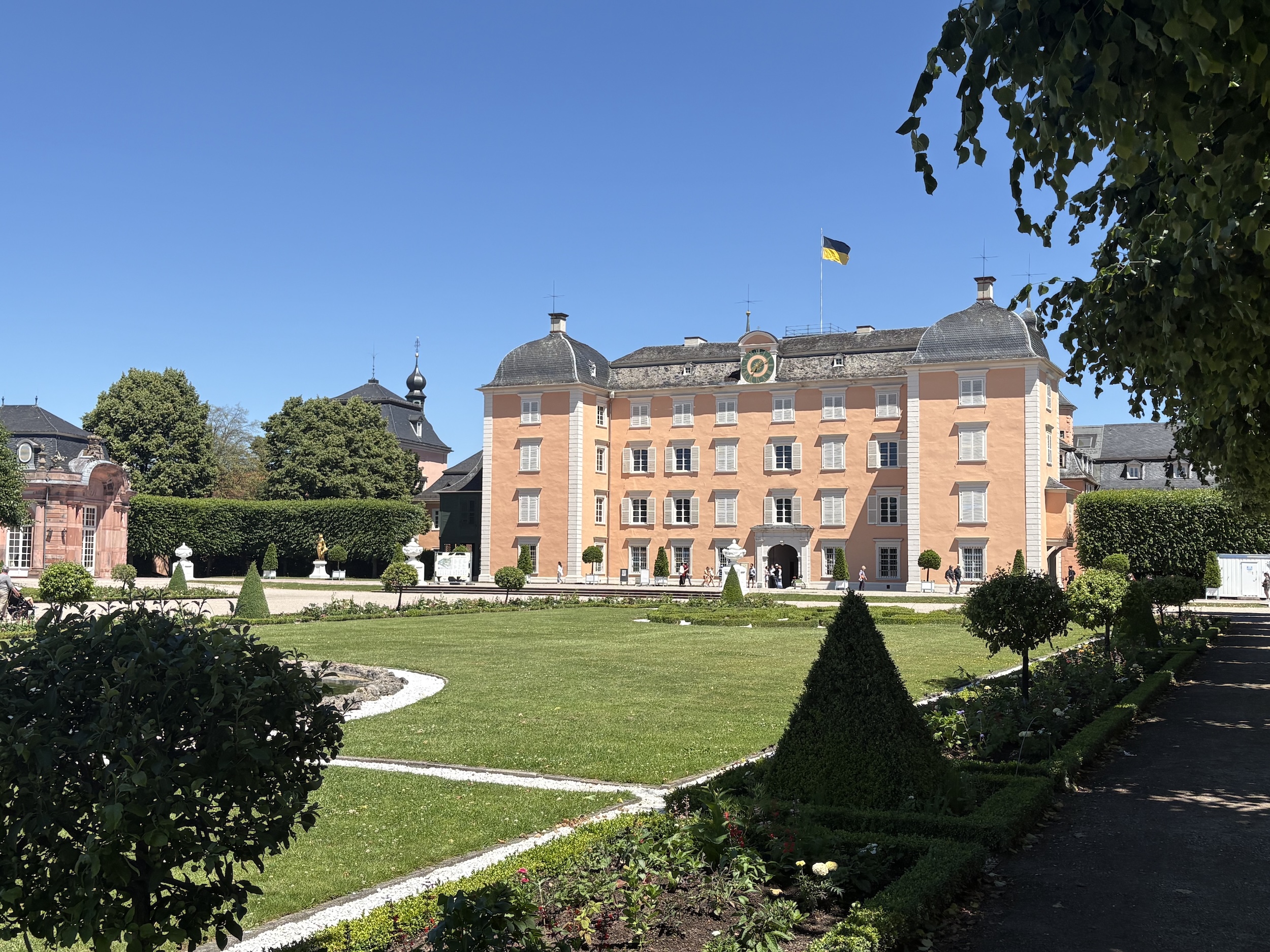
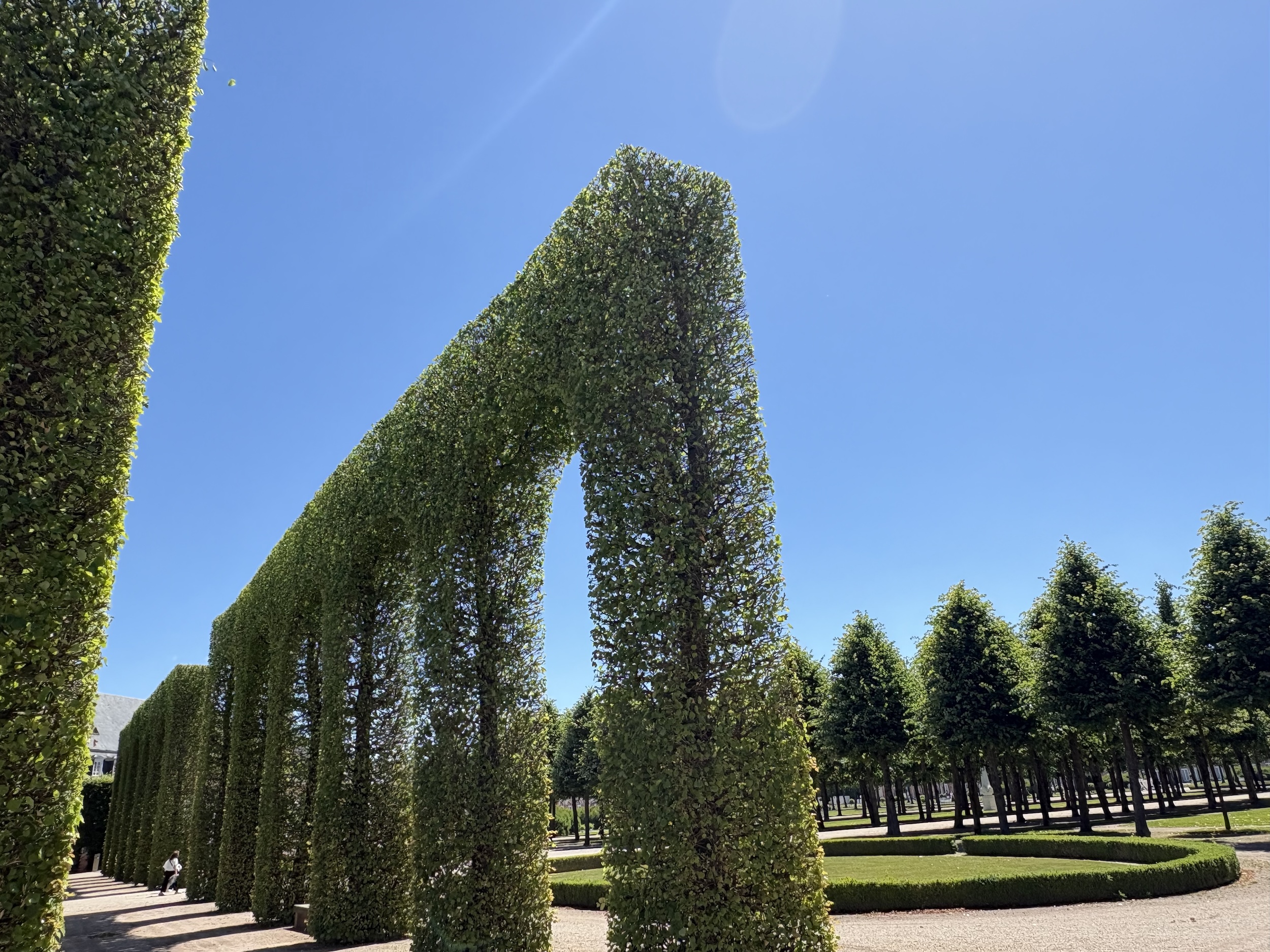
Saturday dawned hot and sunny so we jumped on the tram to the handsome town of Schwetzingen and the palace that bears its name. There’s been a grand home there for many centuries but it flourished in the 18th century under the Electors Palatine and became their summer retreat from Mannheim. We went on a guided tour of the house, which was reasonably interesting if a bit long-winded, but the main attraction was the garden. This is a mix of the formal and informal, with a broad spread of French formal gardens in front of the palace complete with parterres, fountains and perfect symmetry. There’s a vast orangery and expansive lawns, as well as an English garden more in the style of the landscape movement. An arboretum of mature trees provided shade and views of the grand lake.
Numerous trees, though, are showing signs of stress and terminal decline, the result of the decreasing water table and climate change. Various stands throughout the gardens described the challenges the garden faces in this new era, and how they will have to look quite different in the years to come as traditional species die out to be replaced by younger, more exotic varieties.
The garden is also home to a number of unusual structures including temples and a faux mosque, built at a time when anything Turkish was all the rage. It’s a curious and colourful building and the gardens around it are among the highlights of the site.
We caught the tram back to Heidelberg and enjoyed another night out in the old town. On such a beautiful evening, swifts and swallows dived through the skies above us, and thousands of locals and tourists spilled out on to the streets. With the university at the heart of the city, there’s a youthful feel to the bars and pubs in Heidelberg but it was strange to see that smoking is still all the rage in Germany and some bars remain unpleasantly clouded in tobacco smoke. We did eat well though, even if some of the typical central European stodge we consumed in the grungy Schnitzelbank and the traditional Palmbrau Gasse was a bit too much for a summer night. We went a bit lighter on our last evening…
Sunday meant home time but we had most of the day to kill so we got the train to Mannheim and went for a walk. The city and its industry had been a target of bombers during World War Two so the historic buildings are fewer in number compared to Heidelberg. We wandered past the 19th century Wasserturm, which must rank as one of the country’s grandest and most richly decorated water towers, and onwards to the Luisenpark that lies alongside the River Neckar. Unusually for a city park, there’s an admission fee but finding an entrance that sold tickets proved a frustrating challenge.
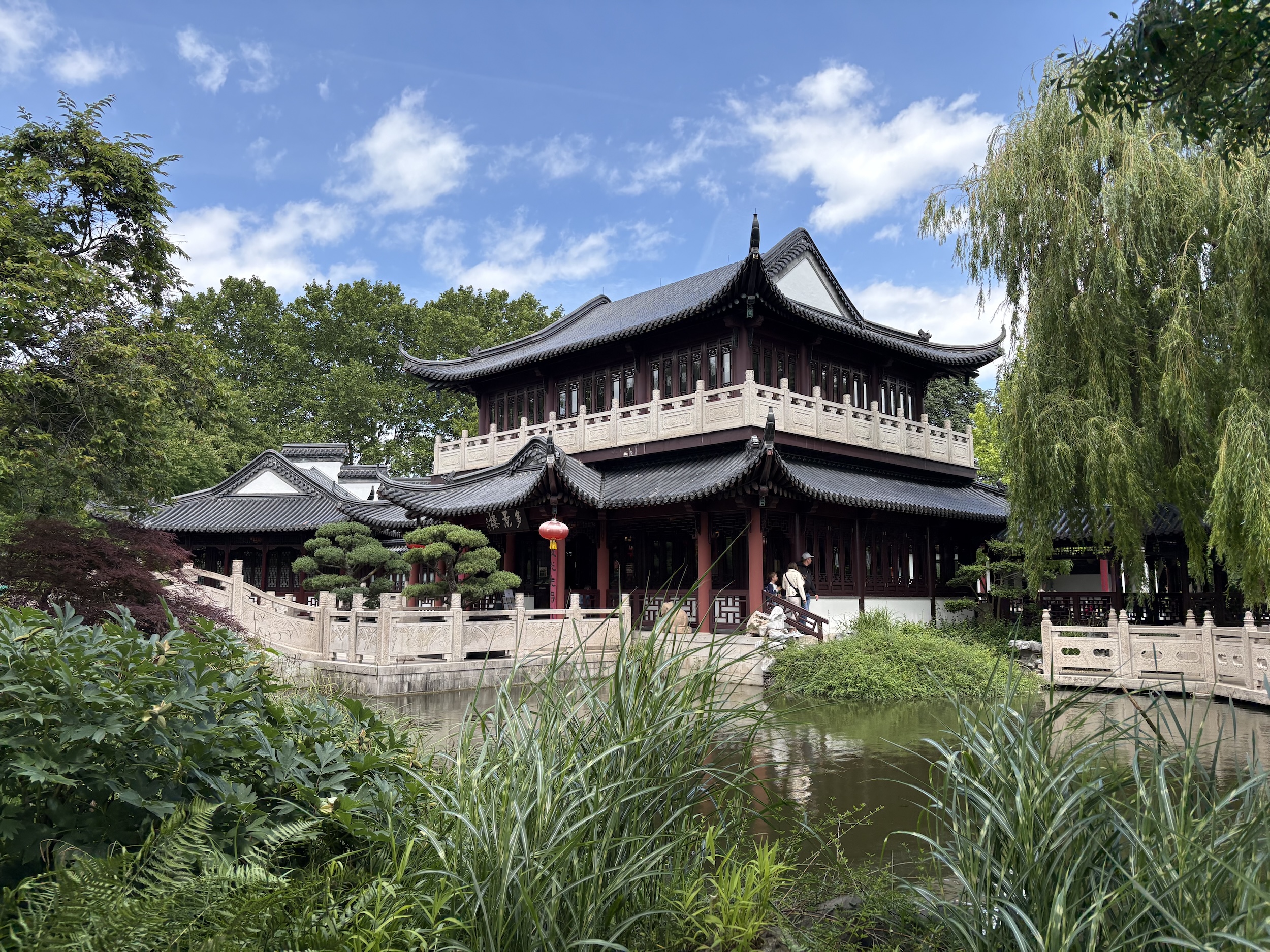
Once inside it’s easy to see where the money’s spent. There’s a grand boating lake, waterways, lush planting and many things for children to do. We stopped for refreshments at a tea house in a beautiful Chinese garden, then walked on through modern naturalistic gardens and beds.
By then, our time was up and we had to catch our train to the airport, ready for our short hop back to London City and home.