
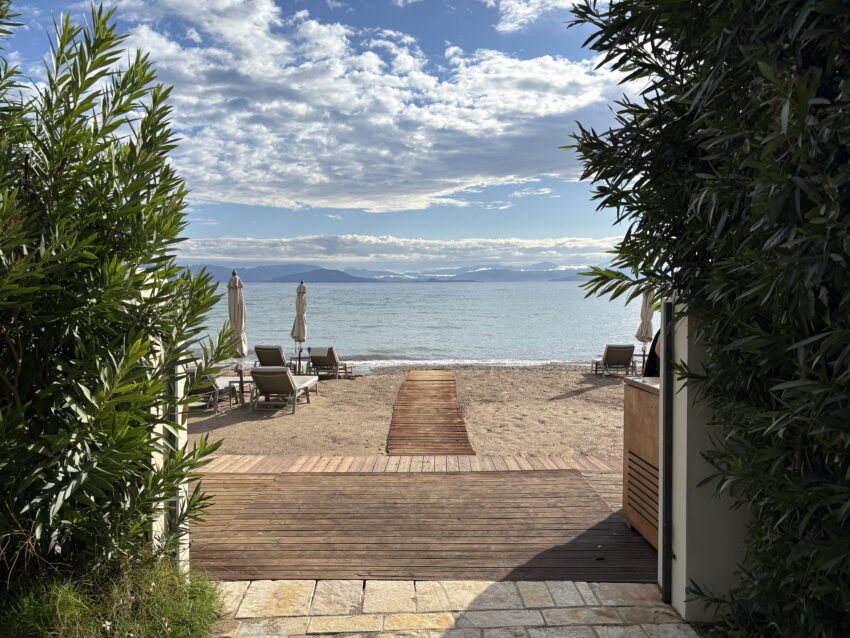
Corfu is known as the greenest of the Greek islands.
Sitting in the Adriatic, wedged in between the coasts of Albania and Italy, it gets plenty of rain. And it’s fair to say that most of its annual average rainfall seemed to fall when we were there thanks to a couple of tremendous electrical storms.
We were on the island in the latter half of September, a potentially dodgy time of year as far as the weather goes. It can be hot and sunny or wet and miserable. So it was for us…
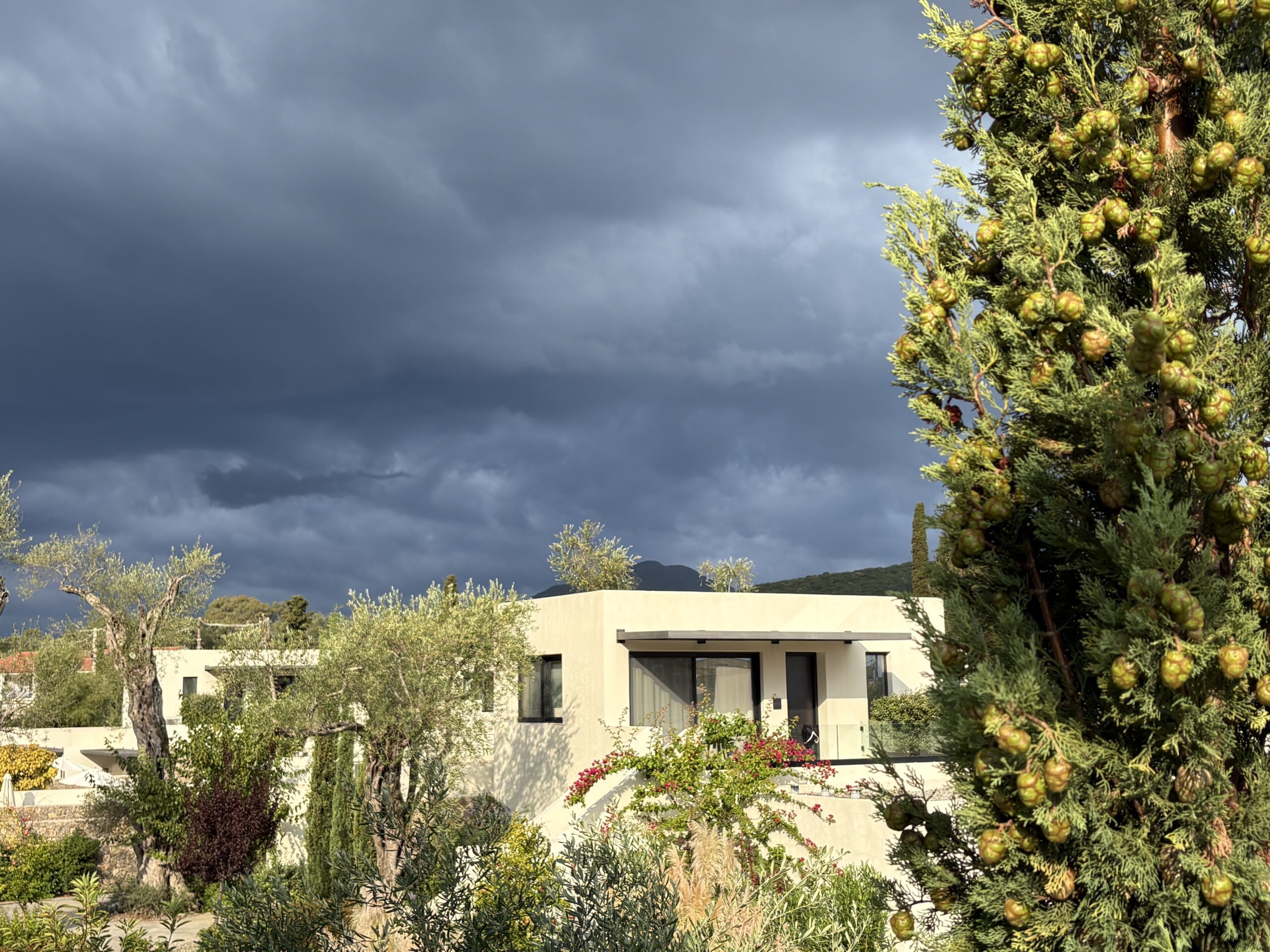
We were based at Messonghi in the south eastern corner of the island, about 40 minutes south of the capital and its airport. We splashed out on the swanky Olivar Suites hotel, a modern collection of low-rise villas built on an old olive grove. Indeed, the extensive, beautifully planted grounds still boast some of those ancient olives as well as pomegranates and countless shrubs. We were in one of the junior suites, an expansive first floor affair with views of the sea.
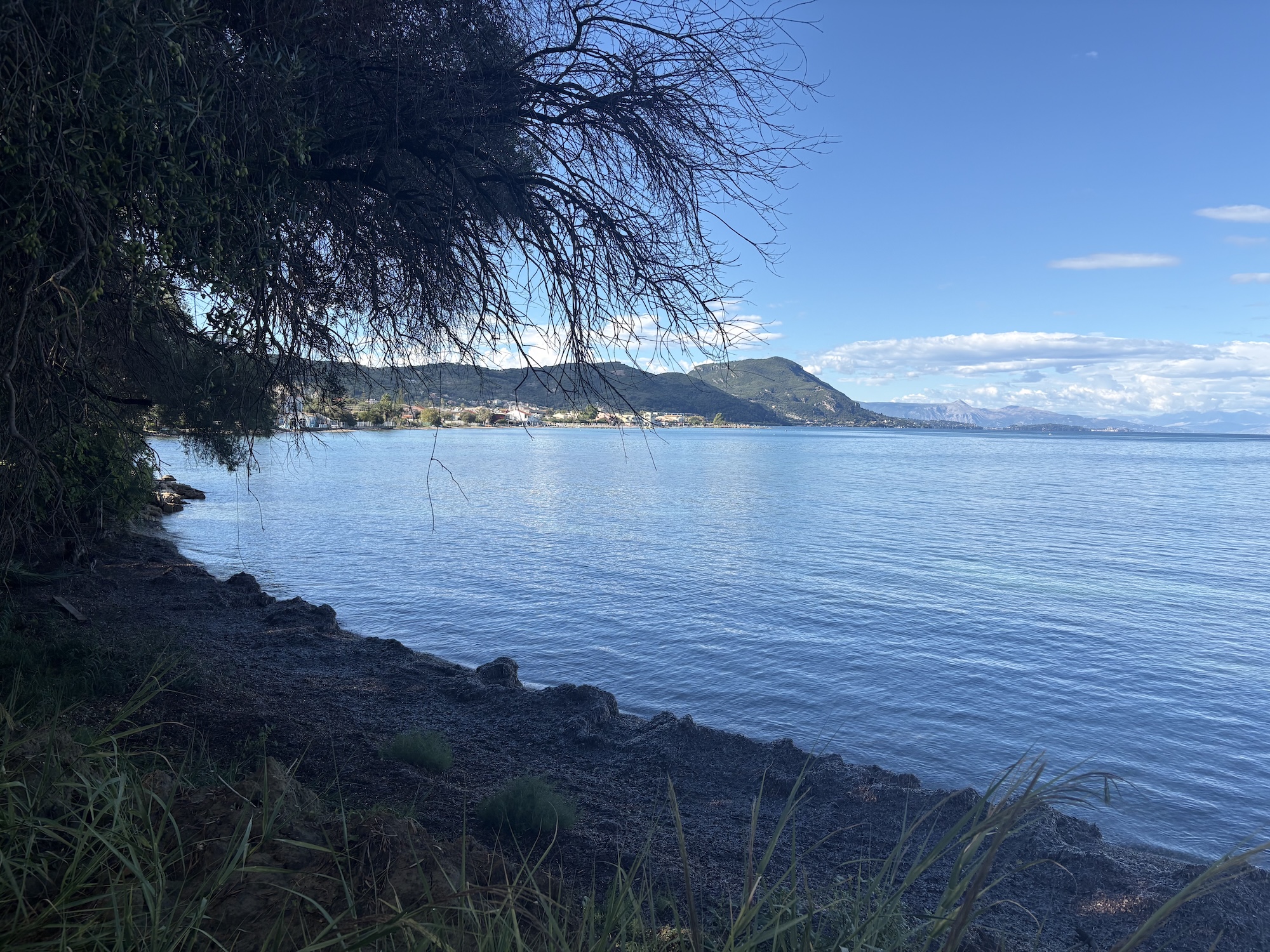
The key thing for us this holiday was relaxation so we spent a lot of the week by the pool or on the beach with its wonderful views across to the mainland, reading, having a swim and lunching in the beach bar. The pool, restaurant and the beach bar are separated from the rest of the hotel by a road but it was no problem for us – other than when the storms hit.
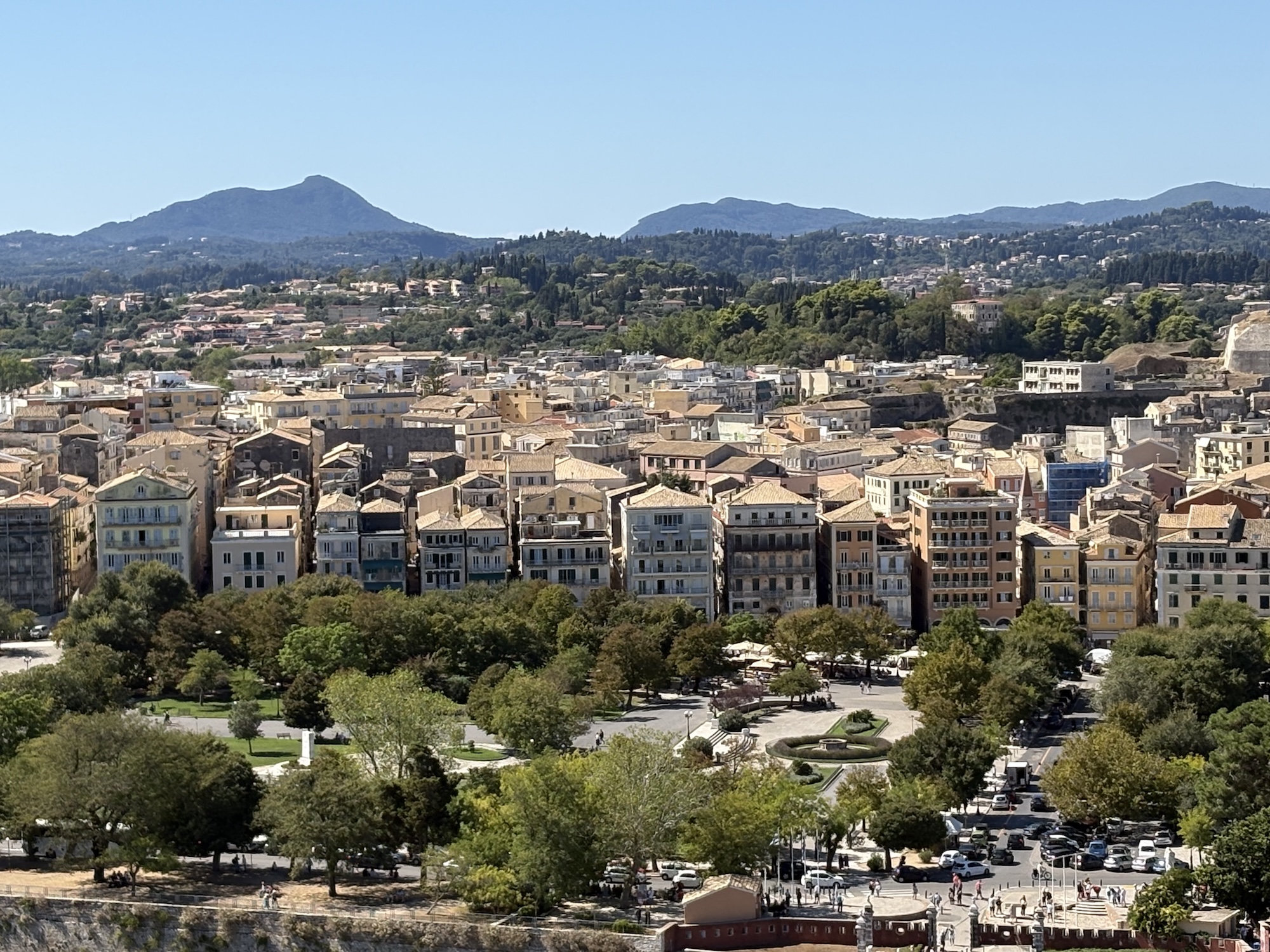
On the Wednesday we took the bus up to Corfu Town, the main settlement on the island. And an absolute beauty it turned out to be, if you ignore the urban sprawl, traffic and cruise ships and focus on the historic old town itself. It’s wonderful and easy to walk around, with much of it pedestrianised, and there are countless independent shops, bars and restaurants to nose around. It’s also a UNESCO World Heritage Site.
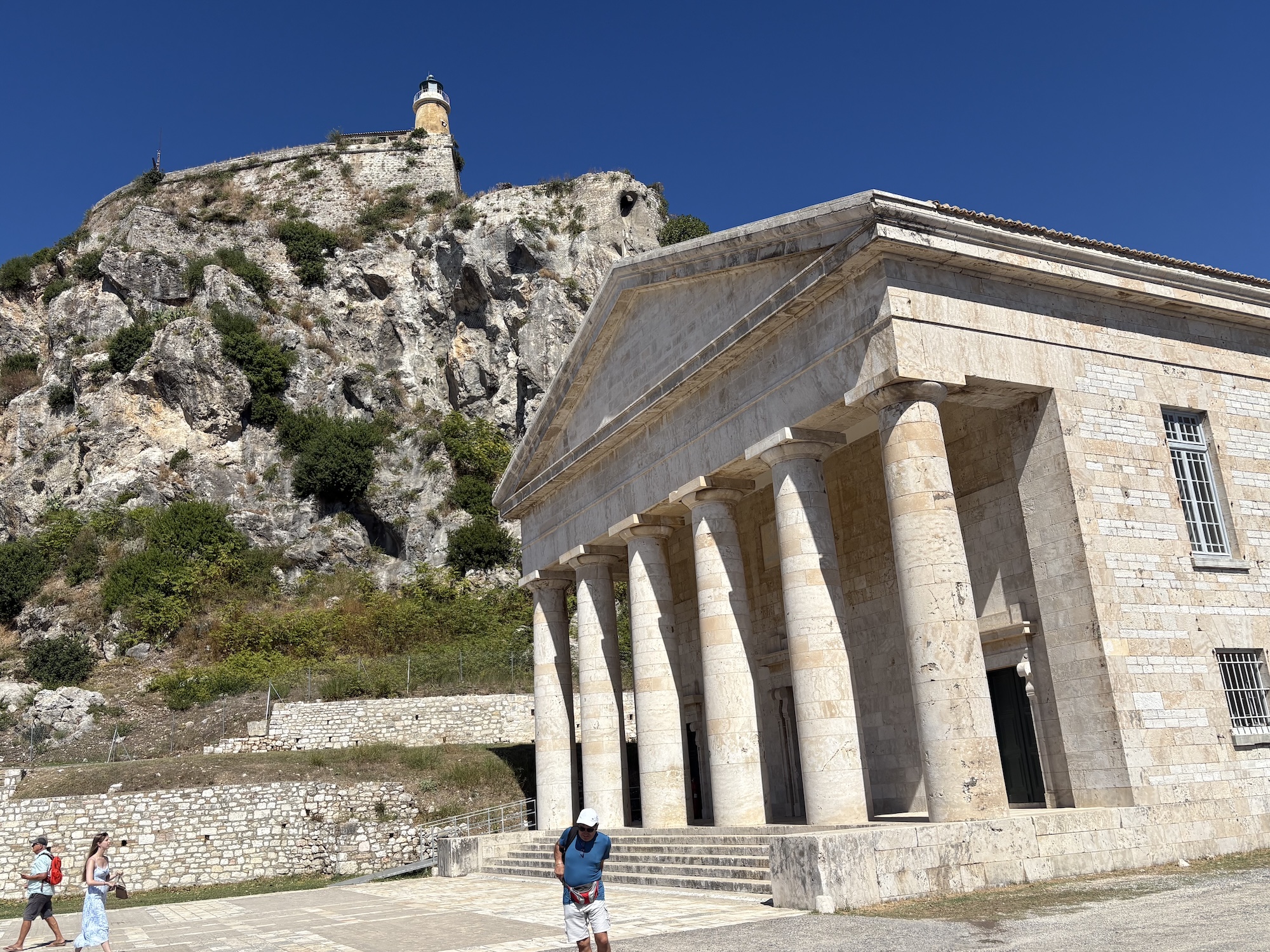
We visited the Old Fortress, on a promontory overlooking the town that was at one time the site of the old settlement of Corfu. The fortress developed under the Byzantines but a lot of what we see today was built by the Venetian Republic when it controlled the island, and later by the British when it took over as protectors in the 19th century. The Venetians built a moat to separate the fortress from the rest of the island, today spanned by a bridge. We had a wander round and climbed in the heat to the top of the main hill, which has great views of the rest of the town and the mainland. The sun shone and the sea shimmered and it was all utterly charming. Sadly a lot of the buildings that remain are either in use by local authorities, closed off or too run down to be visited. The classical church of St George is an exception, built by the British, and looking slightly incongruous amid the beefier fortifications.
Later we stopped at the grand Palace of St Michael and St George, built for the British Lord High Commissioner in the 19th century. It has a few rooms reflecting the grandeur of the time and the high-living of its residents, but it also houses the extensive Museum of Asian Art, which has some interesting exhibits. The pleasant grounds offered shade and expansive views of the sea.
The architecture of the old town is a bit of a mix. Some Greek, some Ottoman, much Italian, the latter reflecting Venetian control of Corfu that lasted from the medieval period to the 18th century. Italy itself is also just a short hop away by ferry. The older parts of the town are a maze of narrow alleys and modest squares, and proved a delight to explore. We stopped afterwards for drinks near the harbour and then wondered into town for a meal before heading home.
Back in Messonghi we mostly ate in the friendly, family-run tavernas, all of them given over to the tourist dollar. But then that’s true of most of Corfu. The village itself is not much to write home about. A bit of a sprawl, a bit run-down in places and lacking character. The waterfront to the north of our base has a number of dated, cheap hotels and the shops are stacked from floor to ceiling with cheapo souvenirs. It’s not somewhere I’d rush back to. All too often Greece is spoiled by uncontrolled sprawls, derelict buildings, litter and what seems to be a lack of civic pride. The roads are in a worse state than Britain, and that’s saying something, and there’s clearly plenty of poverty.
We only ate in the hotel restaurant once, and that was because of one of those storms that plunged part of the village into darkness – including our taverna of choice that night. Storms in the Med can be fierce but these were something else – violent winds, thunder and lightning the like of which I haven’t experienced for a long long time and rain that turned the local roads into rivers. We got absolutely drenched trying to get to a restaurant one night, paddling around in water several inches deep. It was spectacular to watch from the dry, less so when caught up in it outside.
Several nights saw us in the hotel beach bar, a quiet spot but pleasant enough with the sea just yards away from us, lapping the shore. Elsewhere the town was incredibly quiet, the bars equally so and we would often double the numbers when out for a beer after dinner. Not that that’s a bad thing when you want a quiet week away.